




From Wardrobe to Wow-Factor
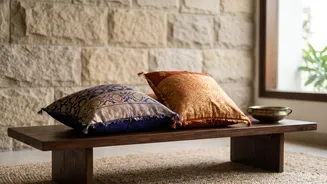
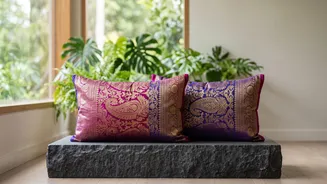
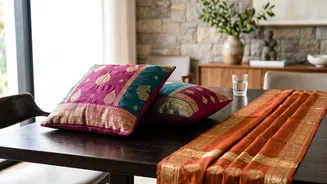
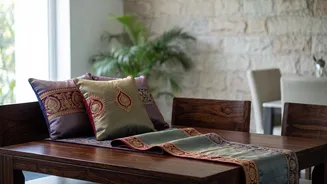
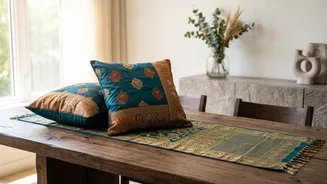
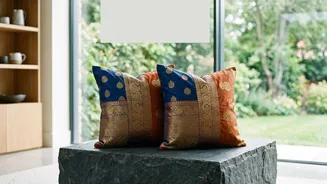
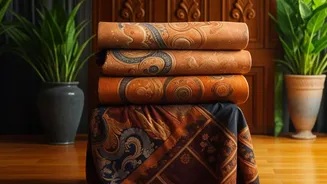
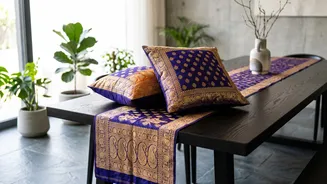
Upcycling a vintage silk saree is more than just a craft project; it’s a way to honour a piece of your history. Those rich colours, intricate zari borders, and lustrous fabrics are too precious to waste. By turning them into cushion covers and table runners,
you infuse your home with a personal story and a touch of sustainable elegance. This festive season, your decor can be a conversation starter, filled with the warmth of memories and the satisfaction of a handmade touch.
Gathering Your Crafting Essentials
Before you begin, you'll need a few key items. Having everything ready makes the process smooth and enjoyable. You will need: a vintage silk saree, sharp fabric scissors or a rotary cutter, a measuring tape, pins (special silk pins are best to avoid marks), a sewing machine or a needle and thread, and cushion inserts. For a table runner, you might want some lining fabric to add weight and durability.
A Simple Guide to Cushion Covers
Creating cushion covers is surprisingly straightforward, especially using the 'envelope' method which requires no zips or buttons. First, wash and iron your saree on a low heat setting. Measure your cushion insert and cut a piece of fabric for the front that is the same size, plus a small seam allowance. For the back, cut two pieces that are the same height but each about two-thirds of the width. Hem one long edge of each back piece. Lay the front piece right-side up. Place the two back pieces on top, right-side down, with their hemmed edges overlapping in the middle. Pin everything together and sew around all four sides. Turn it right-side out, and your cover is ready for the insert. Consider using the saree's 'pallu' or a prominent border for the front of the cushion to create a striking design feature.
Crafting an Elegant Table Runner
A table runner can instantly elevate your dining space. Decide on the desired length and width of your runner; a good rule is for it to be longer than your table but narrower. The rich border of a silk saree is perfect for the long edges of the runner. Cut a long strip from the saree to your desired dimensions, making sure to include the border. If the silk is lightweight, you can add a cotton lining for more structure. Simply cut a piece of lining fabric to the same size, place the two pieces right-sides together, sew around the edges leaving a small gap, and then turn it right-side out. Press it flat and stitch the gap closed for a professional finish.
Pro-Tips for Working with Silk
Silk is a luxurious fabric but can be slippery to work with. To make it easier, use plenty of sharp pins within the seam allowance to hold the fabric in place. Using a rotary cutter instead of scissors can prevent the fabric from shifting while you cut. If you find the fabric is still too slippery, you can lightly spritz it with spray starch to give it temporary stability. When sewing, use a fine, sharp needle (a size 60/8 or 70/10 is ideal) and consider using a shorter stitch length for a neater seam. If your machine tends to 'eat' the fabric at the start of a seam, place a small piece of tissue paper under the fabric to get started, which can be easily torn away afterwards.