






A Sanctuary with Royal Roots
Long before it was declared a sanctuary in 1979, the Barda hills served as a private reserve for the erstwhile princely states of Porbandar and Jamnagar. Spread across 192.31 square kilometres, this area in Gujarat's Saurashtra region has a rich history
intertwined with local communities like the Maldharis, Rabaris, and Gadhvis, who have coexisted with its wilderness for generations. The sanctuary was officially established to protect its unique ecosystem and abundant floral diversity. For decades, it was considered a potential alternative habitat for lions, a vision first articulated in the Gir-Barda Project of 1979.
A Landscape of Rich Biodiversity
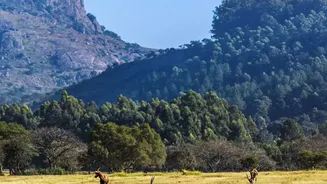
Barda's terrain is a mosaic of undulating hills, dry deciduous forests, and scrubland, creating a habitat that supports a remarkable variety of life. The sanctuary boasts the highest floral diversity in the state, with around 650 to 700 plant species recorded, including valuable medicinal plants. Before the recent arrival of lions, the sanctuary was already home to predators like leopards, hyenas, and wolves. Its avian population is also notable, featuring the rare crested hawk-eagle and spotted eagle. The landscape is sustained by the Bileshvary and Joghri rivers and fortified by dams, which are crucial in this semi-arid region.
The Return of the King
The most significant chapter in Barda's recent history is the return of the Asiatic lion after an absence of nearly 144 years. The last official record of lions in Barda was in 1879. This historic comeback began in January 2023 with the natural dispersal of a male lion from the greater Gir region. Following this, as part of the government's 'Project Lion', the Gujarat Forest Department introduced five females to establish a breeding population. By August 2025, the population had grown to 17 lions, including six adults and eleven cubs, marking a resounding conservation success.
Why a Second Home Is Crucial
For years, wildlife experts have warned about the risks of having the entire global population of wild Asiatic lions confined to a single location—the Gir landscape. A single outbreak of disease, like the canine distemper virus, or a natural disaster could have devastating consequences for the species. The establishment of a second, geographically separate population in Barda provides a critical safety net. It helps mitigate the risk of extinction and eases the pressure on the overcrowded Gir forest, where territorial disputes and human-wildlife conflict can be a challenge.
Preparing for a Thriving Population
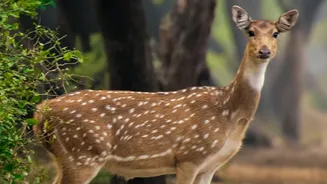
Making Barda a viable long-term home for lions has required dedicated effort. A key focus has been to increase the prey base. To supplement existing prey like wild boar and nilgai, the Forest Department has translocated hundreds of chital (spotted deer) and sambar into the sanctuary. A recent study published in the journal PLOS One confirmed that Barda's habitat is suitable for supporting lions, which have established home ranges and are primarily feeding on wild prey. These efforts, part of the 'Lion@2047' vision, ensure the sanctuary can sustain a healthy and growing predator population.