








A Sudden and Dramatic Shift
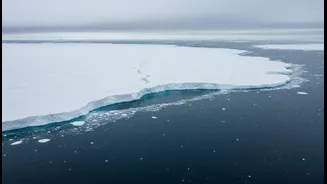
For many years, while the Arctic was clearly and consistently losing ice, Antarctica’s sea ice was a different story. It even saw periods of growth. But that changed dramatically around 2015. Since then, and especially in the 2020s, the amount of sea ice floating
on the Southern Ocean has plummeted, hitting a record low in February 2023. At its winter peak that year, an area of ice larger than Western Europe was missing compared to the long-term average. While 2026 saw a slight rebound from the most extreme lows, the overall extent remains well below the average of previous decades and the long-term trend is a sharp decline.
Not All Ice Is Created Equal
To understand Antarctica, it's crucial to know the difference between sea ice and land ice. Land ice, found in glaciers and the massive Antarctic Ice Sheet, is frozen freshwater that sits on the continent. When it melts and flows into the ocean, it directly raises global sea levels. Sea ice, on the other hand, is frozen ocean water. It forms, grows, and melts in the sea. Its melting doesn't directly raise sea levels—much like an ice cube melting in a glass of water doesn't cause it to overflow. However, its disappearance has profound indirect consequences.
So, What's Causing the Disappearance?
Scientists believe a 'perfect storm' of factors is at play. For years, the system was relatively stable. But since 2015, powerful winds have begun to disturb the ocean's natural layers. This has allowed warmer, saltier water from deep in the ocean to rise to the surface. This warmer water melts the sea ice from below. Once the melting starts, a dangerous feedback loop kicks in. Bright white ice reflects the sun's energy back into space. When it melts, it exposes the dark ocean surface, which absorbs heat instead. This absorbed heat warms the ocean further, making it even harder for new ice to form.
Why This Matters to India and the World
What happens in Antarctica doesn't stay in Antarctica. The loss of sea ice has global ripple effects. Firstly, it acts as a protective barrier for the massive land-based ice shelves. Without sea ice, these shelves are exposed to damaging ocean waves and warmer waters, which can accelerate their collapse and, in turn, speed up sea-level rise—a major concern for India's long coastline. Secondly, the Southern Ocean is a critical engine for global ocean circulation, which regulates weather patterns worldwide. Changes there can influence monsoons and other climate systems far away. Finally, the loss of ice devastates the unique ecosystem, affecting everything from the krill at the base of the food chain to penguins and seals that rely on the ice for breeding and survival.
A System Flipped on Its Head
Scientists are now debating whether Antarctica has reached a 'tipping point' or entered a new, less-icy state. For decades, the continent acted as a buffer against climate change, but some researchers worry it may now become an amplifier. The complexity of the system—with its interacting winds, ocean currents, and ice—makes it difficult to predict the future with certainty. However, the recent, dramatic changes are seen as a clear and urgent warning sign about the health of our planet. The consensus is that continued greenhouse gas emissions will only push the system further out of balance.