




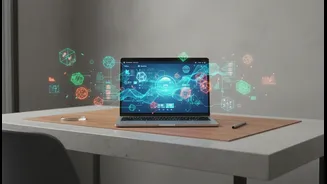


What Exactly is a Local AI Model?
Think of it as the difference between streaming a movie and playing a downloaded file. Cloud AI, like popular chatbot services, processes your questions on massive, remote servers owned by large tech companies. Every query you make travels over the internet,
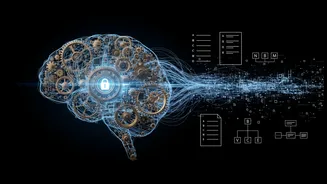
gets an answer, and travels back. Local AI, also known as on-device or edge AI, works differently. The AI model—often a more compact but still powerful version called a Small Language Model (SLM)—is downloaded and runs directly on your personal computer or smartphone. All the processing happens on your device, meaning nothing gets sent to an external server. This shift is made possible by more powerful personal devices and a new generation of efficient AI models designed to run on consumer hardware.
The Privacy Advantage for Students
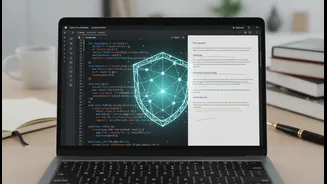
One of the most significant benefits of local AI is privacy. When a student uses a cloud AI for help with an essay, their prompts, drafts, and research material are sent to a third-party server. This creates a data trail that many users and institutions are becoming wary of. Local AI eliminates this risk entirely. Since the model runs on the user's machine, sensitive information—be it personal essays, research notes, or queries about difficult subjects—never leaves the device. This “air-gapped” approach is a game-changer for maintaining confidentiality and giving students and parents peace of mind that their educational data remains private.
Overcoming India’s Connectivity Hurdles
In a country where stable, high-speed internet is not always a given, the ability to work offline is a massive advantage. For students in rural areas or even in cities with patchy connectivity, reliance on cloud-based tools can disrupt learning. Local AI models function perfectly without an internet connection once they are installed. This means a student can continue to get homework help, research topics, or practise concepts during a power cut or while travelling. This offline capability helps bridge the digital divide, ensuring that access to powerful learning tools isn't dependent on having a persistent and costly data connection.
A Personalised and Uninterrupted Tutor
Unlike general-purpose cloud models, local AIs can be fine-tuned for specific subjects or learning styles. A student can use a model trained specifically on a physics curriculum or one that adapts to their particular way of asking questions, creating a truly personalised learning assistant. This customisation leads to more relevant answers and deeper learning. Furthermore, because local models run on the device, responses are often faster, without the lag (latency) of sending data to and from the cloud. This creates a more natural and fluid interaction, much like having a patient tutor available 24/7, without usage limits or subscription fees.
What Are the Downsides?
The transition to local AI isn't without challenges. The primary hurdle is hardware. While newer models are highly optimised, running them efficiently still requires a reasonably modern computer with sufficient RAM and processing power. Additionally, the most powerful, frontier AI models are still exclusively available through the cloud, as they are too large to run on consumer devices. For students needing the absolute cutting-edge of AI capability, cloud services remain the top choice. The initial setup of local AI can also be more complex than simply opening a website, though user-friendly applications are making this process easier every day.