




The Sky's Outdated Operating System
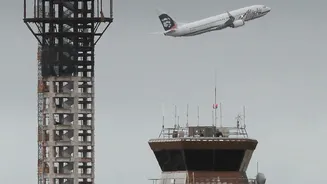
For decades, America’s air traffic control (ATC) system has been a marvel of reliability, guiding over 87,000 flights safely across the country every day. However, much of its core infrastructure dates back to the 1980s or even earlier, relying on a network
of ground-based radars, copper-wire telecommunications, and sometimes even manual data entry with floppy disks. This system works, but it's inefficient. Radar-based tracking is less precise than modern alternatives, forcing controllers to keep aircraft separated by wide margins. This creates invisible traffic jams and forces planes onto fixed, inefficient routes—the equivalent of 'highways in the sky'—instead of flying more direct paths.
From Radar and Paper to Satellites and Screens
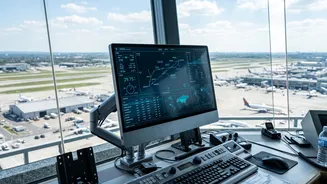
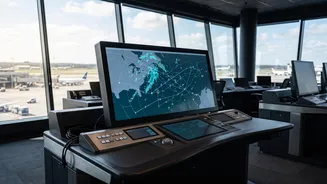
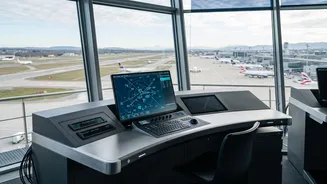
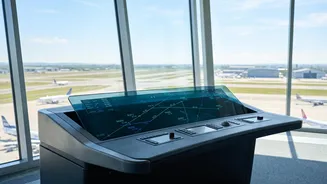
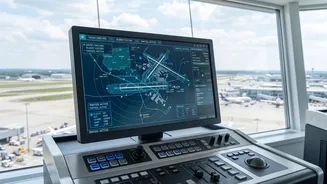
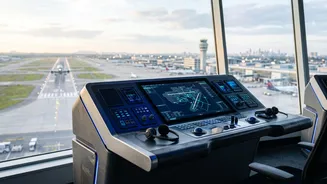
The replacement effort, part of a broad modernization initiative often referred to as NextGen, is a fundamental shift in how air traffic is managed. The centerpiece of this upgrade is moving from a ground-based radar system to a satellite-based GPS system called Automatic Dependent Surveillance-Broadcast (ADS-B). With ADS-B, each equipped aircraft automatically broadcasts its precise location, altitude, and velocity to controllers and other nearby planes. This provides a much clearer, real-time picture of the airspace. Recent steps in November 2026 saw the FAA begin rolling out the Enterprise Information Display System (E-IDS), which replaces multiple 1980s-era systems—some using floppy disks—with a single, modern interface for controllers to see weather, flight data, and alerts.
Shorter Flights, Less Fuel, Safer Skies
For passengers, the benefits of this modernization will be tangible, even if the technology is invisible. The precision of satellite-based navigation allows for more direct and efficient flight paths. Instead of flying in rigid, staircase-like patterns, planes can glide down for landing with their engines at idle, saving significant amounts of fuel and reducing emissions. More efficient routing and spacing mean the system can handle more traffic, potentially reducing the cascading delays that snarl airports nationwide. The improved situational awareness for both pilots and controllers also adds a significant layer of safety, making it easier to see and avoid conflicts both in the air and on the ground.
The Challenge of an Engine Change Mid_Flight
Upgrading a system that manages a nation’s entire airspace is monumentally complex—it's often compared to changing a jet's engine while it’s in mid_flight. The national airspace system cannot simply be shut down for maintenance. The transition is a phased, multi_year, multi_billion_dollar effort involving thousands of projects at facilities nationwide. Old and new systems must run in parallel, and every component, from remote radio towers to central processing software, must be replaced without disrupting daily operations. The Government Accountability Office (GAO) has noted the immense scale, highlighting that the first phase alone involves nearly 12,000 individual project schedules that must be carefully managed through 2028 and beyond.