

The Science of Seeing Clearly
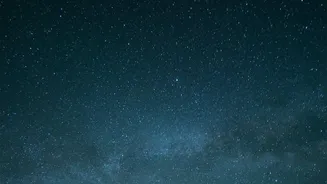
The primary reason for seeking altitude is simple: a clearer, darker sky. At higher elevations, you are literally looking through less air. The Earth's atmosphere, while essential for life, acts as a turbulent, hazy filter for starlight. It's filled with
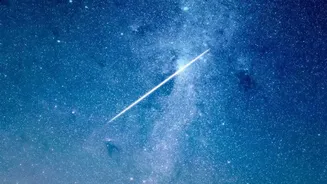
dust, moisture, and pollutants that scatter light and blur our view of the cosmos. By ascending a few thousand metres, stargazers place themselves above a significant portion of this atmospheric soup. The air is thinner, drier, and more stable, leading to what astronomers call better "seeing." Stars twinkle less and shine with a steadier, more brilliant light. Faint objects, like distant galaxies or the delicate dust lanes of the Milky Way, emerge from the background murk and become visible to the naked eye.
Escaping the City's Glow
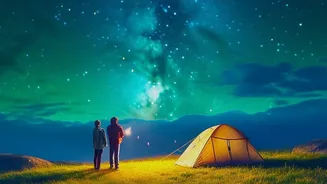
For most people in India, the biggest obstacle to stargazing is light pollution. The bright, ever-present skyglow from cities can drown out all but the brightest stars and planets. This artificial haze is created by streetlights, buildings, and advertising, and its reach is expanding. A trip to a high-altitude location is often the only way to escape this dome of light. Mountain ranges act as natural barriers, blocking the glow from distant urban centres. Places with low population density, such as remote Himalayan villages or desert plateaus, have minimal local light sources, resulting in genuinely dark skies where thousands of stars are visible. This is why India's first official Dark Sky Reserve was established in Hanle, Ladakh, at an altitude of 4,500 metres—a location prized for its pristine darkness.
Dodging the Monsoon Clouds
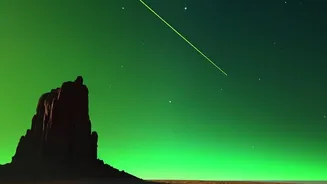
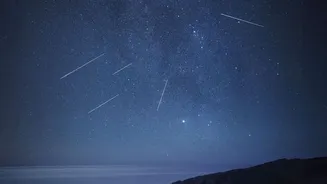
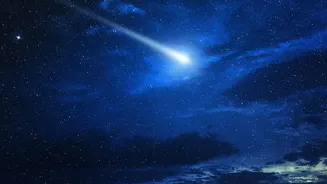
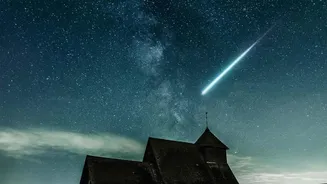
Timing is everything in astronomy, and in India, this often means contending with the monsoon. One of the year's best meteor showers, the Perseids, peaks in mid-August, right in the middle of the rainy season for most of the country. This is where high-altitude geography offers a crucial advantage. Certain regions, like Ladakh and the Spiti Valley in Himachal Pradesh, lie in a rain shadow, meaning the towering Himalayan peaks block most of the monsoon clouds from reaching them. While the rest of the subcontinent is blanketed in clouds, these cold deserts often enjoy clear, dry skies, making them prime destinations for watching summer celestial events like the Perseid display. The 2026 peak on August 12-13 is especially promising as it coincides with a new moon, ensuring no moonlight will wash out the fainter shooting stars.
India's Celestial Sanctuaries
So where do stargazers go? The Himalayas are the premier destination. Ladakh is the undisputed king, with places like Hanle, Pangong Tso, and the Nubra Valley offering some of the darkest, clearest skies in Asia. Spiti Valley is a close second, with villages like Kaza and Kibber providing accessible yet incredibly dark viewing locations. In Uttarakhand, higher-altitude spots around Mukteshwar and Kausani are also popular, though they face increasing threats from light pollution from nearby towns. For those in southern India, the higher elevations of Coorg in Karnataka offer a refuge from city lights, especially outside the monsoon months. Even near Mumbai, the Sahyadri hills in places like Jawhar provide a quick escape to darker skies for city-bound astronomers.
Planning Your High-Altitude Quest
A trip to these locations requires some planning. Acclimatisation to the high altitude is crucial to avoid sickness. Even during summer, temperatures at night can drop dramatically, so packing warm layers is essential. You don’t need a telescope to enjoy a meteor shower, as they are best viewed with the naked eye, allowing you to take in a wide swath of the sky. However, a pair of binoculars can enhance views of the Moon and star clusters. A stargazing app on your phone can help you identify constellations, and using a red-light torch will preserve your night vision. Finally, give your eyes at least 20-30 minutes to fully adapt to the darkness; you'll be amazed at how many more stars gradually appear.