

The Unforgiving Lunar Night
A lunar day-night cycle is vastly different from Earth's. One lunar night lasts for approximately 14 Earth days, plunging the surface into total darkness. Without an atmosphere to retain heat, temperatures plummet to devastating lows, often reaching minus
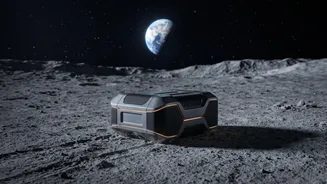
173 degrees Celsius or even colder in some regions. This extreme cold is a death sentence for most electronic and mechanical systems. Batteries lose their ability to hold a charge, and soldered joints can fail, crippling landers and rovers. Furthermore, with no sunlight, solar-powered equipment is rendered useless, creating a dual crisis of extreme cold and a complete power blackout.
Old Solutions and Hard Lessons
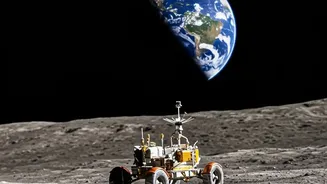
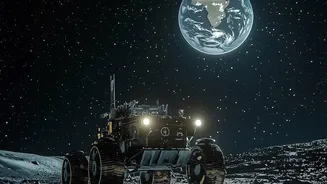
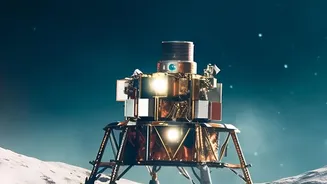
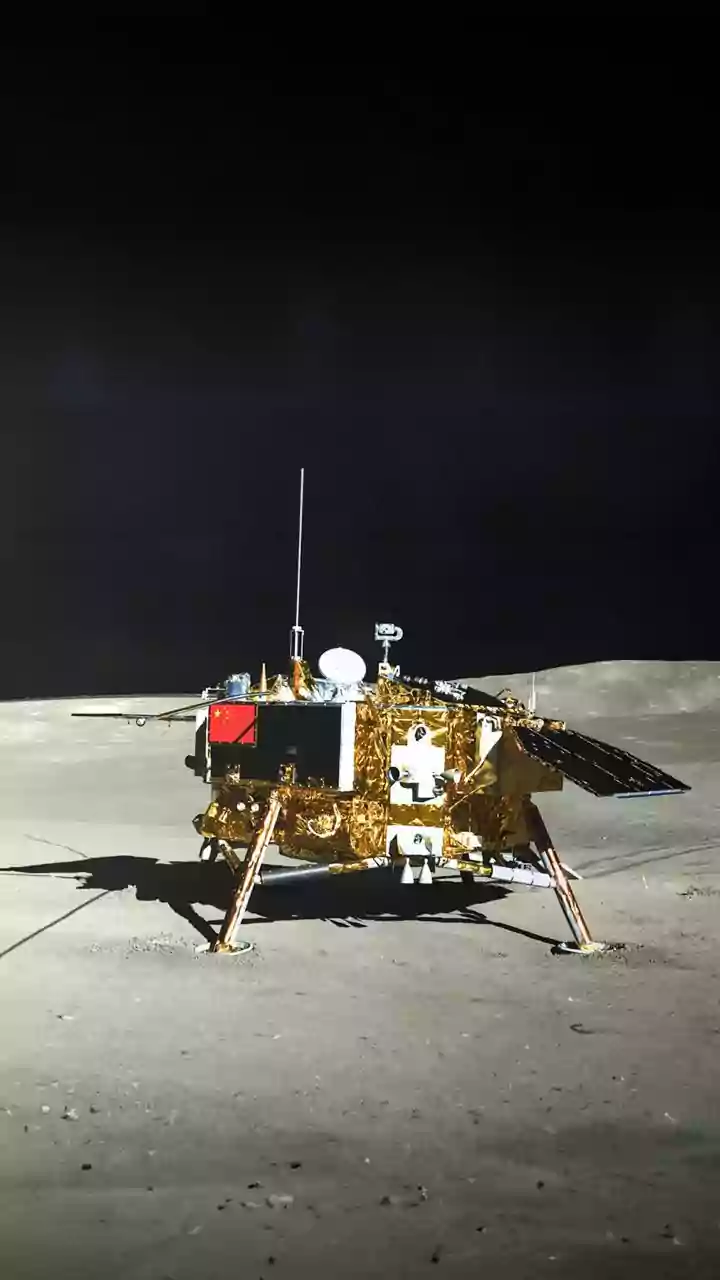
For decades, mission planners have wrestled with this problem. Most lunar missions, including India's successful Chandrayaan-3, were designed to operate for a single lunar day and were not expected to survive the night. Similarly, China's Chang'e-4 and Yutu-2 rover, which made a historic landing on the far side of the moon, enter a dormant or 'sleep' mode during the frigid night to conserve energy and protect their systems. This approach, while effective for short-term science, makes long-duration missions impossible. Powering conventional electric heaters to keep components warm would require massive, heavy batteries, which are prohibitively expensive to launch. The challenge is clear: to build a permanent presence, we can't just hibernate through the night; we must endure it.
A Breakthrough in Warmth
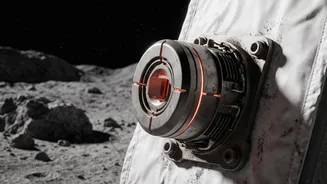
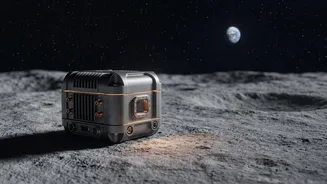
The game-changing solution comes from a technology known as the Radioisotope Heater Unit, or RHU. These are small, simple, and incredibly reliable devices that act as a constant source of warmth. An RHU contains a small pellet of a radioactive material, typically plutonium-238, about the size of a pencil eraser. As the material naturally decays, it releases a steady, predictable amount of heat—about one watt per unit. This process is entirely passive, requiring no electricity, solar power, or moving parts. By strategically placing these small heaters within a spacecraft or rover, engineers can keep critical electronics, batteries, and scientific instruments within their operational temperature range, even in the depths of the lunar night. They have a long history of use, dating back to the Apollo 11 mission's science package.
What This Unlocks for Lunar Ambitions
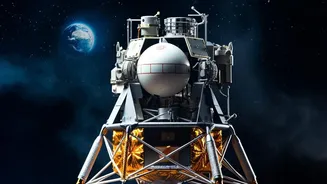
The ability to survive the lunar night is not just an incremental improvement; it is a foundational capability. With RHUs and similar nuclear power systems, landers and rovers can operate for months or even years, instead of just two weeks. This transforms the scope of lunar exploration. It enables long-term scientific studies, like seismology experiments that need to listen for 'moonquakes' over extended periods. It makes prospecting for resources like water ice in the permanently shadowed craters of the South Pole a realistic goal. For programs like NASA's Artemis, which aims to establish a sustainable base camp, this technology is essential. It means future lunar habitats, power grids, and infrastructure can be designed to function continuously, supporting human crews for extended stays on the surface.
The Global Race to a Permanent Foothold
This technological leap is arriving at a critical moment in space exploration. The United States, through its commercial partners and the Artemis program, is actively developing systems designed for long-term endurance at the lunar south pole. Recent announcements show that hardware from cancelled projects is being repurposed specifically for infrastructure that can withstand the lunar night. Simultaneously, China is pursuing an ambitious agenda with its Chang'e missions, planning to build an International Lunar Research Station. Missions like the upcoming Chang'e-7 are specifically designed to explore the south pole and test technologies for resource utilisation, a goal that requires year-round operation. The ability to survive and operate during the lunar night is a key strategic advantage in this new era of lunar development, moving nations from short-term visits to establishing a permanent off-world presence.