








The Foundation: A Trio of Tastes
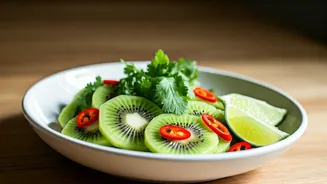
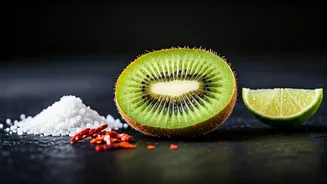
On its own, the trio of kiwi, chili, and lime is already a compelling study in contrasts. The kiwi brings a bright, sweet, and slightly tart flavor, packed with a juicy texture that’s instantly refreshing. The lime juice doubles down on the tartness,
adding a sharp, acidic edge that cuts through the sweetness and cleanses the palate. Then comes the chili powder, offering a slow-building warmth that tingles and excites. Together, they create a snack that hits multiple notes: sweet, sour, and spicy. It’s a popular combination in many parts of the world, where fruit is often treated as a canvas for bold, savory seasonings. But while this combination is delicious, there’s one ingredient that can elevate it from a simple snack to a sophisticated, palate-awakening experience.
The Secret Weapon: What is Black Salt?
Enter black salt, also known as kala namak. Despite its name, this South Asian seasoning is not typically black but rather a pinkish-grey or purplish powder. It’s a kiln-fired rock salt that originates from the Himalayan regions. The production process is what gives it its unique character: raw salt is fired in a furnace for 24 hours with charcoal and various plant materials, like the seeds of the harad fruit. This process creates trace amounts of sulfur compounds, most notably hydrogen sulfide. If that sounds familiar, it's the same compound that gives boiled eggs their distinctive aroma. This pungent, savory, and slightly eggy scent is the hallmark of kala namak, setting it far apart from regular table salt.
The Science of Sensation
So why does this 'eggy' salt make such a profound difference? It’s all about creating flavor complexity. Your palate craves balance. The kiwi, chili, and lime provide sweet, spicy, and sour notes. Black salt introduces two new dimensions: saltiness and, more importantly, umami. The sulfurous compounds in kala namak deliver a deep, savory flavor that many describe as umami-rich. This savory quality acts as a bridge, connecting the sweet, sour, and spicy elements and making them feel more cohesive. The subtle sourness from bisulfites in the salt adds another layer of tang. Furthermore, the saltiness itself does what salt does best: it enhances all the other flavors. It makes the kiwi seem sweeter, the lime zestier, and the chili’s heat more pronounced and well-rounded. It’s a complete sensory upgrade.
A Nod to Tradition: The Culture of Fruit Chaat
Sprinkling savory, spicy salt on fruit is far from a new trend. In India, Pakistan, and other parts of South Asia, it's a core component of fruit chaat, a beloved street food snack. Fruit chaat is a vibrant mix of seasonal fruits—like papaya, guava, apples, and bananas—tossed in a dressing of spices. A key ingredient in the signature spice blend, chaat masala, is black salt. The practice is rooted in both flavor and tradition, including Ayurvedic principles that consider kala namak a cooling spice with digestive properties. It's believed to aid digestion and balance the sweetness of the fruit. This long-standing culinary tradition shows that the combination of sweet fruit with savory, complex salt is a time-tested winner.
How to Make It Elite at Home
Ready to try it for yourself? The process couldn't be simpler, and it’s all about balancing the flavors to your preference. Start with one or two ripe kiwis, peeled and sliced into bite-sized pieces. Place them in a bowl and squeeze the juice of half a lime over them, tossing gently to coat. This not only adds flavor but also helps prevent browning. Next, add a light dusting of your favorite chili powder—a pinch is often enough to start. Finally, the star of the show: a small pinch of kala namak. Be careful, as its flavor is potent. Toss everything together and let it sit for a few minutes for the flavors to meld. The result is a snack that’s juicy, refreshing, and surprisingly complex, with layers of sweet, sour, spicy, and savory flavor in every single bite.