





If you spend your days at a desk, you know the struggle: tight hips, a stiff back, and a general feeling of being locked in place. Many turn to jogging for relief, but for pure flexibility, targeted stretching may be the smarter choice.
The Desk Worker's Dilemma
Prolonged sitting
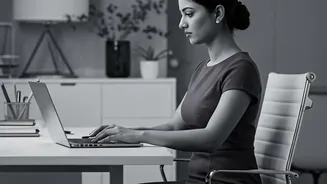
is a modern reality, but our bodies were designed for movement. When you sit for hours, certain muscle groups adapt by shortening and tightening. The primary culprits are the hip flexors (at the front of your hips), the hamstrings (at the back of your thighs), and the pectoral muscles in your chest. This happens because sitting holds these muscles in a consistently shortened state, leading to stiffness, reduced mobility, and often, aches and pains in the lower back, neck, and shoulders. Over time, these imbalances can affect your posture and make even simple movements feel restricted.
Why Jogging Isn't a Silver Bullet for Stiffness
Jogging is an excellent cardiovascular exercise, but it doesn't automatically counteract the effects of sitting. In fact, it can sometimes contribute to tightness. Running is a repetitive motion that primarily moves your joints through a limited range. It doesn't require the full extension of your hips or the complete lengthening of your hamstrings. As a result, running can lead to muscle tightness if it isn't balanced with dedicated flexibility work. Think of it this way: if your muscles are already tight from sitting, an activity that doesn't actively lengthen them won't necessarily solve the core problem of lost flexibility. Some research even suggests that tight muscles can be more efficient for running by providing better elastic energy return, which is why some runners may not prioritize deep stretching.
Stretching: The Targeted Solution
Unlike the repetitive, mid-range motion of jogging, stretching is a targeted intervention designed specifically to lengthen muscles and improve range of motion. For a desk worker, stretching directly addresses the 'adaptive shortening' caused by hours in a chair. By intentionally moving your joints through their full range, you can counteract the stiffness in your hips, hamstrings, and chest. Regular stretching increases blood flow to muscles, reduces tension, and helps maintain joint health. Experts recommend taking short, one-to-three-minute movement breaks every 30 to 60 minutes to combat the negative effects of a sedentary day. Even five to ten minutes of focused stretching daily can make a significant difference in how you feel.
Your 5-Minute Desk-Side Flexibility Routine
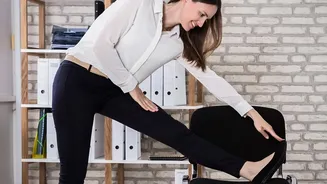
You don't need a gym or a yoga mat to get started. These simple stretches can be done right at your workstation to provide immediate relief and longterm benefits.n1. Seated Figure‑Four Stretch: While sitting, place your right ankle on your left knee. Gently press down on your right knee and lean your torso forward until you feel a stretch in your right hip and glute. Hold for 20‑30 seconds and switch sides.n2. Standing Hip Flexor Stretch: Stand up and take a step back with your right leg. Gently bend your front knee and push your hips forward, keeping your back leg straight. You should feel a stretch in the front of your right hip. Hold for 20‑30 seconds, then repeat on the other side.n3. Chest Opener in Doorway: Stand in a doorway and place your forearms on the frame, with your elbows just below shoulder height. Step forward with one foot until you feel a gentle stretch across your chest and the front of your shoulders. Hold for 30 seconds.n4. Seated Spinal Twist: Sit tall in your chair with both feet on the floor. Gently twist your torso to the right, using your chair for light support. Hold for 20 seconds, breathing deeply, before repeating on the left side.n5. Hamstring Stretch: Sit on the edge of your chair and extend one leg straight out in front of you, with your heel on the floor. Keeping your back straight, hinge forward at your hips until you feel a stretch in the back of your extended leg. Hold for 20‑30 seconds and switch.