



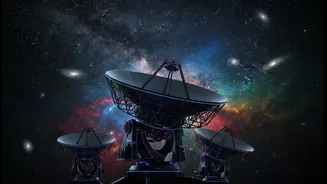


The Magnificent, Disposable Telescope
When the James Webb Space Telescope (JWST) began sending back its breathtaking images of the cosmos, it represented the pinnacle of astronomical engineering. Yet, for all its power, it was designed with a fatalistic acceptance: it is a disposable asset.
Positioned 1.5 million kilometres from Earth at a gravitationally stable spot known as Lagrange Point 2 (L2), the JWST is far beyond the reach of any human repair mission. If a critical component fails or a micrometeoroid causes irreparable damage, there is no plan B. This stands in contrast to its famous predecessor, the Hubble Space Telescope. Hubble, orbiting just a few hundred kilometres up, was famously saved and upgraded multiple times by astronauts on Space Shuttle missions. But the ideal observation points for modern telescopes are far from home, creating a stark choice: build observatories that are brilliant but temporary, or find a new way to keep them alive.
A New Philosophy for the Habitable Worlds Observatory
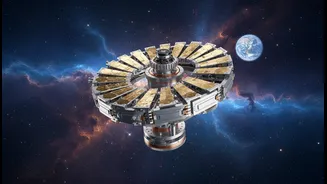
Enter the Habitable Worlds Observatory (HWO), NASA’s next great flagship mission planned for the 2040s. Its primary goal is one of humanity’s most profound: to directly image at least 25 planets similar to our own and scan their atmospheres for chemical biosignatures—the tell-tale signs of life, such as oxygen and methane. To achieve this, HWO will also operate at the distant L2 point. However, learning from the experiences with Hubble and JWST, NASA has mandated a radical shift in thinking. From its very inception, the HWO is being designed to be serviced, repaired, and upgraded not by astronauts, but by robots. This isn't an afterthought; it's a core requirement that will shape every aspect of the telescope's $11 billion design, transforming it from a single-use instrument into a sustainable, long-term platform for discovery.
Meet the Robotic Mechanics
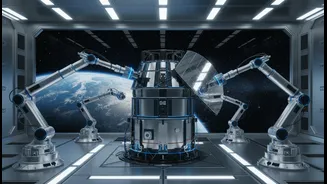
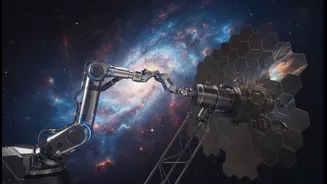
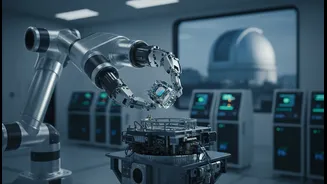
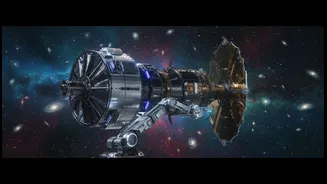
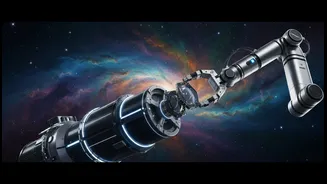
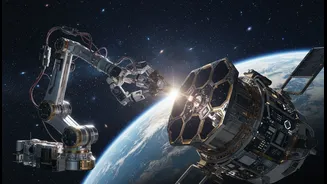
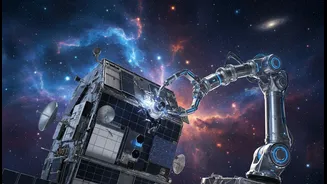
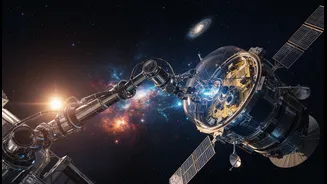
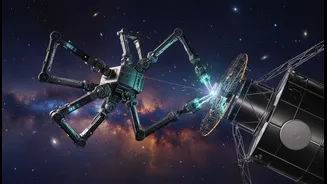
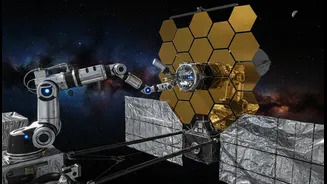
So what does a robotic mechanic for a space telescope look like? The concept is less about a single humanoid robot with a wrench and more about a complete logistical ecosystem. NASA is requiring HWO to be built with a modular architecture. Think of it like a high-end desktop computer. Critical components like cameras, sensors, and processing units will be designed as standardized, swappable parts called Line-Replaceable Units (LRUs). When a part wears out or becomes obsolete, NASA or a commercial partner will launch a dedicated servicing spacecraft. This robotic servicer will autonomously navigate to HWO, dock with it, and use its mechanical arms to carefully unlatch the old module and plug in a new one. This could even extend to the assembly process itself, with robots potentially piecing together parts of the telescope in orbit if it's too large to launch in one go.
More Than Just a Quick Fix
The implications of this robotic servicing strategy go far beyond simple repairs. The most significant benefit is upgradability. Technology advances at a blistering pace. The instruments considered state-of-the-art in the 2030s when HWO's parts are being finalized will almost certainly be surpassed by the 2050s. With a serviceable design, scientists won't be stuck with decades-old tech. If a new, more sensitive detector is invented that could dramatically improve the search for biosignatures, a robotic mission can be sent to install it. This approach not only future-proofs the massive investment but also stimulates the burgeoning commercial space industry, creating a market for companies that can provide these in-space servicing, assembly, and manufacturing (ISAM) capabilities.
Why the Search for Life Demands It
Ultimately, this forward-thinking engineering is in service of the science. Detecting the faint chemical whispers of life from a planet trillions of kilometres away is an exceptionally difficult task. It requires pushing our technology to the absolute limit. Having an observatory that can evolve is a game-changer. Imagine HWO detects a tantalizing but ambiguous signal from a nearby exoplanet. With robotic servicing, there would be a powerful motivation to fast-track the development of a next-generation instrument specifically designed to analyze that signal more clearly and send it up for installation. This new philosophy ensures that our most powerful eye on the universe can be sharpened over time, maximizing its chances of answering the question of whether we are alone.