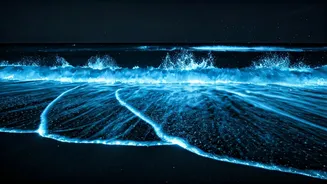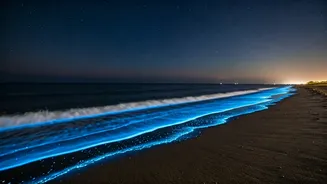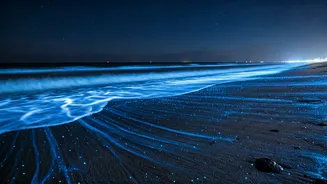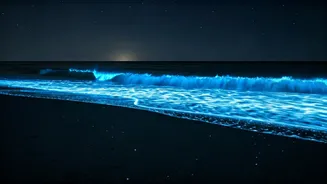





The 'Sea Sparkle' Flooding Your Feed
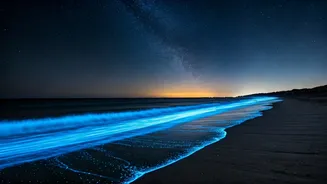
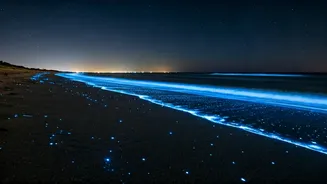
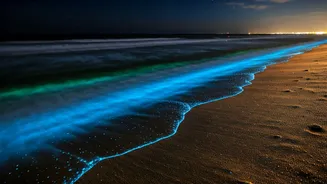
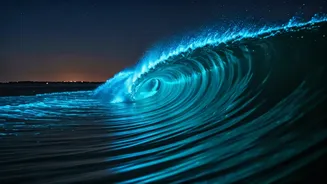
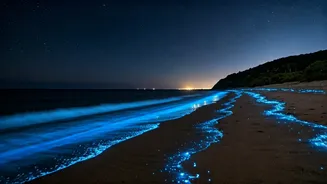
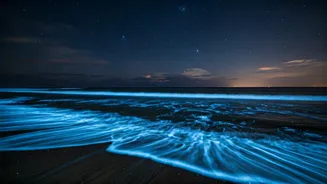
The videos are mesmerizing. Under the cover of night, every wave that crashes along beaches in Udupi and Mangaluru, cities in the Indian state of Karnataka, erupts in a ghostly, electric blue. People are seen splashing in the water, their movements triggering
bursts of light, as if they have liquid lightning at their fingertips. It’s the kind of natural wonder that seems tailor-made for social media, a real-world spectacle that looks like a special effect from the movie *Avatar*. This phenomenon, often called “sea sparkle,” isn't new, but its recent appearance has collided perfectly with TikTok’s algorithm, turning a regional ecological event into a global viral moment. For millions of viewers, it's a first glimpse into one of the planet’s most enchanting secrets.
Nature’s Own Glow Sticks
So, what’s actually going on here? This isn't magic or pollution; it's biology. The glow is caused by bioluminescence, a chemical reaction created by living organisms. In this case, the culprit is a type of single-celled plankton called a dinoflagellate, specifically a species named *Noctiluca scintillans*. Think of these microscopic creatures as tiny, floating lightbulbs. When the water they live in is disturbed—by a crashing wave, a swimming fish, or a person’s hand—it triggers a defense mechanism inside them. A chemical called luciferin reacts with an enzyme called luciferase, producing a flash of blue light. It’s essentially a biological burglar alarm designed to startle predators. When millions of these organisms bloom in the same area, their collective flashes create the large-scale, brilliant display we see washing up on shore.
Why Now, and Why There?
While bioluminescence can occur in oceans all over the world, from California to Puerto Rico, these intense blooms are often seasonal and dependent on specific conditions. The current event along the Karnataka coast is linked to the period following the monsoon season. Heavy rains wash excess nutrients from the land into the coastal waters. This sudden influx of food, combined with favorable water temperatures and salinity, creates a perfect storm for a population explosion of *Noctiluca scintillans*. The dinoflagellates feast on the nutrients, reproduce rapidly, and gather in dense concentrations near the surface. As the currents bring them toward the shore, the constant motion of the surf churns them up, creating the nonstop light show that has beachgoers and TikTok scrollers in awe.
A Beautiful but Complicated Truth
As breathtaking as the blue tide is, it comes with a significant environmental caveat. Large-scale *Noctiluca* blooms, while not typically toxic to humans directly, can be devastating for marine ecosystems. These organisms are voracious eaters, consuming diatoms (a key food source for many fish) and excreting large amounts of ammonia. When the massive bloom eventually dies and decomposes, the process sucks huge amounts of oxygen out of the water, creating hypoxic “dead zones” where fish and other marine life cannot survive. Local fishing communities in India have long viewed these blooms as a bad omen, as they are often followed by mass fish die-offs and a decline in their catch. So while the glowing waves offer a moment of viral beauty, they are also a stark visual indicator of potential ecological imbalance, often linked to nutrient runoff from agriculture and urbanization.