





That shaded balcony or dim garden corner doesn't have to be bare. Transform it into a lush, green retreat with tropical plants that thrive away from direct sun. Here’s a guide to some of the best ferns and foliage for your Indian home.
Boston Fern (Nephrolepis exaltata)
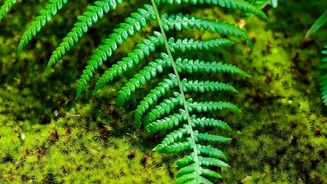
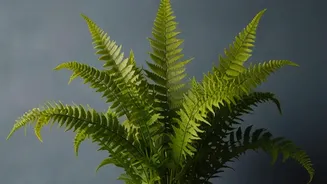
The Boston Fern
is a classic choice for a reason. Its long, arching fronds covered in small, delicate leaves create an instant sense of lushness. Perfect for hanging baskets on a shaded porch or as a potted plant indoors, it’s an icon of tropical grace. This fern loves bright, indirect light, so a spot near an east-facing window or on a covered patio is ideal. Direct afternoon sun can scorch its fronds, so protection is key. The key to a happy Boston Fern is consistent moisture and humidity. The soil should be kept evenly moist but not waterlogged. In India's dry winters and hot summers, you might need to water it more frequently. To boost humidity, you can mist the plant regularly or place it on a tray of pebbles filled with water. Use a well-draining potting mix, often a blend of cocopeat, compost, and perlite, to prevent root rot while retaining necessary moisture.
Maidenhair Fern (Adiantum)
With its delicate, fan-shaped leaflets on wiry black stems, the Maidenhair Fern is one of the most elegant shade plants you can grow. It brings a soft, airy texture to any space. However, it can be a bit more demanding than other ferns. It absolutely requires high humidity to prevent its delicate leaves from turning crispy and brown. This makes it a perfect plant for a bright bathroom or kitchen where steam is plentiful. Alternatively, place it near a humidifier. Maidenhair Ferns need their soil to be consistently moist; they will not forgive you for letting them dry out completely. Water them when the top inch of soil feels slightly dry, and never let the pot sit in water. They thrive in bright, indirect light and should be protected from direct sun and cold drafts. Despite its delicate appearance, when its needs are met, it’s a rewarding and beautiful addition.
Calathea (Prayer Plant)
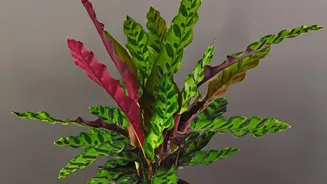
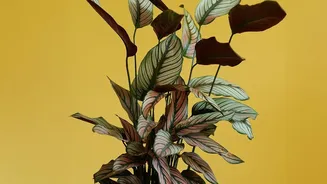
Known as 'Prayer Plants' because their leaves fold upwards at night, Calatheas offer some of the most stunning foliage in the plant world. Varieties like the Rattlesnake Plant (Calathea lancifolia) and Peacock Plant (Calathea makoyana) boast intricate patterns in shades of green, cream, and deep purple. These plants are native to tropical rainforest floors, so they are perfectly adapted to low-light conditions. Bright, indirect light is best, as direct sun will fade their vibrant patterns. Calatheas are particular about water and humidity. They prefer their soil to be kept lightly and consistently moist. Allow the top inch to dry out before watering again. They are also sensitive to chemicals in tap water, so using filtered or rainwater is often recommended. High humidity is a must for Calatheas to avoid brown, crispy leaf edges. Grouping them with other plants or using a pebble tray can help create a humid microclimate.
Aglaonema (Chinese Evergreen)
If you are looking for a plant that is both beautiful and incredibly forgiving, the Aglaonema, or Chinese Evergreen, is an excellent choice. It's one of the best plants for low-light conditions, making it perfect for shadier indoor corners where other plants might struggle. Aglaonemas come in a dazzling array of varieties, from the classic silvery-green 'Silver Bay' to the striking 'Siam Aurora' with its red-tinged edges. The more colourful varieties will often show their best hues in medium, indirect light, but most will tolerate lower light levels. This plant is not overly demanding about water. It’s best to let the top inch or two of soil dry out between waterings. It can tolerate periods of dryness better than it can handle being overwatered, which can lead to root rot. It is adaptable to average household humidity and doesn't require any special pruning, making it a truly low-maintenance star for shady spots.
Money Plant (Epipremnum aureum)
No list of easy care Indian house a a a a a a a a a a a a a a a a a a a a a a a a a a $a$ $a$ $a$ $a$ $a$ $a$ $a$ $a$ $a$ $a$ $a$ $a$ $a$ $a$ $a$ $a$ $a$ $a$ $a$ $a$ $a$ $a$ $a$ $a$ $a$ $a$ $a$ $a$ $a$ $a$ $a$ $a$ $a$ $a$ $a$ $a$ $a$ $a$ $a$ $a$ $a$ $-plants would be complete complete without the humble Money Plant. Extremely adaptable and fast growing, its trailing vines with heart shaped leaves can be trained to climb a wall or cascade beautifully from a shelf or hanging pot. It thrives in a wide range of light conditions including low light and full shade though its green and yellow variegation may be less pronounced in deeper shade. This is arguably one of the most forgiving plants when it comes to watering much as it can tolerate some neglect but grows best when the soil is allowed to dry out between waterings. It’s also incredibly easy to propagate simply snip a piece of vine and place it in water to root.