



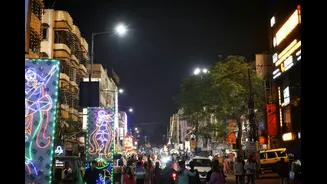
Kolkata has many names, but none are quite as evocative as the 'London of India'. This title isn't just a casual comparison; it's a window into a time when the city was the jewel of the British Empire and a global hub of culture and power.
The Empire's Second City
The most direct
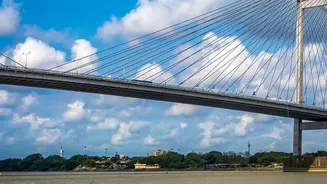
reason for the nickname stems from Kolkata’s status during the British Raj. From 1772 until 1911, the city, then known as Calcutta, was the capital of British India. This made it the administrative and political epicentre of the entire subcontinent, a role analogous to London's position within the British Empire. As the 'second city of the Empire', Calcutta was the seat of the Viceroy, home to the headquarters of the East India Company, and the nerve centre for all major political and commercial decisions. This concentration of power naturally invited comparisons to London, the ultimate heart of the empire. The city's location on the Hooghly River, a vital artery for trade, further mirrored London's own development along the Thames, reinforcing its importance as a commercial powerhouse.
A City of Palaces and Grand Designs
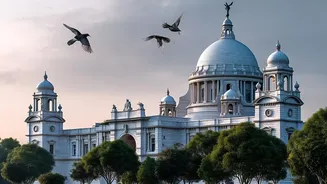
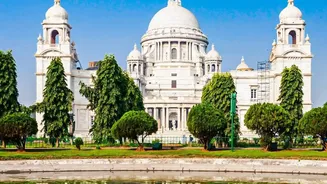
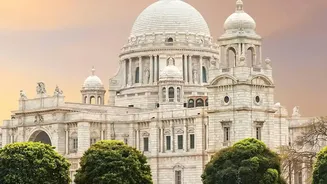
Walk through central Kolkata today, and you are walking through a living museum of colonial architecture. The British didn't just rule from Calcutta; they reshaped its landscape to reflect their imperial might. The city was adorned with grand edifices in Neoclassical, Gothic Revival, and Victorian styles, intentionally designed to evoke the grandeur of European capitals. This building boom led to another of the city's nicknames: the 'City of Palaces'. Iconic structures like the Victoria Memorial, the Calcutta High Court, and St. Paul's Cathedral were designed to be architectural statements. The former Government House, now the Raj Bhavan, was explicitly modelled on English aristocratic estates. This deliberate mirroring of British architectural trends created a cityscape that felt strikingly familiar to European visitors, making the 'London of India' moniker feel earned and visible.
An Intellectual and Cultural Renaissance
The comparison wasn't just skin-deep. During the 19th century, Kolkata became the crucible of an extraordinary intellectual and cultural awakening known as the Bengal Renaissance. The city blossomed into a hub of literature, philosophy, art, and social reform, drawing parallels with London's own vibrant public and intellectual life. Home to a flourishing press, influential universities, and countless literary societies, Calcutta was a place where ideas were debated with fervour. This environment nurtured luminaries like Rabindranath Tagore, the first non-European to win the Nobel Prize in Literature. This intellectual dynamism, a fusion of Indian traditions and Western thought, created a cosmopolitan atmosphere that was rare at the time and contributed to its reputation as a globally significant cultural capital.
The Nickname in Modern Times
After the capital shifted to Delhi in 1911, Kolkata's political prominence waned, and the city faced new economic and social challenges, particularly after the partition of Bengal in 1947. Yet, the 'London of India' nickname endures, not as a reflection of its current status, but as a marker of its unique history. The colonial-era buildings, while now part of a distinctly Indian metropolis, still define its core identity. The tram network, the only one remaining in India, adds to this old-world charm, serving as a nostalgic link to a bygone era that once mirrored European cities. While modern Kolkata has forged its own vibrant identity, far removed from its colonial past, the echoes of the 'London of India' remain in its architecture, its intellectual spirit, and the very layout of its historic streets.