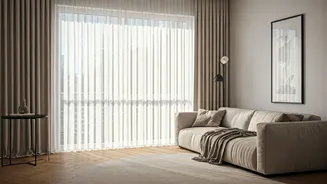





The Classic: Opposite a Window
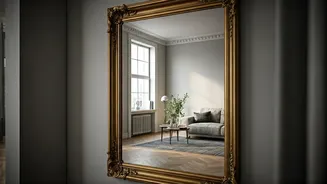
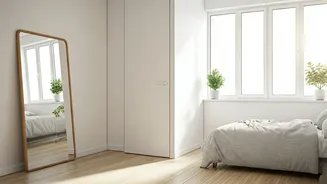
This is the oldest trick in the book for a reason: it works. Placing a large mirror directly opposite a window acts like a second light source. It captures the natural sunlight and bounces it back into the room, instantly making the space feel brighter
and more airy. In India, where sunlight is abundant, this technique can transform a dim corner into a vibrant part of your home. The mirror also reflects the outdoor view, creating a sense of depth and connecting your indoor space with the outside world, which is a welcome bonus in a dense city.
The Hallway Expander
Narrow corridors and entryways are common in many apartment layouts, and they can often feel dark and constricting. Placing a long, vertical, or a series of smaller mirrors along one wall of a hallway can create a powerful illusion of width. As you walk past, the reflection gives a sense of movement and openness, preventing that closed-in feeling. For a dramatic effect, place a large, full-length mirror at the very end of a dead-end hallway. This tricks the eye into thinking the space continues, effectively erasing the boundary of the wall.
Go Big Behind the Furniture
Small spaces can paradoxically handle large mirrors very well. A common mistake is using a mirror that is too small, which can look cluttered and insignificant. Instead, try placing a large, horizontally oriented mirror on the wall behind your sofa or the headboard of your bed. This not only creates a stunning focal point but also reflects the room back on itself, doubling the visual space. It anchors the furniture while pushing the wall back, making the entire room feel deeper and more expansive than it actually is.
Create a Mirrored Gallery Wall
Who says a gallery wall has to be made of only prints and paintings? For a chic, modern twist, consider creating a feature wall using a collection of mirrors. You can group together several small- to medium-sized mirrors of different shapes—round, oval, square, sunburst—and frames. This approach adds texture, personality, and artistic flair to a room. The varied reflections will catch light from different angles, creating a dynamic, shimmering effect that adds both brightness and a sense of sophisticated playfulness to your decor.
The Golden Rule: Reflect Something Beautiful
A mirror will double whatever it sees, so be strategic about what you are reflecting. This is the most important rule of all. Before you hang a mirror, stand where it will be placed and see what it will reflect from the most common viewpoints in the room. You want it to reflect a piece of art you love, a beautiful chandelier, a lush indoor plant, or the light from a window. Avoid positioning a mirror where it will reflect clutter, a blank wall, or an unattractive part of the room. A well-placed mirror enhances beauty; a poorly placed one simply multiplies mess.
Use Mirrors on Doors and Furniture
Your walls aren't the only place for mirrors. Integrating them into functional pieces is a clever space-saving strategy. Mirrored wardrobe doors are a fantastic choice for bedrooms, as they serve a practical purpose while making the room feel significantly larger and brighter. You can also find or DIY furniture with mirrored surfaces, such as a small cabinet, a console table, or even the front of a chest of drawers. These pieces blend into the background, reflect light, and add a touch of glamour without taking up extra visual space.