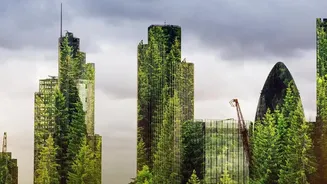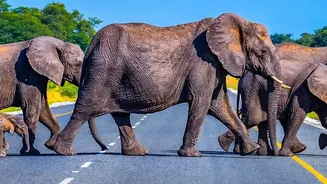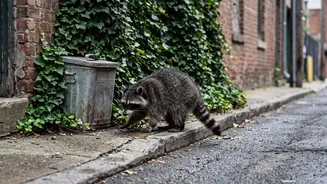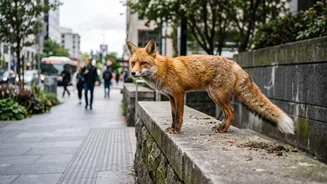






The flash of a fox darting across a quiet street at 2 a.m. or the sight of monkeys navigating power lines is becoming a common urban spectacle. Across the world, wildlife isn't just surviving in our cities—it's actively adapting to them.
The Night Shift
One of the most
significant changes scientists have observed is a shift in timing. To avoid the hustle and bustle of human activity, many animals that would naturally be active during the day or at dawn and dusk have become increasingly nocturnal. A global analysis of 62 mammal species, including coyotes, wild boars, and even tigers, found a consistent pattern: animals are working the night shift to minimise their interactions with people. This strategy, known as temporal partitioning, essentially allows humans and animals to share the same space by using it at different times. This isn't a small adjustment; it's a fundamental reordering of an animal's life, driven by the constant presence of people, cars, and our daily routines. For many species, from black bears in suburbs to coyotes in city parks, the night offers a quieter, safer time to find food and move around.
A New Urban Menu
Cities offer a veritable feast for animals clever enough to exploit it. Many species have become dietary generalists, changing what they eat to take advantage of the abundant food supplied by humans. This includes everything from discarded fast food and overflowing rubbish bins to ornamental fruit trees planted in parks and gardens. Urban foxes, for instance, have shifted from hunting wild prey to scavenging processed foods. In New Delhi, monkeys have become bold enough to steal food directly from people, while Sydney's white ibises earned the nickname 'bin chickens' for their talent in raiding trash. This dietary flexibility is a key survival trait, but it's not without consequences. While calorie-rich, human food is often nutritionally poor for wildlife and can affect everything from their gut health to their immune systems over the long term.
Getting Bolder and Smarter
Constant exposure to non-threatening humans is leading many urban animals to lose their natural fear. This process, called habituation, is why you might see squirrels or deer in a city park that barely flinch as people walk by, whereas their rural cousins would flee instantly. Global studies have shown that animals in cities consistently tend to be bolder, more exploratory, and more willing to take risks than their counterparts in the countryside. Some researchers believe that the complex, ever-changing urban environment may even be selecting for smarter, more innovative individuals. Animals that can solve novel problems—like the raccoons in Toronto that have learned to defeat 'animal-proof' bins or the cockatoos in Sydney that figured out how to open them—are the ones that thrive. This suggests cities are acting as a powerful force of natural selection, favouring the boldest and most adaptable minds.
Singing a Different Tune
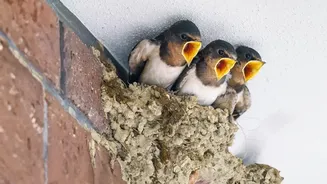
The adaptation of urban wildlife isn't just about what they do; it's also about how they communicate. Cities are incredibly noisy places, and the low-frequency rumble of traffic and construction can easily drown out animal calls. In response, many bird species have literally changed their tune. Studies on species like the house finch, great tit, and white-crowned sparrow have found that urban birds often sing at a higher pitch than their rural relatives. By shifting their songs to a higher frequency, they avoid being masked by the low-frequency noise of the city, ensuring their calls to attract mates and defend territory can still be heard. Some birds even sing louder or change the timing of their songs, starting earlier in the morning before the city fully wakes up.
Evolution in the Concrete Jungle
These behavioural shifts are more than just learned tricks; they can be the first step in rapid evolution. Scientists are observing physical and genetic changes in some urban species, a phenomenon known as 'human-induced rapid evolutionary change'. For example, crested anole lizards in Puerto Rico have evolved longer limbs and stickier toe pads, which help them grip smooth urban surfaces like painted walls and glass. In New York, some white-footed mice and brown rats show genetic changes that may help them better digest fatty, processed human foods. These are not slow, million-year processes. The powerful selective pressures of the city—new foods, new dangers, new surfaces—are accelerating evolution, demonstrating the remarkable resilience of life in the most unexpected of environments.