






The World Before The Anomaly
There was a time when 25 goals in a season could win a player the Ballon d'Or. In 2003, Pavel Nedvěd won it with 14 goals. In 2006, Fabio Cannavaro, a defender, was crowned the world's best player primarily for his World Cup heroics. These were giants
of the game, defined by influence, style, and decisive moments. Scoring was a key metric, but it wasn't the only one, and the numbers were grounded in a reality that held for decades. A striker hitting 30 goals was exceptional; a winger scoring 20 was world-class. This was the accepted benchmark for footballing excellence.
Redefining The Numbers Game
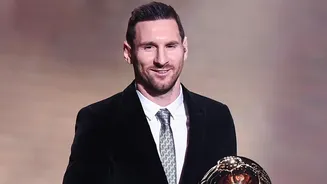
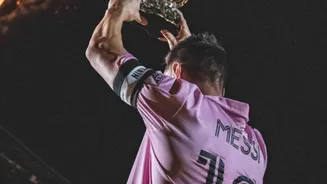
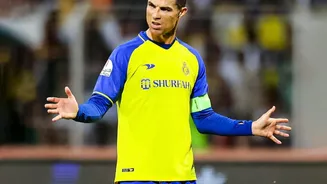
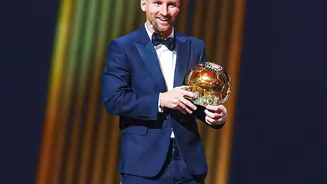
Then came the statistical explosion. Messi and Ronaldo didn't just raise the bar; they launched it into another orbit. What was once a career-defining season became their average output. Suddenly, 50-goal campaigns were not just possible, but expected from the world's best. In the 2011-12 season alone, Messi scored an astonishing 73 goals in all competitions for his club. Ronaldo, in response, turned goalscoring into a relentless industrial process, breaking Real Madrid's all-time scoring record in a fraction of the games it took the previous holder, Raúl. Between 2008 and 2017, the two men shared ten consecutive Ballon d'Or awards, creating a duopoly that turned the sport's highest individual honor into a private duel. Their combined career goal tally now exceeds 1,800, a figure that has made fans and pundits reassess all prior records.
The New Standard of Longevity
Perhaps their most profound impact is on the idea of a player's peak. Previously, a world-class footballer might dominate for three to five seasons. Messi and Ronaldo have maintained their otherworldly standards for nearly two decades. Their sustained excellence into their mid- and late-30s has shattered expectations about career longevity. They have both played in six different World Cup tournaments, a testament to their incredible durability and adaptation. Ronaldo, known for his obsessive physical conditioning, became a model for athletic persistence. Messi, once thought to rely purely on natural genius, also adapted his game and fitness regimen to continue competing at the highest level well beyond an age when past greats had retired. This endurance has created a new expectation: true greatness now requires not just a brilliant peak, but a long, consistent reign.
A Rivalry That Fueled a Global Obsession
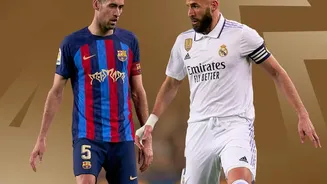
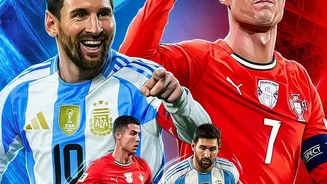
The nine seasons they spent on opposite sides of the Real Madrid-Barcelona rivalry turned El Clásico into the world's most-watched club fixture. This consistent, high-stakes battle didn't just elevate their own performances; it transformed global football culture. The rivalry propelled the sport into the forefront of social media, where every goal, record, and statistic was debated by a global fanbase. It created a narrative that transcended team loyalty, forcing a generation of fans to pick a side. This constant comparison, fueled by the media and the players' own relentless drive to outperform one another, had a positive effect on their output, pushing them to break records weekly. They made individual brilliance a central storyline in a team sport on a scale never seen before.
Two Prototypes of Perfection
Beyond the numbers, they also offered two distinct templates for the 'perfect' player. Ronaldo embodied the ultimate athlete: a combination of speed, power, and aerial prowess, honed through relentless dedication. He proved that a winger could evolve into the most complete goal-scorer in history, effective from anywhere on the pitch. Messi, by contrast, was the natural artist: a playmaker and goalscorer in one, whose dribbling, vision, and creativity seemed to defy tactical analysis. He redefined the 'false nine' role, demonstrating how a team's most lethal scorer could also be its creative hub. Coaches worldwide have since adapted their tactics, influenced by the flexible roles these two perfected. Their differing styles proved there wasn't one way to be the greatest, but two.