




Meet Pushpak: India's Space Shuttle
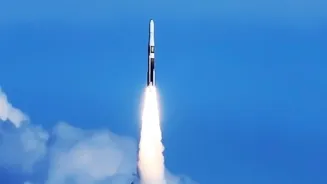
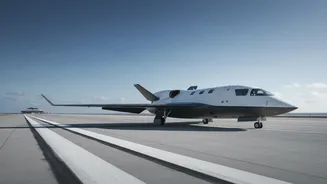
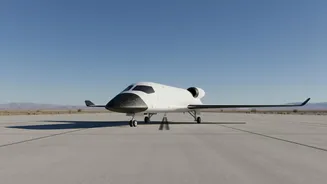
At the heart of this revolution is a winged vehicle named 'Pushpak'. It’s the core of ISRO's Reusable Launch Vehicle (RLV) program. Unlike traditional rockets that are used once and then discarded as expensive junk in the ocean or atmosphere, Pushpak is designed
to be used again and again. Think of it less like a conventional firework-style rocket and more like a space plane. It will be launched vertically, attached to a booster, but will re-enter the atmosphere and land horizontally on a runway, just like an aircraft. This shift from a disposable model to a reusable one is the key to making space access more affordable and sustainable.
How It Saves Crores
The fundamental economics of rocketry are brutal. The most sophisticated and expensive components of a launch vehicle are its powerful engines, complex avionics, and flight control systems, most of which are in the first or booster stage. In a traditional launch, all this high-value hardware is lost after a single use. It’s like buying a brand new car, driving it once, and then throwing it away. The RLV changes this entire equation. By recovering the vehicle after a mission, ISRO can refurbish and reuse these critical systems. This reusability is expected to dramatically cut launch costs. ISRO's goal is ambitious: to reduce the cost of placing a kilogram of payload into Low Earth Orbit by up to ten times. This would make India one of the most competitive players in the global commercial launch market.
Mastering the Autonomous Landing
The most challenging part of this entire process is getting Pushpak to land safely on its own. The vehicle re-enters the atmosphere at hypersonic speeds and must autonomously guide itself to a specific runway, without a pilot. To prove this capability, ISRO has conducted a series of crucial tests known as the Landing Experiments (LEX). In these tests, a prototype of Pushpak was carried to an altitude of 4.5 kilometers by an Indian Air Force Chinook helicopter and then released. From there, the vehicle had to navigate and land entirely on its own. The most recent tests, including the final one in June 2024, were successful, with Pushpak executing complex manoeuvres and landing precisely on the runway centerline, even in challenging wind conditions. This demonstrated ISRO's mastery over the critical autonomous navigation and control systems needed for the real mission.
The Technology Behind the Touchdown
Pushpak’s successful landings are made possible by a suite of advanced, indigenously developed technologies. It uses a multi-sensor fusion approach, combining data from various systems to navigate with pinpoint accuracy. These include inertial sensors, a radar altimeter to precisely measure height, and India's own NavIC satellite navigation system. This 'brain' allows the vehicle to make real-time corrections to its flight path, lining itself up perfectly for a high-speed landing that can exceed 320 km/h before brake parachutes and landing gear brakes slow it down. The fact that the same winged body and flight systems were reused in later tests proves the robustness of the design.
A New Era for India in Space
The implications of this technology are enormous. Lower launch costs mean ISRO can launch more satellites more frequently. This translates to better services for the nation, including enhanced communication networks, more accurate weather forecasting, improved disaster management, and advanced earth observation for national security. It also opens the door for more ambitious projects, such as supporting the future Bharatiya Antariksh Station (Indian Space Station) and undertaking deep-space missions. By making access to space more economical, ISRO is not just saving money; it is paving the way for a future where India is a leading power in space exploration and commerce.