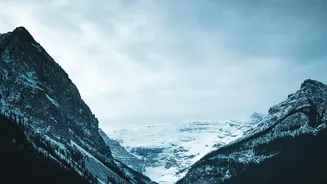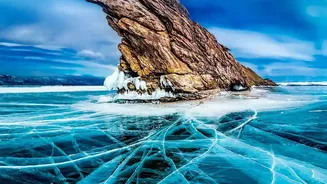

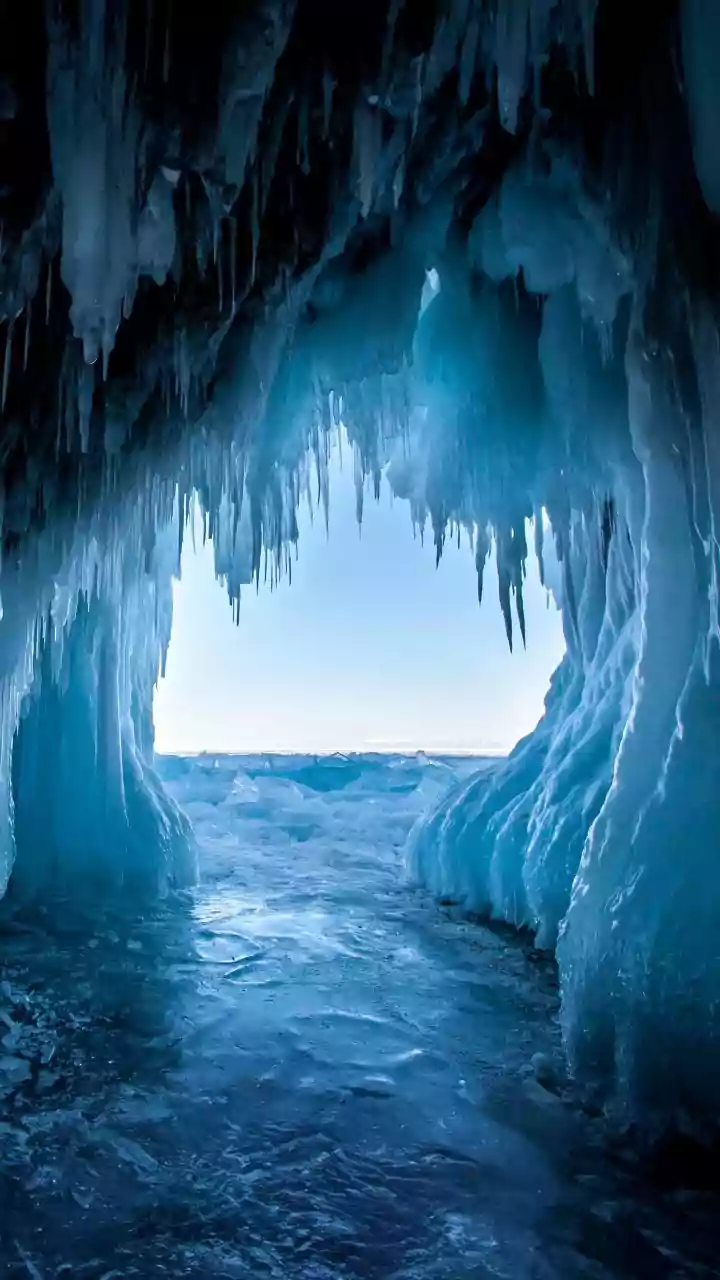
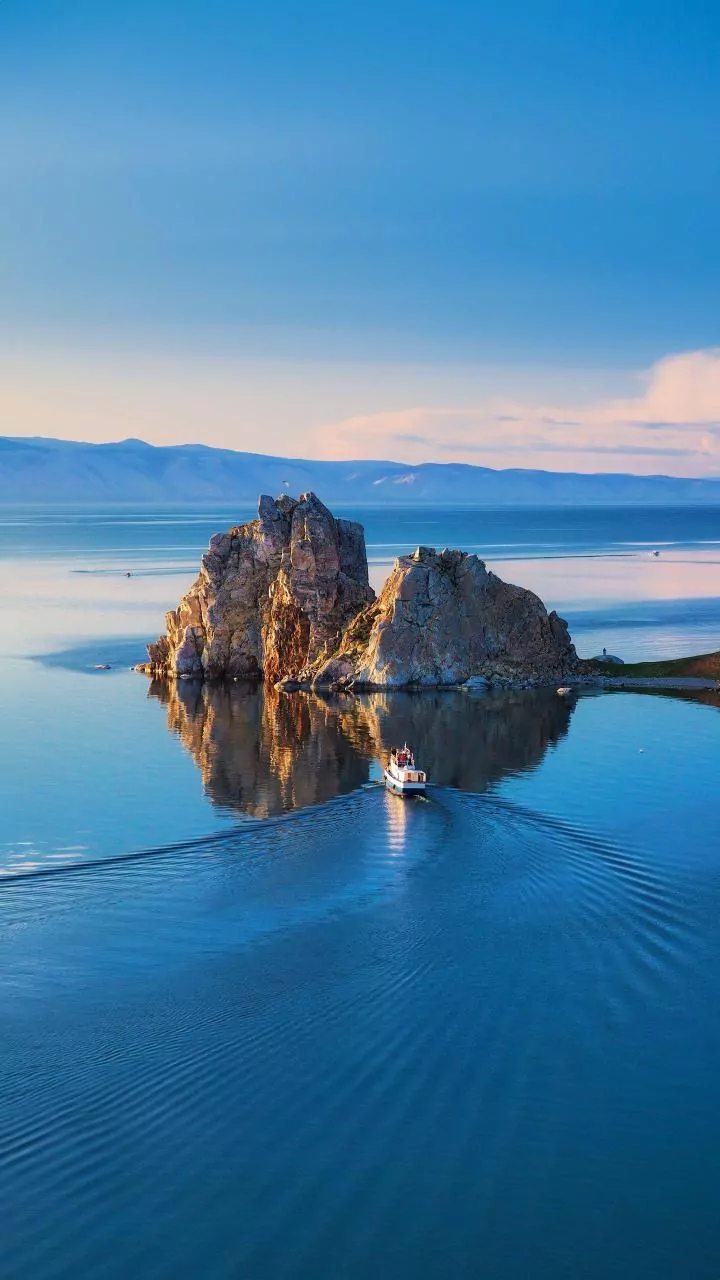


Lake Baikal, Russia
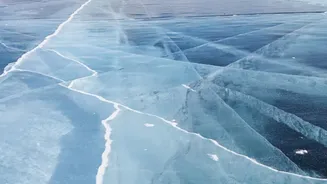
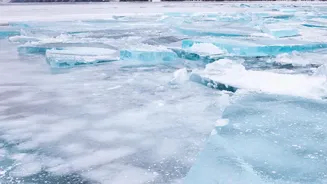
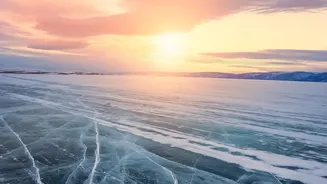
The world's oldest and deepest lake, Siberia's Lake Baikal, becomes a natural art gallery in winter. Its famously pure water freezes into a transparent sheet up to two metres thick, allowing visibility down to 40 metres. The real showstoppers are the
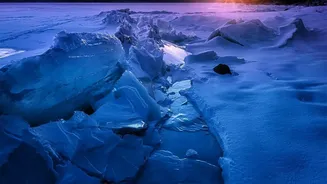
massive shards of turquoise ice, called hummocks, that jut from the surface like giant crystals when the ice cracks and refreezes. This phenomenon, combined with unique circular ice rings formed by warm eddies below, creates a landscape that feels truly otherworldly.
Abraham Lake, Canada
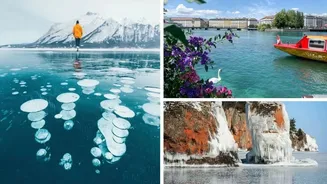
In Alberta, the man-made Abraham Lake is world-famous for a captivating spectacle: frozen methane bubbles. As bacteria on the lakebed decompose organic matter, they release methane gas. In winter, these rising bubbles are trapped at various depths as the water freezes, creating vertical stacks of white orbs suspended in the clear ice. Strong winds often sweep the lake's surface clear of snow, providing an unobstructed view of this strange and beautiful natural process.
Jökulsárlón, Iceland
Jökulsárlón is not a typical lake but a glacial lagoon on Iceland's south coast, where it presents a scene straight out of the ice age. Giant icebergs calve from the Breiðamerkurjökull glacier and float serenely in the deep, chilly water. These luminous blue and white sculptures drift towards the Atlantic, eventually washing up on the adjacent black sand shore, known as Diamond Beach. The contrast between the sparkling ice and dark volcanic sand makes it one of the most photographed sights in Iceland.
Lake Louise, Canada
Nestled in Banff National Park, Lake Louise is celebrated for its stunning turquoise water in summer, but its winter persona is just as magical. From around December to April, the lake freezes solid, transforming into what many call the world's most scenic outdoor ice rink. Maintained daily by the nearby Fairmont Chateau, the rink is set against the dramatic backdrop of the Victoria Glacier and snow-covered Rocky Mountains, offering an unforgettable skating experience.
Lake Superior, USA/Canada
The largest of North America's Great Lakes, Lake Superior puts on a dramatic winter display. While a full freeze is rare, its shoreline offers incredible sights. Most famous are the ice caves of the Apostle Islands in Wisconsin. In winters cold enough for safe access, the sea caves along the sandstone cliffs are transformed into magical chambers adorned with frozen waterfalls and colossal icicles. However, access is rare and depends on extremely specific and stable ice conditions.
Blue Pond (Aoiike), Japan
Located on the island of Hokkaido, the man-made Blue Pond is known for the ethereal, mineral-rich water that gives it its name. In winter, this changes completely. The pond freezes and is blanketed in snow, with the skeletal, pale trunks of larch trees rising from the ice. The scene is made even more mystical by a nightly illumination event that runs from November to April, bathing the frozen forest in shifting coloured lights.
Lake Bled, Slovenia
Lake Bled, with its iconic island church and clifftop castle, is a fairy-tale setting in any season. In winter, a dusting of snow enhances its charm, creating a quiet, serene atmosphere. A complete freeze-over is a rare event, happening only in the coldest of winters, perhaps once a decade. When it does happen, locals and visitors sometimes venture onto the ice to walk or skate, experiencing the landmark from a truly unique perspective.
Lake Michigan, USA
Another of the Great Lakes, Lake Michigan develops a unique and sometimes treacherous feature known as shelf ice. This phenomenon occurs when waves push floating ice against the shoreline, where it freezes together in spectacular mounds and ridges. Though beautiful, the ice is not attached to the lakebed and can be unstable. In some conditions, waves breaking through holes in the shelf can create 'ice volcanoes' that spew water and slush.
Pangong Tso, India/China
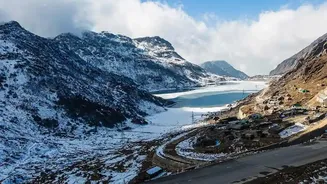
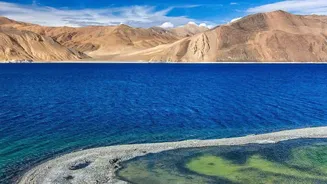
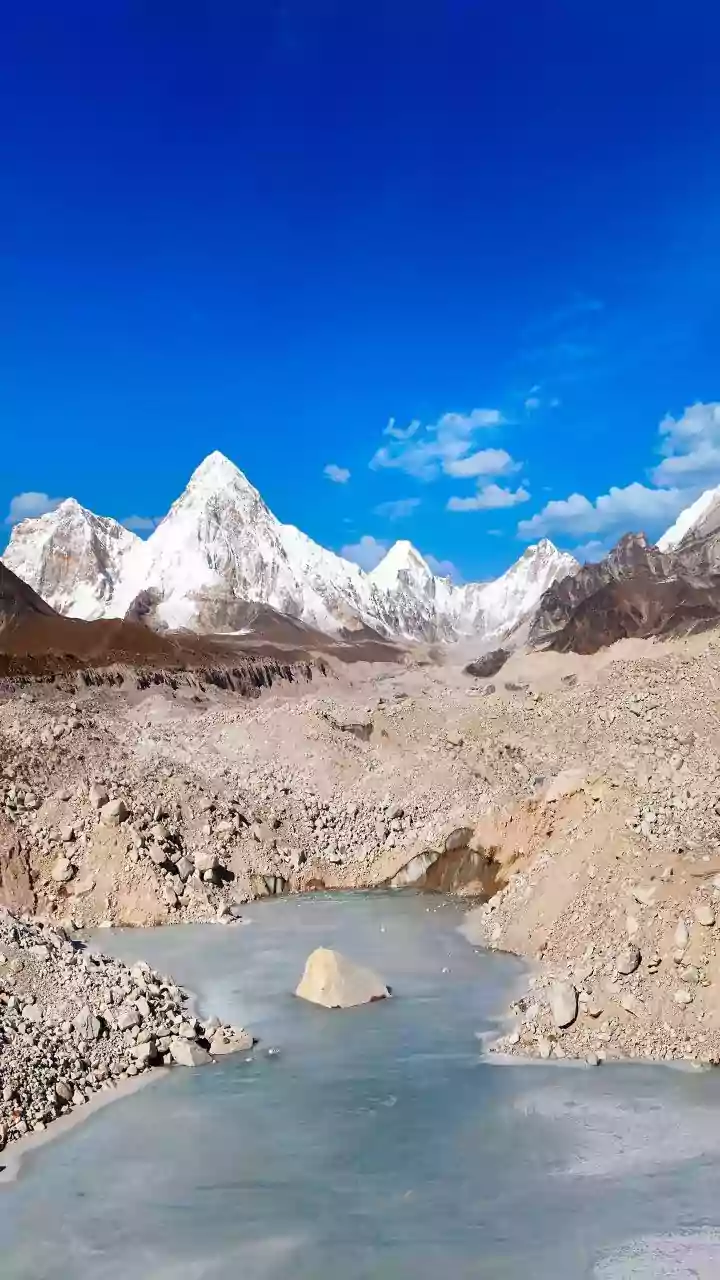
Stretching across the India-Tibet border at an altitude of over 4,350 metres, Pangong Tso is one of the world's highest saltwater lakes. Despite its salinity, the lake freezes completely solid during the harsh Himalayan winter from January to February. The vast, sparkling ice sheet reflects the surrounding snow-capped peaks, creating a breathtaking high-altitude panorama. It even hosts an annual frozen lake marathon, drawing endurance runners to its extreme environment.
Lake Päijänne, Finland
In the heart of Finland's Lakeland region, Lake Päijänne is a vast body of water that transforms into a winter playground. As Finland's second-largest lake, its frozen expanse becomes a prime destination for 'tour skating'—long-distance skating on natural ice. Marked trails guide skaters across the snowy landscape, offering a serene and invigorating way to explore the Finnish winter. Ice fishing and snowmobiling are also popular activities on its thick, reliable ice.