


The Sun’s Unseen Threat
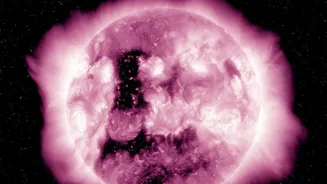
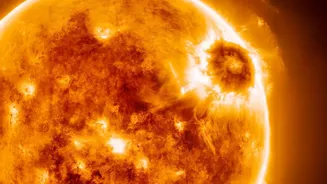
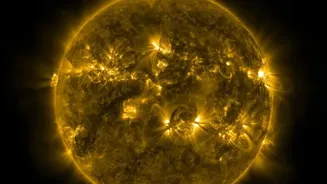
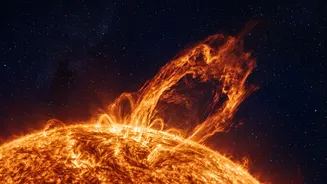
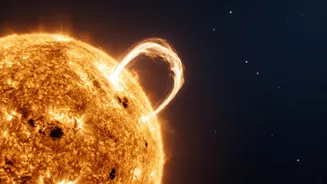
Solar storms are not science fiction. They are a regular feature of our star’s life. The most dangerous for us are coronal mass ejections, or CMEs. These are colossal eruptions of plasma and magnetic fields from the Sun's surface that hurtle through space
at immense speeds. While many miss Earth, a direct hit can have devastating consequences. When a CME collides with Earth's magnetic field, it can trigger a geomagnetic storm. A severe event, on the scale of the 1859 Carrington Event, could cripple our modern society. Such a storm could induce powerful electrical currents in our power grids, potentially frying transformers and causing blackouts that last for weeks or months. This could lead to a cascading failure of everything that relies on electricity, from water pumps and refrigeration to banking and transport.
A Race Against Time
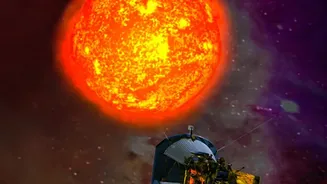
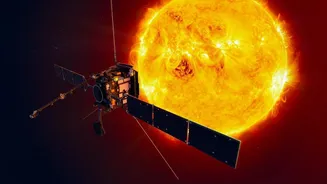
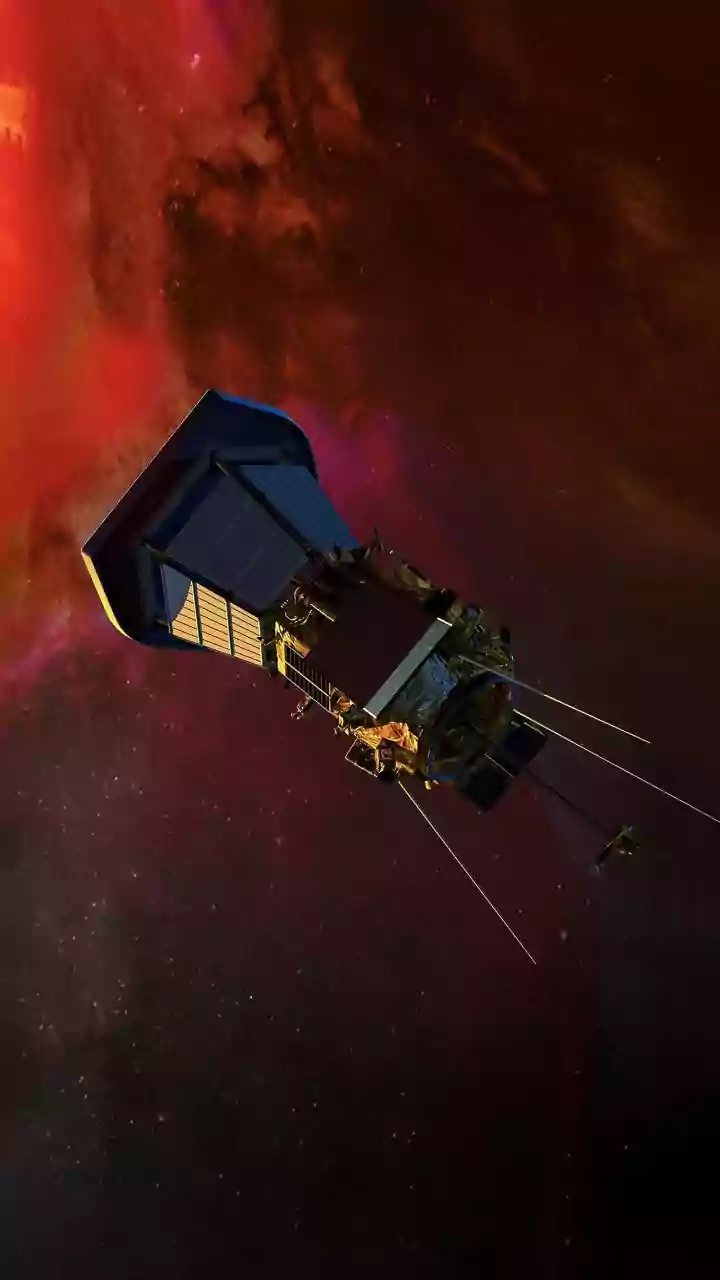
Until now, our best defence has been a network of satellites parked between the Earth and the Sun. These spacecraft act as our space weather buoys, directly sampling the solar wind as it rushes past. They can measure the speed, density, and magnetic orientation of an incoming CME. The problem is that this provides very little warning. For the fastest CMEs, the time between the satellite detecting the threat and the storm hitting Earth can be as short as 15 to 30 minutes. This gives grid operators and satellite controllers a franticly short window to take protective measures. For years, scientists have been searching for a way to get a better, faster, and more precise forecast.
Enter the Algorithm
This is where artificial intelligence is changing the game. Researchers, with support from organisations like NASA, have developed a groundbreaking AI model called DAGGER (Deep Learning Geomagnetic Perturbation). Instead of relying solely on human analysis, DAGGER uses deep learning to process data from solar-monitoring spacecraft in real time. The AI has been trained on vast amounts of historical data, teaching it to recognize the complex relationships between solar wind measurements and the resulting geomagnetic disturbances on Earth. By spotting these patterns instantly, the AI can do what takes human analysts hours or is simply too complex to compute quickly. A key researcher on the project, Vishal Upendran of the Inter-University Center for Astronomy and Astrophysics in India, noted that with this AI, it's now possible to make rapid and accurate global predictions.
The 30-Minute Warning
So what does this mean in practice? The DAGGER model can predict where a solar storm will strike anywhere on Earth and how severe its impact will be, all with a 30-minute advance warning. It can produce these highly specific forecasts in less than a second and update them every minute. When tested against two major solar storms that occurred in 2011 and 2015, the AI was able to quickly and accurately predict the impacts. This represents a monumental leap forward. It's the difference between seeing a blurry shape on the horizon and having a detailed map of an incoming threat, showing exactly which regions are in the most danger.
How a Warning Protects Us
Thirty minutes may not sound like much, but in the world of infrastructure management, it can be the difference between resilience and ruin. This warning acts like a planetary tornado siren. With this lead time, power grid operators can strategically take sensitive equipment offline to prevent it from being overloaded and destroyed. Satellite companies can reorient their billion-dollar assets to minimize damage from harmful radiation. Airlines can be alerted to potential communication and GPS disruptions. It shifts our stance from being reactive victims of space weather to proactive defenders of our technological backbone. This AI doesn't stop the storm, but it gives us the precious time needed to get to the digital cellar.