






The Glow of a Thousand Screens
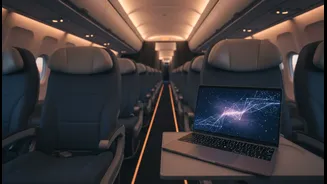
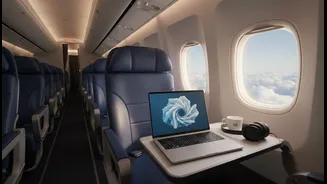
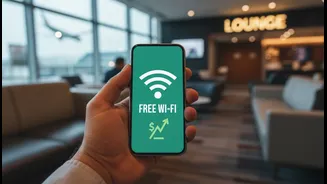
Step onto any flight in 2026, and you’ll notice it instantly. Before the safety briefing even begins, screens are aglow. But it’s no longer just about downloading a movie for the journey. With in-flight Wi-Fi becoming faster and more common, the cabin
has transformed into a floating co-working space, social club, and video arcade. While text-based messaging on apps like WhatsApp and iMessage has been possible for some time, the behaviour is escalating. It's the rapid-fire group chat notifications, the endlessly scrolling video feeds, and even the occasional video call that are starting to test the patience of fellow passengers. The issue isn't connectivity itself, but the public performance of it. Every notification alert, no matter how brief, pierces the shared quiet of the cabin—a space where dozens of strangers are trying to work, sleep, or simply endure in close quarters.
A Generational Divide at 30,000 Feet?
The headline's focus on "young travellers" isn't entirely without cause, though it's more about norms than malice. For a generation raised with a smartphone as a primary limb, the line between public and private communication is fundamentally different. Constant digital interaction is the baseline, and the concept of a space being 'offline' by default is fading. Where older passengers might see a flight as a forced period of quiet contemplation or single-tasking, younger flyers may see it as just another environment to multitask within. They aren't necessarily trying to be disruptive; they are operating under a different set of social rules, where digital presence is persistent. The friction arises when these new norms clash with long-standing expectations of travel etiquette, which prioritises communal peace over individual expression.
The Unwritten Rules of Airmanship
Airlines are caught in the middle. While most carriers in the U.S. and Australia still prohibit voice and video calls over Wi-Fi, citing passenger comfort and cabin decorum, the rules around messaging are less defined. Some, like British Airways, are now embracing full connectivity by partnering with providers like Starlink, allowing voice and video calls with the caveat that passengers should use headphones and keep their voices low. However, flight attendants, who are already tasked with managing a rise in unruly behaviour, express concern about having to police yet another source of passenger conflict. Their primary role is safety, and becoming the "cell phone police" distracts from that critical duty. This leaves a gap where etiquette must step in. United Airlines recently took a step by formalizing a rule requiring headphones for any device playing audio, giving crew clear authority to address noise disturbances.
Finding the Right Altitude for Your Alerts
So, what do reasonable boundaries look like? It starts with awareness. The first rule of a shared space is to act as if you are, in fact, sharing it. This means silencing your phone is no longer enough; you must also silence your notifications. Turning off alerts for messaging apps or putting your device on a 'Do Not Disturb' mode is a simple act of courtesy. If you’re watching videos or listening to music, headphones are non-negotiable—a rule some airlines are now enforcing. For messaging, consider the visual impact. The bright, flashing lights of a screen in a darkened cabin can be just as distracting as noise. Dimming your screen and avoiding frantic, high-speed typing can make a significant difference. And while some international carriers are beginning to allow video calls, the consensus among passengers remains clear: the airplane cabin is not the place for your FaceTime catch-up or your team meeting.