







A New STRIDE in Mars Exploration
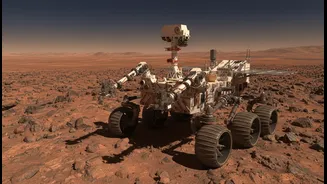
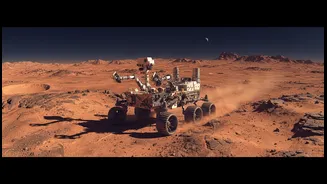
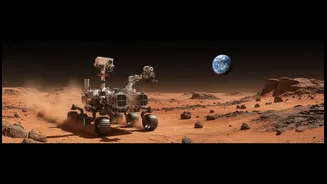
The future of Mars exploration isn't just about bigger rovers; it's about smarter, more agile, and more diverse robotic systems. That's the core idea behind NASA's recent contract awards under a new initiative called STRIDE, which stands for Science Transport
and Robotic Innovation for Deployment and Exploration. Announced on July 8, 2026, these public-private partnerships aim to develop new mobility technologies that will allow future missions to access challenging terrain, travel greater distances, and investigate scientifically rich areas that are currently out of reach. With a total potential value of around $17 million, these contracts task seven companies with creating the concepts that could one day become reality on the Martian surface.
AeroVironment: The Power of Flight
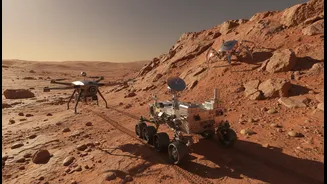
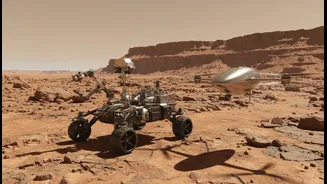
Known for its pioneering work on the Ingenuity Mars Helicopter, AeroVironment is a natural choice for advancing aerial exploration. While current rovers are limited to the ground, aerial platforms can quickly scout large areas, access steep crater walls, and provide a bird's-eye view for mission planning. This contract suggests NASA is serious about making aerial mobility a standard tool for future missions, moving beyond the initial proof-of-concept provided by Ingenuity. Expect AeroVironment to propose more advanced and capable rotorcraft designed for the thin Martian atmosphere.
Astrobotic & Intuitive Machines: Lunar Landings to Martian Mobility
Both Astrobotic and Intuitive Machines have become key players in NASA's Commercial Lunar Payload Services (CLPS) program, developing landers to deliver science to the Moon. Their inclusion in the STRIDE initiative shows NASA's interest in leveraging that expertise for the Red Planet. These companies have proven experience in developing robust systems for landing and operating in harsh off-world environments. Their focus will likely be on creating reliable and versatile surface mobility platforms—rovers or other wheeled explorers—that can safely carry and deploy scientific instruments across the Martian landscape.
Venturi Astrolab: A New Kind of Rover
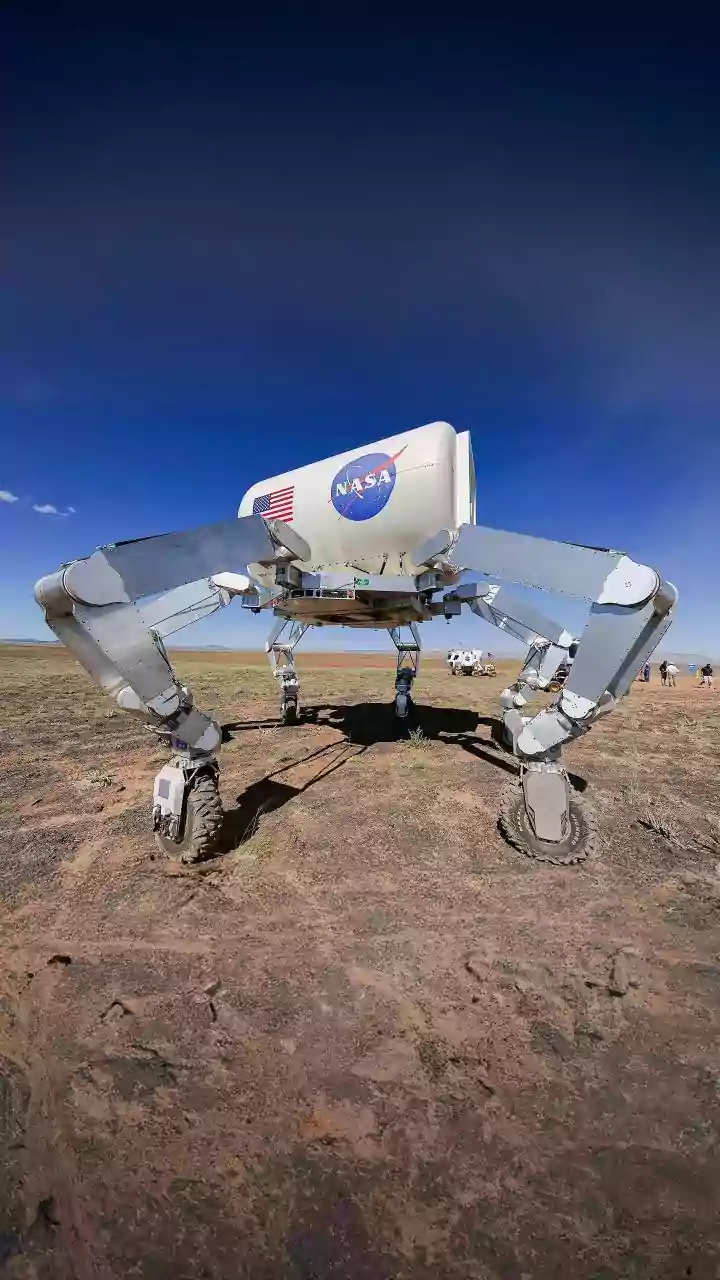
Venturi Astrolab is focused on creating highly capable rovers for both lunar and Martian exploration. Their Flexible Logistics and Exploration (FLEX) rover is designed to be a multi-purpose vehicle, capable of transporting cargo, science experiments, and eventually, astronauts. Astrolab's selection signals NASA's interest in developing larger, more versatile surface assets that go beyond the purely scientific rovers of the past. Their work could lay the foundation for the logistical backbone needed for a long-term human presence on Mars.
Honeybee Robotics: Masters of the Drill
For decades, Honeybee Robotics has been the go-to company for systems that drill, sample, and analyse planetary surfaces. Their technology has been a part of nearly every major Mars mission, including the rock-abrading tools on Spirit, Opportunity, and Curiosity, and the sample collection systems on Perseverance. Under the STRIDE contract, Honeybee will likely develop innovative mobility systems that are deeply integrated with scientific tools, potentially creating robots that can not only traverse difficult terrain but also perform complex sample acquisition and analysis in places no robot has gone before.
Ground Control Robotics: The Newcomer's Edge
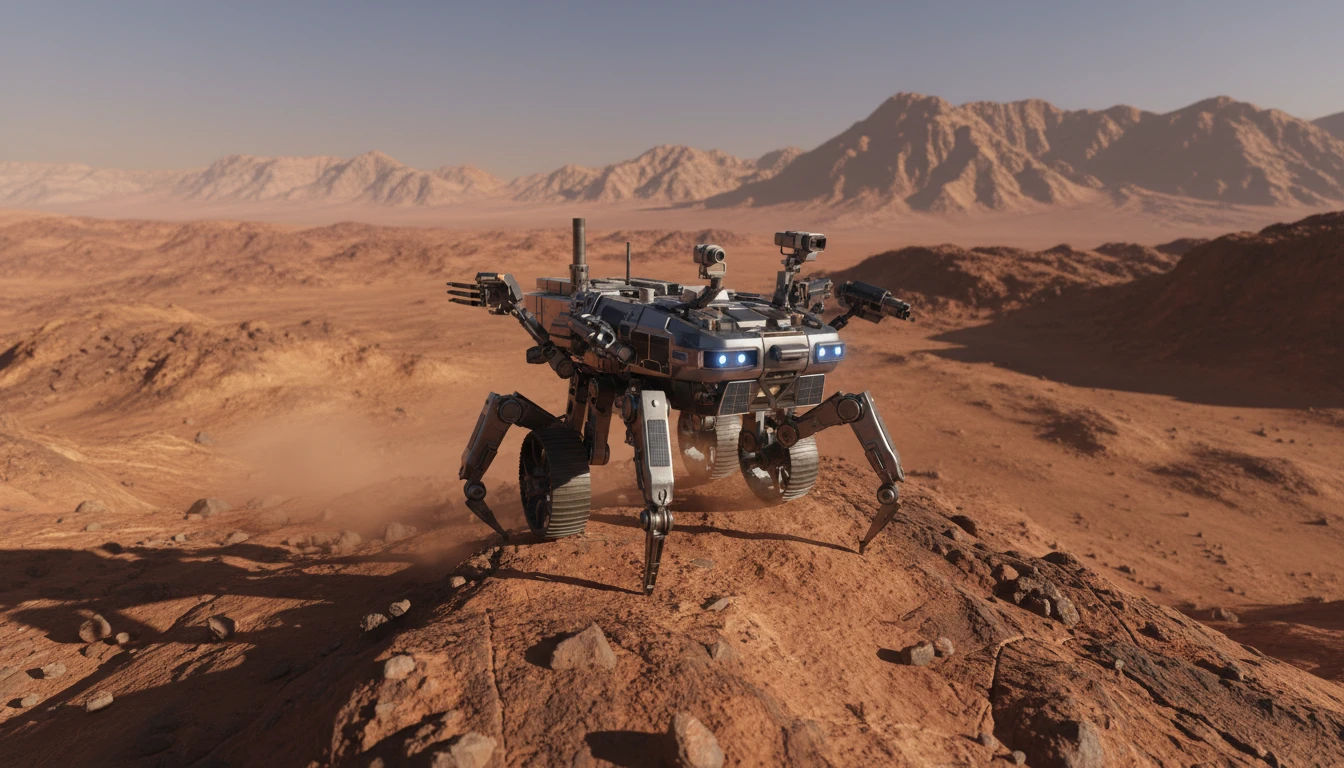
As one of the newer players in this lineup, Ground Control Robotics brings fresh perspectives to the challenge of planetary mobility. The inclusion of less-established companies is a deliberate part of NASA's strategy to encourage a diverse range of ideas and prevent stagnation. These smaller, agile firms can often propose more radical or specialised solutions that larger, more established contractors might overlook. Ground Control's work will likely focus on a specific niche or a novel approach to robotic locomotion on Mars.
MEI Technologies: Systems and Integration
MEI Technologies, which merged with Alpha Space to form Aegis Aerospace, has a long history of providing engineering and mission integration services to NASA. Their role in the STRIDE initiative is likely to focus on the bigger picture: how these new mobility systems will work as part of a cohesive mission architecture. This includes everything from deployment and communication to ensuring the robotic platforms can effectively support the scientific objectives of a future Mars campaign.