



The Allure of Hidden Oceans
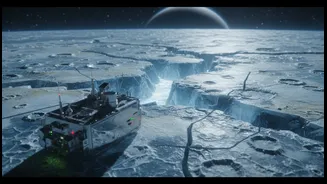
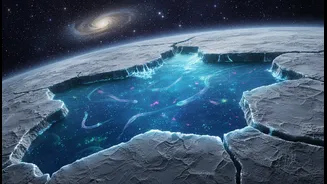
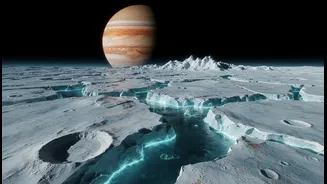
For decades, scientists have been captivated by the ocean worlds of our outer solar system. Moons like Jupiter's Europa and Saturn's Enceladus are covered in thick shells of ice, but strong evidence suggests they hide vast, liquid water oceans beneath.
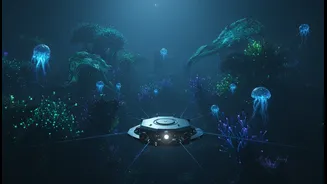
These oceans are considered prime candidates for hosting extraterrestrial life because they likely contain the three key ingredients: liquid water, essential chemical elements, and an energy source, possibly from hydrothermal vents on their seafloors. Missions like NASA's Europa Clipper, now en route, were designed with this tantalizing possibility in mind, equipped with instruments to analyze the chemistry of these distant worlds. The discovery of plumes of water vapor erupting from Enceladus further fueled excitement, offering a potential way to directly sample its ocean without needing to drill through miles of ice.
A Complication in the Chemistry
The central strategy for finding life has been to look for biosignatures—molecules that are typically produced by living things. This includes things like amino acids, which are the building blocks of proteins, and other complex organic molecules. The problem, as a growing body of research highlights, is that many of these so-called biosignatures can be created by non-biological, or abiotic, processes. Recent studies show that a geological process called serpentinization is a powerful engine for creating organic molecules without any help from life. This happens when water interacts with certain types of rock, producing hydrogen. This hydrogen can then react with carbon dioxide to form methane and other more complex organic compounds, mimicking the byproducts of microbial life. This means that finding these molecules on an ocean world isn't the smoking gun for life that we once thought it might be.
The Danger of a False Positive
The realization that life-like molecules can form through simple geology presents a major challenge: the risk of a false positive. Imagine a future mission to Europa or Enceladus detecting a complex soup of organic compounds. The initial excitement would be immense, but scientists would face a difficult task: proving that these molecules were made by alien microbes and not just cooked up by rock and water over millions of years. This has happened before in the history of science, where initial, exciting claims of life detection—from Martian 'canals' to supposed biogenic markers in Martian meteorites—were later found to have non-biological explanations. To avoid a similar mistake, the scientific community is now focused on developing a much more rigorous standard of evidence before making any grand announcements.
How to Design a Smarter Life Test
So, how can we tell the difference between alien life and weird chemistry? The answer isn't to look for a single 'magic' molecule, but to search for patterns. Life is picky. On Earth, living organisms almost exclusively use 'left-handed' versions of amino acids to build proteins. Finding a strong preference for one-handedness (a concept called chirality) on another world would be a very strong indicator of life, as non-biological processes tend to produce a 50/50 mix of left- and right-handed molecules. Another strategy is to look at the distribution and abundance of molecules. If certain compounds are found in quantities that can't be explained by geological models alone, it could point to a biological source pumping them out. Scientists are now focused on establishing this 'abiotic baseline'—understanding the full range of what geology can do, so that anything that falls outside that range becomes truly interesting.
A More Refined Search for Life
This new understanding is directly influencing upcoming missions. The instruments aboard NASA's Europa Clipper, such as its mass spectrometers, are designed to do more than just detect the presence of organic molecules; they will analyze their composition and environment in detail. The goal is to build a complete picture of Europa's chemistry to distinguish what is geologically plausible from what might be biologically produced. Far from being a setback, this deeper level of scrutiny makes the search for life more robust. It forces scientists to sharpen their tools and their thinking. It ensures that if and when a discovery is announced, it will be built on a foundation of solid, defensible evidence. The hunt for life has become harder, but also smarter and ultimately more meaningful.