




The Challenge: Stargazing Meets the Monsoon
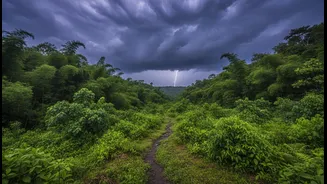
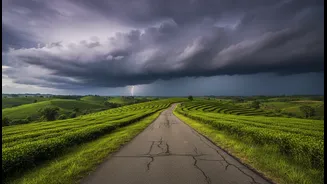
Let's be clear: monsoon is not traditionally prime stargazing season in most of India. Heavy cloud cover, high humidity, and frequent rain can frustrate even the most patient sky-watcher. The winter months of November to February generally offer the clearest,
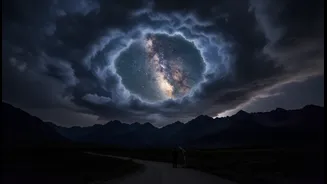
crispest skies. However, that doesn't mean you should pack away your curiosity entirely. The monsoon skies are dynamic. Breaks in the clouds are common, and the periods just after a rain shower can sometimes offer surprisingly clear air, washed clean of dust and pollutants. The key is to transform your mindset from planning a long, uninterrupted session to seizing brief, magical windows of opportunity. It’s a game of patience and timing.
Your Golden Ticket: The New Moon Window
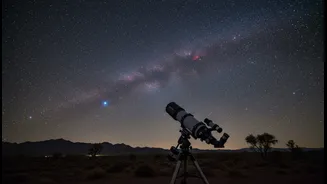
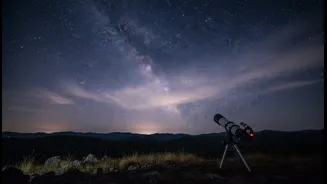
The single biggest ally in any stargazer's toolkit is a dark sky, and the darkest skies happen around the New Moon, when our lunar neighbour isn't casting its bright glow across the night. In July 2026, the New Moon falls on Tuesday, July 14th. This date marks the centre of the best stargazing window for the month. The ideal period for deep-sky viewing, like spotting the Milky Way, generally spans the week before and the week after the New Moon. During this time, from roughly July 7th to July 21st, the minimal moonlight gives you the best possible chance of seeing fainter stars and celestial objects whenever the clouds decide to part.
What to Look For: Celestial Events in July
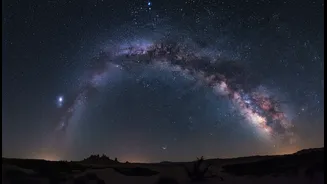
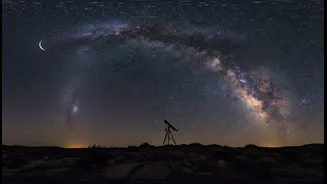
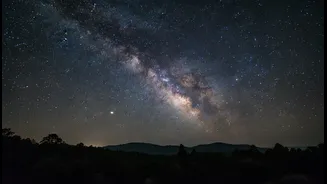
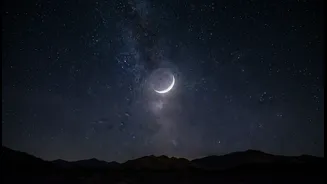
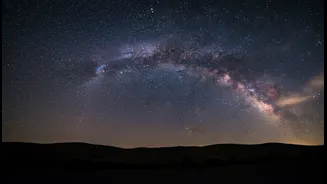
Even with the challenge of clouds, July 2026 has some rewarding targets. Throughout the month, the bright band of the Milky Way will be arching across the sky, and the dark nights around the new moon are the best time to try and spot it. Look for it as a faint, glowing river of light in the darkest part of your sky. Early in the month, on the mornings of July 7th and 8th, you can see the Moon near Saturn. On July 11th, a beautiful celestial triangle will form before sunrise, with the crescent moon joining reddish Mars and the Pleiades star cluster. While two meteor showers, the Southern Delta Aquariids and the Alpha Capricornids, peak at the end of the month, the bright light from the nearly Full Moon on July 29th will likely wash out all but the brightest meteors this year.
The Monsoon Playbook: Tips for Success
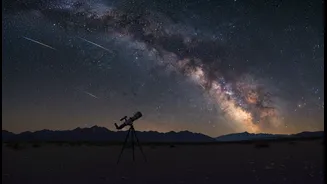
Winning the monsoon stargazing game requires a specific strategy. First, become a weather-watcher. Use weather apps that show real-time cloud cover and satellite imagery to spot incoming breaks. Be prepared to act fast. Keep your gear, whether it's just a pair of binoculars or a small telescope, ready to go. Second, manage your expectations. A whole night of clear skies is unlikely; an hour or even 30 minutes is a major victory. Use stargazing apps on your phone to quickly identify what's visible. Finally, let your eyes adapt. It takes about 20-30 minutes for your eyes to fully adjust to the darkness, so avoid looking at bright phone screens or other lights. Using a red-light torch can preserve your night vision.
Location, Location, Location
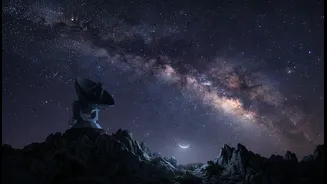
Getting away from city light pollution is always the number one rule of stargazing, and it's even more critical during the monsoon. But where to go? Some parts of India are more favourable than others. High-altitude desert regions that fall in a rain shadow, like Spiti Valley in Himachal Pradesh or parts of Ladakh, offer remarkably clearer skies even in July and August. These are premier destinations for serious astro-tourists. For those closer to the Western Ghats, places like Malshej Ghat in Maharashtra or elevated clearings in Coorg, Karnataka, can offer windows of opportunity between spells of rain. The key is finding a location with low light pollution and being willing to wait for a lucky break in the weather.