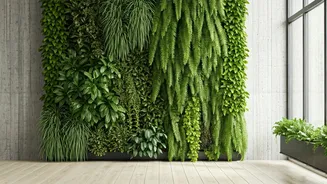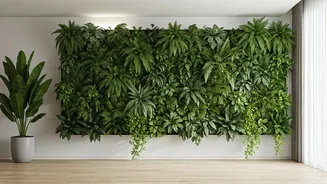





What is a Biophilic Green Wall?
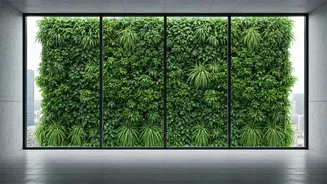
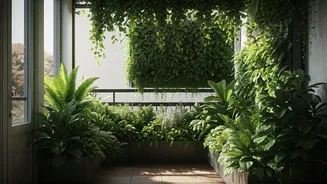
At its heart, 'biophilia' is the idea that humans have an innate tendency to seek connections with nature. Biophilic design is the practice of incorporating nature into our built environments to satisfy this need. A vertical green wall, often called a living
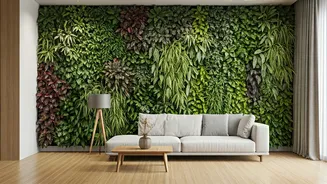
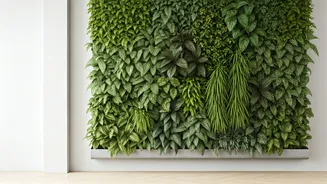
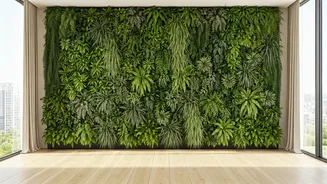
wall, is a prime example of this principle in action. It's essentially a garden that grows vertically, either indoors or out, on the face of a wall. Unlike a simple pot of ivy, a green wall is a fully integrated system of plants, soil or a growing medium, and often an automated irrigation system, creating a lush, seamless tapestry of foliage.
The Benefits: More Than a Pretty Face
The appeal of a green wall goes far beyond its striking aesthetics. These living installations are mini-ecosystems that work hard for your well-being. Studies have consistently shown that exposure to plants and natural elements can significantly reduce stress and anxiety levels, creating a calmer, more restorative home environment. The plants in a green wall act as natural air purifiers, filtering out common indoor pollutants like formaldehyde and benzene, thereby improving air quality. Furthermore, the mass of plant life and the substrate they grow in are excellent at absorbing sound, which can help dampen ambient noise in open-plan homes or apartments in bustling city centres. For those working from home, a view of nature has been linked to increased focus and productivity.
Types of Vertical Green Walls
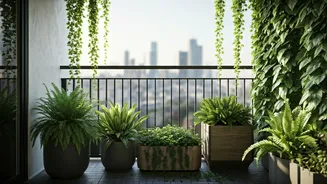
There isn't a one-size-fits-all solution for green walls, which allows for customisation based on space, budget, and commitment level. The most common types are: 1. Panel/Modular Systems: These consist of pre-planted panels or trays that are mounted onto the wall. They are often used for larger installations and can create an instant, dense wall of green. They typically have sophisticated, built-in irrigation. 2. Felt Pocket Systems: This system uses a sheet of felt, often made from recycled materials, with pockets sewn into it. Plants are inserted into these pockets. They are generally more affordable and flexible for smaller, DIY-friendly projects but may require more manual watering. 3. Trellis Systems: The simplest form of a vertical garden involves installing a trellis or wire grid on a wall and training climbing plants like money plants (Pothos), philodendrons, or certain types of ivy to grow up it. This is a low-cost, low-tech way to achieve a green wall effect over time.
Key Design and Placement Considerations
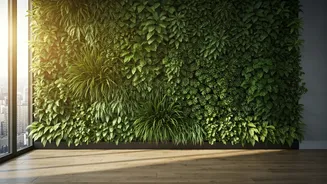
To ensure your green wall thrives, careful planning is essential. The most critical factor is light. Most plants need ample light to flourish, so placing your wall near a large window or in a well-lit atrium is ideal. If natural light is insufficient, you will need to install dedicated grow lights. Secondly, consider the structural integrity of the wall; a fully saturated green wall can be very heavy, so ensure your wall can support the weight. Access to a water source and a drainage solution is also crucial, especially for larger, automated systems. From a design perspective, a green wall serves as a powerful focal point. Use it to bring life to a large, blank wall in a living room, add serenity to a home office, or create a stunning welcome in an entryway.
The Reality of Maintenance
A green wall is a living feature, not a static piece of art. It requires ongoing care. While many systems come with automated irrigation and nutrient delivery, you will still need to perform regular checks. This includes monitoring for pests, pruning overgrown or dead foliage to maintain its appearance and health, and ensuring the irrigation system is functioning correctly. The specific plants chosen for your wall will dictate the exact level of care, so it's wise to select species that are well-suited to your indoor environment. While it is a commitment, the daily joy and calming presence it brings to a home often far outweigh the maintenance tasks.