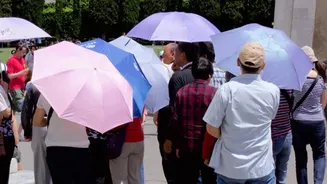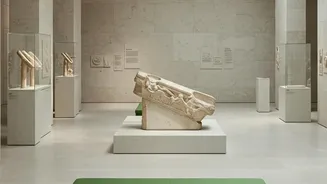





The dream of seeing masterpieces in Paris often clashes with reality: long queues and crowded rooms that turn art appreciation into an ordeal. But beyond the blockbuster galleries lies a calmer, more intimate world of artistic discovery.
The Allure of the Undiscovered
France’s flagship
museums, like the Louvre and Musée d'Orsay, are victims of their own success. The Louvre, designed for four million visitors annually, now handles more than double that, leading to what its own director has called a 'physical ordeal'. Staff have even held walkouts to protest overcrowding. While these institutions house world-famous treasures, the experience can be draining. In contrast, smaller museums offer a breath of fresh air. Often housed in historic mansions or former artist studios, they provide a unique sense of place and tranquility. These spaces allow for quiet contemplation, letting you connect with art without jostling for a view. They trade blockbuster names for specialised collections and an atmosphere that feels less like a tourist attraction and more like a personal discovery.
Musée Marmottan Monet: An Impressionist Haven
Tucked away in the quiet 16th arrondissement, the Musée Marmottan Monet is an essential detour for any Impressionist fan. While the Musée d'Orsay presents the broad sweep of the movement, the Marmottan offers a deep, personal dive into its namesake. It holds the world's largest collection of Claude Monet's works, including the seminal painting 'Impression, soleil levant' ('Impression, Sunrise'), which gave the movement its name. Housed in a former hunting lodge, the museum's atmosphere is serene and residential. Its crown jewel is a custom-built basement gallery displaying Monet's late-career Water Lilies, including monumental works from his Giverny garden, painted when his eyesight was failing. Here, you can sit and absorb the near-abstract beauty of these final pieces in a peaceful setting that major museums simply cannot replicate.
Musée Jacquemart-André: A Grand Private Home
Visiting the Musée Jacquemart-André is like stepping back into the Gilded Age. Located on the grand Boulevard Haussmann, this opulent 19th-century mansion was the home of collectors Édouard André and Nélie Jacquemart. They bequeathed their home and its spectacular collection to the public, preserved exactly as they had arranged it. The museum boasts an incredible array of Italian Renaissance art, with works by Botticelli, Donatello, and Mantegna, alongside Dutch masters like Rembrandt. But the true star is the house itself, from the stunning winter garden with its double-helix staircase to the lavish private apartments. It remains one of Paris's best-kept secrets, offering a world-class collection without the crowds, allowing you to experience the art as its original owners did: as part of a magnificent home.
Musée Rodin: Art in the Open Air
For a truly unique and calming experience, the Musée Rodin offers a perfect blend of indoor galleries and outdoor splendor. Located in the 18th-century Hôtel Biron, where Auguste Rodin once lived and worked, the museum is as famous for its seven-acre garden as for its interior collection. While the mansion displays many of his works, including 'The Kiss', the gardens provide a tranquil space to wander among his most iconic sculptures. Masterpieces like 'The Thinker' and 'The Gates of Hell' are set against a backdrop of rose bushes, shady trees, and the distant dome of Les Invalides. This harmonious dialogue between sculpture and nature creates a peaceful, reflective atmosphere that feels worlds away from the city's hustle, offering a chance to appreciate Rodin's genius at a leisurely pace.
Beyond the Capital
The joy of discovering quieter museums isn't limited to Paris. In Nice, the Musée National Marc Chagall showcases the artist's vibrant, spiritual works in a building he helped design, while the nearby Musée Matisse offers an intimate look at the painter's life on the Riviera. The city of Lyon boasts the impressive Musée des Beaux-Arts, often called a 'mini-Louvre' for the quality and breadth of its collection, but with a fraction of the visitors. In Lille, the Palais des Beaux-Arts is another of France’s most significant fine arts museums, presenting European paintings by Rubens, Goya, and Delacroix in a grand but manageable setting. These regional powerhouses prove that exceptional art can be found across the country, often accompanied by the same calm and intimate viewing experience that makes smaller Parisian galleries so rewarding.