



Meet ChaSTE: The Lunar Thermometer
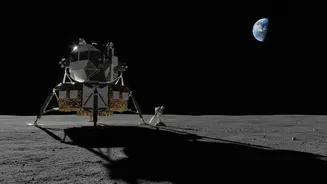
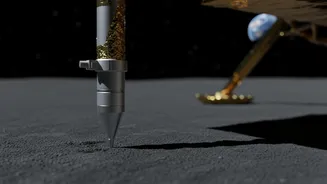
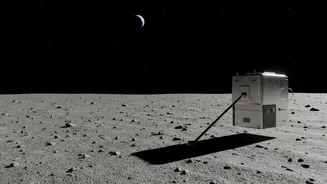
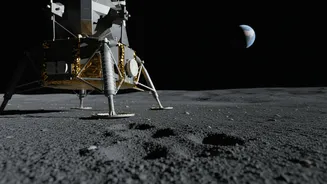
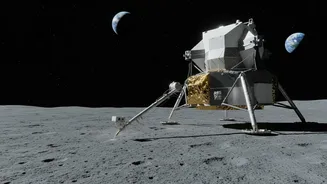
The key instrument behind this discovery is the Chandra’s Surface Thermophysical Experiment, or ChaSTE, aboard the Vikram lander. Developed by teams at ISRO's Space Physics Laboratory and the Physical Research Laboratory, ChaSTE is essentially a high-tech
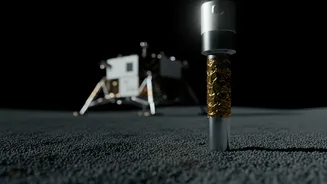
thermometer designed for the harsh lunar environment. It consists of a slender probe that can be slowly and carefully pushed into the lunar soil, or regolith, to a depth of 10 centimetres. Unlike previous missions that may have used hammering techniques, ChaSTE's controlled penetration mechanism was designed to cause minimal disturbance to the soil, ensuring the data collected is as pristine as possible. Along the length of this probe are 10 individual temperature sensors, ready to create a detailed thermal profile of the ground beneath the lander.
A Surprising Temperature Plunge
When ISRO released the first data from ChaSTE, it caught many scientists by surprise. The instrument recorded a surface temperature of around 40 to 50 degrees Celsius. However, just 8 to 10 centimetres below the surface, the temperature plummeted dramatically to approximately minus 10 degrees Celsius. This massive temperature drop of nearly 60 degrees over just a few centimetres was far more extreme than many had anticipated. It was the first time such a direct, in-situ measurement had been taken at the lunar south pole, providing a unique and invaluable dataset that orbital scans could only hint at. Previous beliefs, based on indirect measurements, had estimated surface temperatures to be much milder, in the range of 20 to 30 degrees Celsius, making ChaSTE's findings particularly groundbreaking.
The Moon's Insulating Blanket
So, what does this sharp temperature gradient mean? The primary conclusion is that the Moon's topsoil is an incredibly effective thermal insulator. The loose, powdery layer of shattered rock and dust, known as regolith, does not conduct heat well at all. This means the intense heat from the sun that scorches the surface barely penetrates the subsurface. The top few centimetres of regolith act as a protective blanket, shielding the layers below from the extreme temperature swings that occur on the surface. This property, known as low thermal conductivity, is a crucial piece of the puzzle for understanding the lunar environment. It confirms that the subsurface is a much more stable environment than the volatile surface.
Implications for Water Ice and Habitats
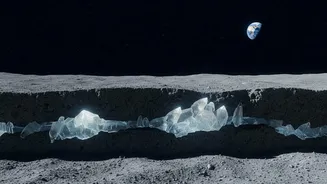
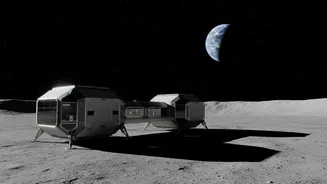
These findings have profound implications for the future of lunar exploration. The excellent insulating properties of the regolith strongly support the theory that water ice could remain stable and preserved just below the surface in the permanently shadowed regions of the south pole. The soil effectively protects it from being vaporized by solar radiation. This is a critical factor for future missions hoping to find and utilize water on the Moon. Furthermore, this discovery is a game-changer for plans to build human habitats. The same insulating soil that protects water ice could also protect human-built structures from the Moon's extreme temperatures and harmful radiation. Astronauts could potentially use the regolith itself as a construction material to build shielded bases, a concept known as in-situ resource utilization that is now supported by this direct data from ISRO.