






From Data Relays to Brains in the Sky
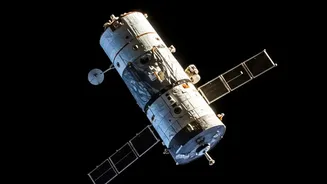
At its core, orbital computing, also known as edge computing in space, means processing data directly on the satellite where it is collected. Traditionally, satellites act like cameras, capturing raw information and sending it down to powerful computers
on the ground for analysis. This new approach equips satellites with high-performance processors, like GPUs, allowing them to run artificial intelligence and machine learning models in orbit. Instead of just collecting and forwarding data, these AI-powered satellites can analyze it, identify what's important, and send back only the valuable insights. Think of it as the difference between mailing a full roll of film to be developed and having a smart camera that instantly tells you which photos are the keepers.
Why We Can't Just Download Everything
The need for orbital computing stems from a simple problem: a data bottleneck. Modern satellites generate an incredible amount of information—a single Earth observation satellite can produce terabytes of imagery daily. Transmitting all of this raw data to Earth is slow, expensive, and constrained by the limited number of ground stations and available communication windows. Much of this data is also redundant or useless, such as images of empty oceans or cloud-covered landscapes. Sifting through it on the ground is inefficient. As we launch more and larger constellations of satellites, the traditional model of downloading everything is becoming unsustainable.
Smarter Satellites, Faster Insights
By processing data in orbit, AI satellites can provide near real-time intelligence that could be revolutionary. For disaster response, a satellite could autonomously detect the outbreak of a wildfire or the extent of flooding and immediately send alerts to emergency crews, rather than waiting hours for the data to be downloaded and analyzed. In agriculture, onboard AI can identify crop stress or disease from orbit and notify farmers directly. For national security, it enables the real-time tracking of moving targets or the detection of environmental changes without human intervention. This ability to go from observation to actionable insight in minutes, not hours, is the key advantage.
The Hurdles to Orbiting AI
Putting a data center into orbit is not without its challenges. The space environment is incredibly harsh, with extreme temperatures and high levels of radiation that can damage sensitive electronics. Computers for space need to be specially 'hardened' to survive. Furthermore, satellites have a very limited power budget, and AI processing is energy-intensive. Another significant challenge is updating the software and AI models. You can't simply connect to the internet to patch a vulnerability or improve an algorithm on a satellite traveling thousands of miles per hour, making secure and reliable updates a complex problem.
The Future of Autonomous Missions
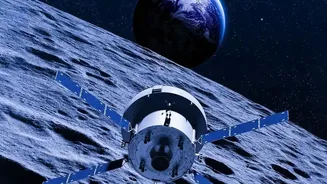
Despite the challenges, the trend is clear: space missions are becoming more autonomous. Orbital computing is essential for this evolution. Looking ahead, we can expect to see interconnected constellations of intelligent satellites that collaborate and share tasks. This technology is even more critical for deep space exploration. With communication delays to Mars taking many minutes, a rover or spacecraft must be able to make its own decisions, from navigating hazardous terrain to identifying scientifically interesting samples without waiting for instructions from Earth. By bringing the analysis to the data, orbital computing is paving the way for a new era of more responsive, efficient, and intelligent space operations.