



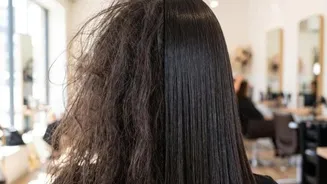
Winter often brings a flurry of hair frustrations, from static and flyaways to dryness and breakage. The culprit is often a combination of cold, dry air and increased friction. Fortunately, a simple switch in your accessories can help.
The Winter Hair Problem
When the temperature
drops, so does the humidity in the air. This dry outdoor environment, combined with indoor heating systems, works together to strip moisture from your hair. Dehydrated hair becomes brittle, rough, and much more susceptible to static electricity and physical damage. Every time your hair rubs against a coarse wool scarf, a cotton pillowcase, or a tight elastic band, it creates friction. This friction lifts the hair's outer layer, known as the cuticle, leading to tangles, frizz, and eventually, breakage.
How Silk and Satin Reduce Friction
This is where silk and satin enter the picture. Unlike cotton, which has a rougher, textured surface that grips and pulls at hair strands, silk and satin have an incredibly smooth finish. This allows your hair to glide across the surface with minimal friction, whether you're tossing and turning at night on a pillowcase or securing your hair in a scrunchie. This simple mechanical difference significantly reduces the stress on each strand, keeping the cuticle smooth and intact. The result is less frizz, fewer tangles, and a noticeable reduction in split ends and breakage.
Locking In Essential Moisture
Beyond reducing friction, these fabrics also help your hair retain its natural moisture. Cotton is a highly absorbent material, meaning it can wick away your hair's natural oils and any conditioning products you've applied. Silk, being a natural protein fiber, is far less absorbent. It helps keep that essential moisture locked into your hair shaft where it belongs, preventing the strands from becoming dry and brittle. Satin, typically a synthetic weave, also shares this non-absorbent quality, making it a protective barrier that preserves hydration overnight.
Silk vs. Satin: What’s the Difference?
Though often used interchangeably, silk and satin are not the same. Silk is a natural protein fiber produced by silkworms, while satin is a type of weave. Most satin products today are made from synthetic materials like polyester. Both provide the necessary smooth surface to reduce hair friction. However, silk offers additional benefits. As a natural fiber, it is more breathable, hypoallergenic, and can help regulate temperature. Polyester satin is a more affordable and durable alternative that still delivers the core benefit of a low-friction surface, making it an excellent budget-friendly option.
Why a Silk Scrunchie Matters
The same principles that apply to a pillowcase also apply to your hair ties. Traditional elastic bands can create significant tension and friction, leading to a specific type of breakage right where the ponytail is secured. A silk or satin scrunchie provides a soft, smooth layer between the elastic and your hair. This allows you to tie your hair back securely but gently, without the snagging, pulling, or creasing associated with regular hair ties. They glide out of your hair easily, protecting styles and preventing the damage that can accumulate from daily wear, especially on fragile winter hair.