








The Unsung Hero of Nutrition
Before we get to its newfound fame, let’s revisit the basics. Dietary fibre is a type of carbohydrate that our bodies can't digest or absorb. Instead of being broken down, it passes relatively intact through our digestive system. This might sound counterintuitive,
but this indigestibility is precisely its superpower. There are two main types: soluble fibre, which dissolves in water to form a gel-like substance (found in oats, apples, and beans), and insoluble fibre, which does not dissolve and adds bulk to stool (found in whole grains and vegetables). For years, its main claim to fame was promoting regular bowel movements. While true and essential, this single benefit vastly undersold its full potential. It was the reliable friend you called for one specific problem, unaware it had a dozen other skills.
More Than Just a Digestive Aid
The real story of fibre extends far beyond the bathroom. Its benefits are systemic, impacting everything from our heart to our waistline. Soluble fibre, for example, is a champion at managing cholesterol. As it moves through the digestive tract, it can bind to cholesterol particles and help remove them from the body, lowering overall levels. It also slows down the absorption of sugar, which helps prevent sharp spikes in blood glucose after a meal—a crucial benefit for managing and preventing type 2 diabetes. Furthermore, high-fibre foods are typically more filling. Because they take longer to digest and add volume to your meals, they increase satiety, helping you feel full for longer on fewer calories. This makes fibre an incredibly useful ally in weight management, shifting the focus from restrictive dieting to eating satisfying, nutrient-dense foods.
Why Now? The Gut Microbiome's Rise
The primary reason for fibre’s ‘main character moment’ is the explosion of research into the gut microbiome. Our gut is home to trillions of microorganisms, including bacteria, fungi, and viruses, that play a critical role in our overall health. We now know that a diverse and thriving gut microbiome is linked to a stronger immune system, better mood, and a lower risk of chronic diseases. And what do these beneficial gut bacteria love to eat? Fibre. Specifically, prebiotic fibre acts as food for our good gut bacteria (probiotics). When these bacteria ferment fibre, they produce compounds called short-chain fatty acids (SCFAs), which have powerful anti-inflammatory effects and help maintain the health of our intestinal lining. As our understanding of the gut-brain axis grows, fibre is no longer just a digestive aid; it’s a key player in holistic well-being, influencing everything from mental health to immunity.
Hitting Your Fibre Goals in India
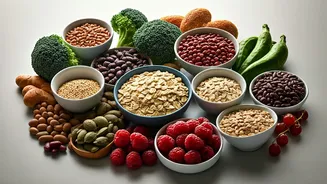
The good news is that traditional Indian diets are naturally rich in fibre, but modern processed foods have pushed it out. India’s National Institute of Nutrition recommends about 30 grams of fibre per day for a healthy adult. Hitting this target is easier than you think and doesn’t require expensive superfoods. Start with simple swaps: choose wholewheat atta over refined maida, and brown rice or millets like ragi and jowar over white rice. Make lentils (dal), chickpeas (chana), and kidney beans (rajma) staples in your meals. Snack on whole fruits like apples, guavas, and pears (with the skin on) instead of reaching for biscuits. A handful of nuts and seeds can also provide a significant fibre boost. The key is to focus on whole, unprocessed plant foods—the closer a food is to its natural state, the more fibre it likely contains.
A Word of Gentle Caution
Excited to embrace fibre? That’s great, but it’s best to take it slow. Dramatically increasing your fibre intake overnight can lead to uncomfortable side effects like gas, bloating, and cramping as your digestive system adjusts. The best approach is to gradually add more fibre-rich foods to your diet over several weeks. At the same time, make sure you increase your water intake. Fibre works best when it absorbs water, which helps soften your stool and allows it to move smoothly through your system. Without enough water, a high-fibre diet can actually worsen constipation. So, as you add more dal and sabzi to your plate, be sure to keep your water bottle handy.