


The New Geopolitical High Ground
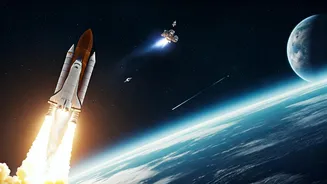
The 21st-century space race is, in many ways, a reflection of earthly rivalries, primarily between the United States and China. Both nations view space as a critical domain for asserting technological dominance and national prestige. [8, 18, 20] The U.S.
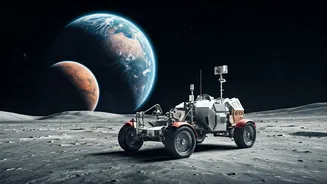
is pushing forward with its Artemis program, which aims to establish a long-term human presence on the Moon. [8] Meanwhile, China has ambitious lunar plans of its own, including landing astronauts by 2030 and partnering with Russia on an International Lunar Research Station (ILRS). [8] This competition isn't just about planting flags; it's about setting the rules for the future exploration and use of outer space. [8] The U.S.-led Artemis Accords, a set of principles for lunar governance, now has over 50 signatories, creating a diplomatic framework that stands in contrast to the Sino-Russian initiative. [20] For both sides, leadership in space is seen as a direct indicator of global leadership on Earth. [18]
India's Ascent as a Major Player
India has firmly established itself as a formidable space power, challenging the long-standing dominance of the U.S. and Russia. [6] The Indian Space Research Organisation (ISRO) has a string of impressive achievements, including becoming the first nation to land a spacecraft near the Moon's south pole with Chandrayaan-3 and reaching Mars' orbit on its first attempt. [12, 14] The country's space program is driven by a vision of self-reliance and strategic autonomy. [7, 12] Future ambitions are even bolder, with plans for the Gaganyaan mission to send Indian astronauts into orbit, a lunar sample return mission (Chandrayaan-4) by 2027, and a goal to land an astronaut on the Moon by 2040. [7, 8, 14] A key advantage for India is its cost-effective approach to missions, making it a competitive player in the global commercial launch market. [6] This combination of scientific achievement and economic pragmatism positions India as a crucial player in the evolving space order. [6, 8]
The Lure of an Off-World Economy
Beyond prestige, a powerful economic incentive is driving the new push to the Moon: resources. The lunar surface is believed to hold significant deposits of valuable materials. [23] One of the most talked-about is Helium-3, a rare isotope on Earth that has been deposited on the Moon by solar winds over billions of years. [26, 28] It is considered a potential fuel for future nuclear fusion power plants, which could provide clean and safe energy. [23, 26] Several private companies are already developing business plans around harvesting it. [24] Another critical resource is water ice, confirmed to exist in shadowed craters near the lunar poles. [23, 26] This ice could be mined and broken down into hydrogen and oxygen, providing breathable air, drinking water, and, crucially, rocket propellant. [23] This would enable the Moon to function as a refuelling station for more ambitious missions to Mars and deeper into the solar system, laying the groundwork for a true in-space economy. [26]
The Private Sector Takes the Lead
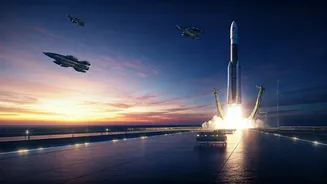
Unlike the state-funded space race of the Cold War, today's expansion is dramatically accelerated by private enterprise. [5, 9] Companies led by billionaire entrepreneurs, such as Elon Musk's SpaceX and Jeff Bezos's Blue Origin, are no longer just government contractors; they are pioneering new technologies and driving missions themselves. [4, 10] SpaceX, with its reusable rockets, has drastically lowered the cost of accessing space and now dominates the global launch market. [4, 15] This commercial rivalry has shifted the focus from singular national achievements to creating sustainable and economically viable business models for space. [4, 5] These companies are competing for major government contracts, such as building lunar landers for NASA's Artemis program, and are also pursuing their own ambitious goals, from space tourism to Mars colonization. [5, 10] This public-private partnership is a defining feature of the modern era, increasing the pace of innovation and expanding access to space for a wider range of players. [5, 13]