
A Sweet Steeped in Divinity
To understand the Mathura Peda, one must first understand Mathura's spiritual significance as the birthplace of Lord Krishna. The city and its surrounding region, known as Braj Bhoomi, are deeply connected to dairy. Krishna's childhood tales are filled
with references to milk, butter, and other dairy products, laying a natural foundation for milk-based sweets to become central to the local culture. The peda is widely believed to be Krishna's favourite sweet, making it the quintessential offering, or 'prasad'. One popular legend tells of Krishna's mother, Yashoda, accidentally over-boiling milk until it thickened. She added sugar and gave it to her son, who loved it so much that the tradition was born. This divine connection elevates the peda from a mere dessert to an edible form of devotion.
The Art of Simplicity
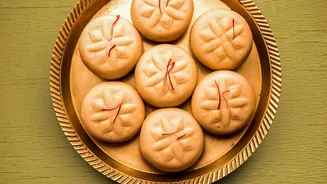
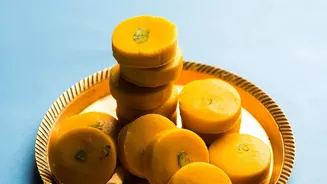
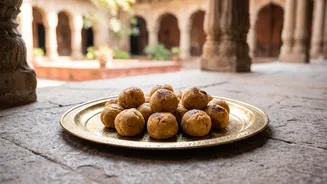
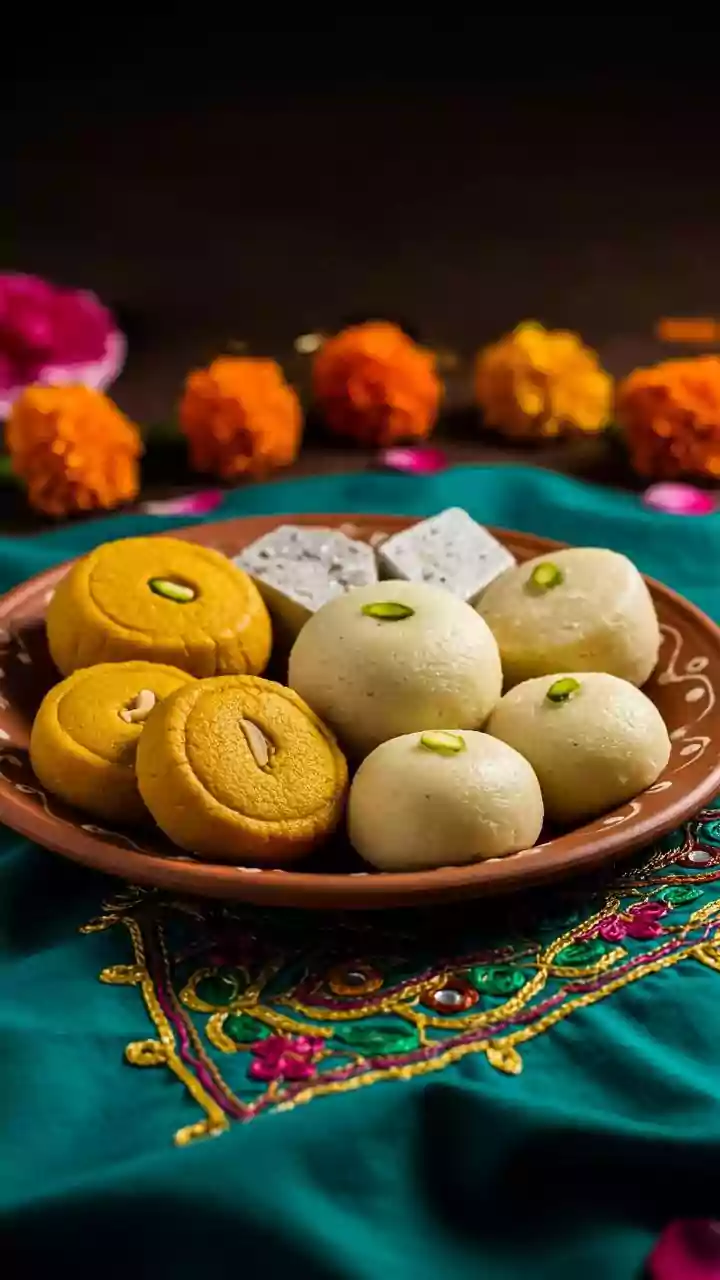
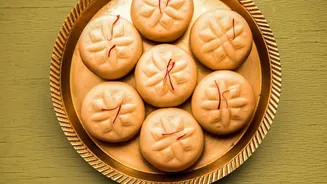
The magic of the Mathura Peda lies in its simple yet precise preparation. The primary ingredient is khoya or mawa—milk that has been slowly simmered for hours until the liquid evaporates, leaving behind milk solids. Traditionally made with cow's milk, which is abundant in the region, this khoya is the heart of the peda. The khoya is then carefully roasted in a heavy-bottomed pan, often with a bit of ghee, until it achieves a signature golden-brown colour and a rich, caramelized aroma. This roasting process is crucial; it gives the Mathura Peda its distinct grainy texture and deep flavour, setting it apart from other, paler peda varieties. Once roasted, the khoya is cooled slightly before being mixed with sugar—often a special type called 'tagar' or 'boora'—and fragrant cardamom powder. The mixture is then shaped by hand into small, dense rounds.
The Taste of Faith
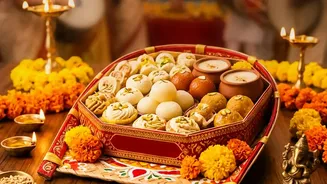
In Mathura, the peda is more than just a sweet; it is a sacred offering. It is the most common prasad distributed in the temples of Mathura and nearby Vrindavan, especially during festivals like Janmashtami, the celebration of Krishna's birth. Devotees visiting the region's thousands of temples often purchase boxes of peda to offer to the deity and then take back home to share with family and friends. Consuming this blessed sweet is considered an act of receiving divine grace. This tradition has transformed the peda from a local specialty into a recognizable symbol of pilgrimage. The phrase 'Mathura ka Peda' has become a brand in itself, signifying authenticity and a connection to the sacred city.
The Engine of a Local Economy
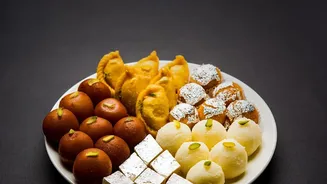
The peda's cultural and religious importance has also made it a cornerstone of Mathura's local economy. The city is dotted with innumerable sweet shops, from generations-old family businesses to larger enterprises, all dedicated to perfecting and selling this iconic sweet. The demand, fuelled by millions of pilgrims and tourists who visit annually, sustains a vast network of milk producers, sweet makers, and sellers. For many visitors, a trip to Mathura is incomplete without tasting its famous peda and carrying a box home as a souvenir. This has cemented Mathura's reputation not just as a spiritual centre, but as the undisputed capital of this beloved milk sweet.