


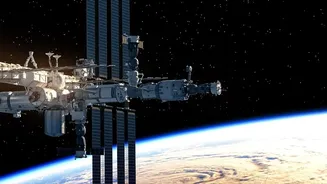

A Legendary Outpost’s Final Sunset
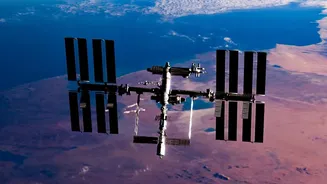
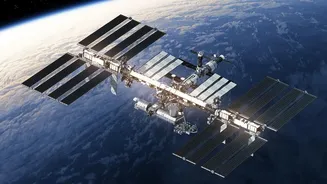
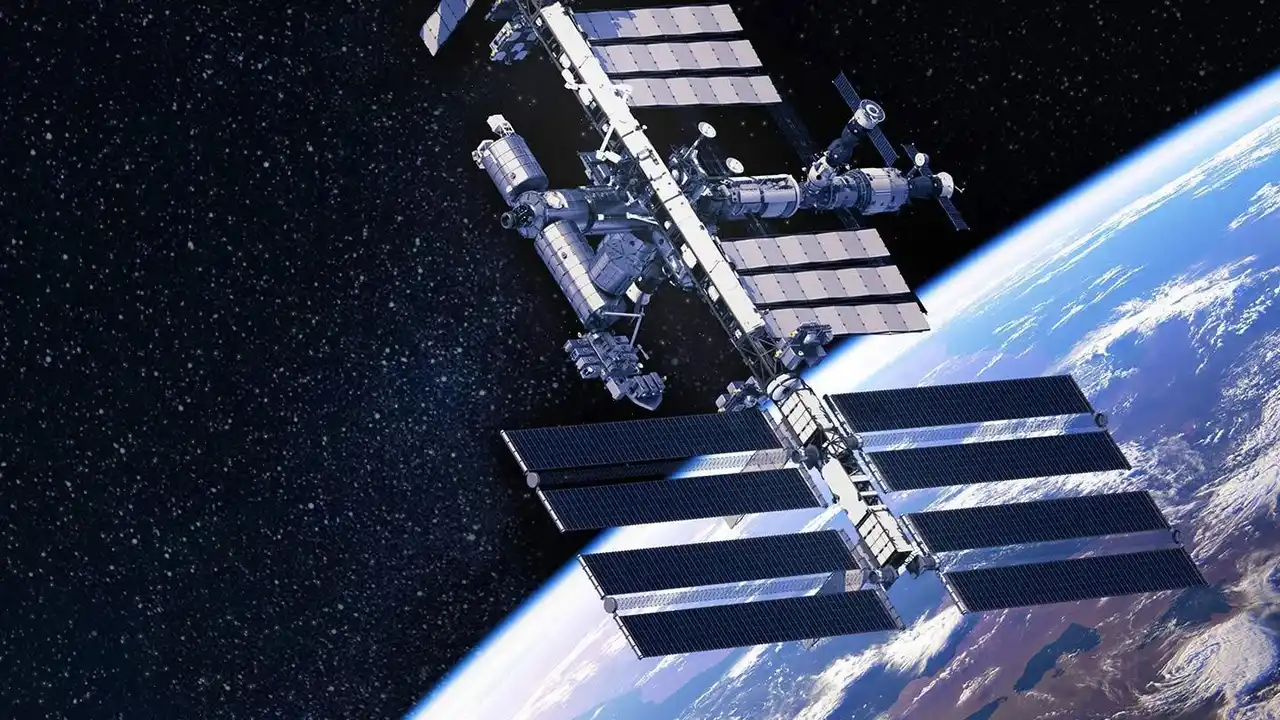
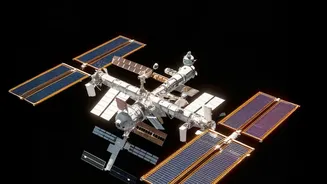
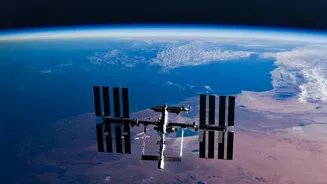
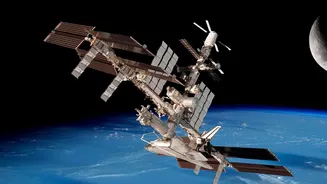
The International Space Station is an engineering marvel and a symbol of global cooperation, but it cannot last forever. Launched in sections starting in 1998, the aging outpost is showing its wear. NASA and its international partners have noted recurring
issues like small air leaks and structural fatigue, which become costlier and more complex to manage over time. Faced with rising maintenance costs and a strategic desire to focus resources on deeper space exploration, like the Artemis missions to the Moon and Mars, NASA is planning to deorbit the ISS around 2030. The plan involves a controlled descent into a remote part of the Pacific Ocean known as Point Nemo, a designated 'spacecraft graveyard'.
NASA's New Role: From Landlord to Tenant
Instead of building a direct replacement, NASA is pioneering a new strategy: becoming a customer. Through its Commercial Low-Earth Orbit Destinations (CLD) program, the agency is funding and supporting private companies to develop their own space stations. The goal is to create a vibrant commercial marketplace in low-Earth orbit where NASA is just one of many clients, alongside other nations, research institutions, and commercial ventures. This public-private partnership model allows NASA to offload the operational costs of a space station while ensuring American astronauts still have a place to live and work in orbit. After some debate in early 2026 about changing this strategy, NASA confirmed in June 2026 that it would stick to its original plan of supporting free-flying commercial stations.
Meet the Commercial Contenders
Several companies are leading the charge to build the first private outposts. Axiom Space is taking a unique approach by first building modules that will attach to the ISS. Once its cluster is large enough, it plans to detach and operate as the independent Axiom Station as early as 2028. Another major player is Starlab, a joint venture between Voyager Space and aerospace giant Airbus, which is developing a station focused on science and research. Meanwhile, Blue Origin and Sierra Space have teamed up to create Orbital Reef, envisioned as a 'mixed-use business park' in space, designed for commerce, research, and tourism. A fourth company, Vast, is also racing to launch its single-module station, Haven-1.
A New Economy in the Stars
These new commercial stations promise more than just a continuation of the ISS's research. Their business models are built on diversification. While government-sponsored science will remain a key activity, these platforms are designed to host a wide range of clients. Potential markets include in-space manufacturing of unique materials like fibre optics or pharmaceuticals, dedicated modules for movie production, and, of course, space tourism. For example, Orbital Reef is explicitly designed to open up multiple new markets in space, providing end-to-end services for industrial and commercial customers. Starlab has partnered with Hilton to design its crew quarters, signalling a focus on the human experience beyond just functional research.
Challenges on the Launchpad
The path forward is not without significant hurdles. Building and operating a space station is an incredibly complex and expensive undertaking. Each of these companies must raise substantial private capital to complement the seed funding from NASA. There is also immense pressure to get at least one station operational before the ISS is retired to avoid a 'gap' in American human spaceflight capability in low-Earth orbit. Any delays in development or launch could have significant consequences, not only for NASA's research continuity but also for American leadership in space, especially as China operates its own Tiangong space station.