





The Story Behind the Sweetness
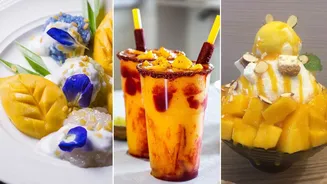
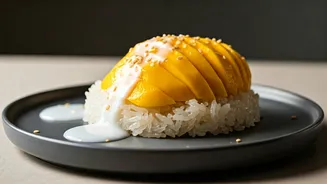
This stunner of a dessert is Mango Sticky Rice, or 'Khao Niao Mamuang' in its native Thailand. While it feels incredibly modern and perfect for Instagram, its roots are deep in Thai culinary tradition, enjoyed for centuries as a seasonal delicacy. It’s
a dish that celebrates the peak of the mango harvest, transforming simple, high-quality ingredients into something truly special. Traditionally sold by street vendors and served in fine restaurants alike, it represents a quintessential taste of Thai summer. The magic lies in its balance: the sweetness of the mango, the salty-sweet richness of the coconut sauce, and the satisfying chew of the glutinous rice. It’s more than just a dessert; it’s a cultural icon, a comforting treat that evokes feelings of warmth, generosity, and celebration.
Why It's the Perfect Summer Dessert
What makes Mango Sticky Rice so irresistible? It’s a masterclass in texture and flavour. The star, of course, is the mango. For the most authentic experience, you’d use Thai varieties like Nam Dok Mai or Ok Rong, known for their floral aroma and non-fibrous flesh. In India, a ripe, sweet Alphonso or Kesar works beautifully. The mango should be perfectly ripe—sweet, fragrant, and almost meltingly soft. This sweetness is cut by the coconut-infused sticky rice. The rice isn't just plain boiled rice; it's glutinous rice that has been steamed and then soaked in sweetened coconut milk, which gives it a uniquely soft, chewy texture and a rich flavour. A final drizzle of a saltier coconut cream on top provides the perfect counterpoint, creating a flavour profile that is complex, comforting, and utterly addictive. It’s served warm or at room temperature, making it a delightful treat that doesn’t feel too heavy on a hot day.
The Anatomy of a Perfect Bowl
Making this at home might sound intimidating, but it’s all about getting three key components right. First, the rice. You must use glutinous rice, also known as sweet rice. Regular rice like Basmati or Jasmine won't work, as they lack the high starch content that gives the dish its signature chewiness. You’ll need to soak it for at least four hours, or preferably overnight, before steaming it. Second, the mango. Choose wisely. The mango is not a garnish; it’s a co-star. It should be sweet, juicy, and have minimal fibre. Look for one that yields to gentle pressure and smells fragrant at the stem. Third, the coconut milk. Don't skimp here. Use full-fat coconut milk for both the rice infusion and the final sauce. The richness is essential to the dessert's creamy character. A pinch of salt in the final sauce is non-negotiable; it elevates all the other flavours and keeps the dessert from being one-dimensionally sweet.
Your Guide to Making It at Home
Ready to try? Here’s a simplified approach. Start by steaming your soaked and drained glutinous rice for about 20-25 minutes until it’s translucent and cooked through. While it's steaming, gently heat your main batch of coconut milk with sugar and a little salt until the sugar dissolves. Once the rice is cooked, immediately transfer it to a bowl and pour the warm coconut milk mixture over it. Stir gently, then cover and let it sit for at least 30 minutes. This is where the magic happens—the rice will absorb the sweet, creamy liquid. For the topping, heat a smaller amount of coconut milk with a bit more sugar and a stronger pinch of salt. Some recipes thicken this sauce with a tiny bit of rice flour slurry. To serve, peel and slice your mango. Place a neat mound of the sticky rice on a plate, arrange the mango slices alongside it, and drizzle that salty-sweet coconut sauce over everything. It’s a process, but a deeply rewarding one.
The Secret to Making It Feed-Worthy
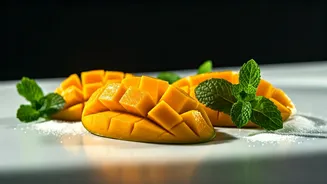
To capture the beauty that the headline promises, presentation is key. First, plate with intention. Use a simple, clean plate—white or a dark ceramic—to make the colours pop. Create a neat, round mound of the sticky rice using a small bowl as a mould. Slice the mango cleanly and fan the slices out next to the rice. Some prefer to cut the mango cheeks into a crosshatch pattern and turn them inside out for a 'hedgehog' effect. The drizzle is your action shot; let the thick coconut sauce cascade over the rice, not drown it. For that final professional touch, add a sprinkle of toasted mung beans or sesame seeds for a bit of crunch and visual contrast. A mint leaf can add a pop of green, but don't over-garnish. The beauty of this dish is in its elegant simplicity. Natural light is your best friend for photography; shoot near a window to capture the glossy sauce and the vibrant colour of the mango.