




The Next Frontier: A Lunar Sample Return
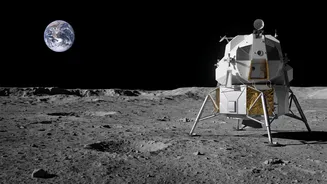
The primary goal of the proposed Chandrayaan-4 mission is to achieve something only three other countries have ever done: perform a lunar sample return. This means landing on the Moon's surface, collecting several kilograms of soil and rock (regolith),
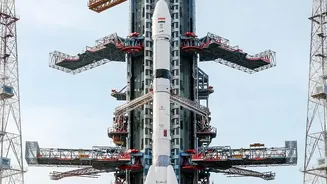
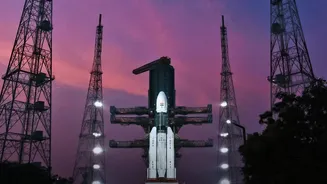
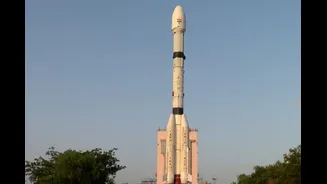
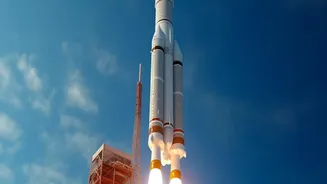
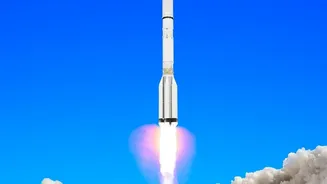
and launching it back to Earth for detailed study. This is a monumental leap in complexity from Chandrayaan-3. The mission requires a series of perfectly executed manoeuvres, including a soft landing, robotic sample collection, and—most challengingly—launching a smaller vehicle off the lunar surface to begin its journey home. This endeavour will involve not just one, but two separate launches of India's powerful LVM3 rocket to get all the necessary components into space, highlighting the mission's ambitious scale.
Why Bring the Moon to India?
Bringing lunar samples back allows scientists to use the full power of Earth-based laboratories for analysis, far exceeding the capabilities of robotic instruments on the Moon. These precious materials hold clues to the origin and evolution of the Moon and, by extension, our own planet. While the Apollo and Soviet Luna missions returned samples decades ago, they came from limited regions. China's recent Chang'e missions have added to this collection, but vast areas of the Moon remain unexplored. Chandrayaan-4 plans to collect samples from the scientifically rich south pole region, an area known for its unique geology and the potential presence of water ice. Studying these samples in India will build invaluable national expertise and could lead to groundbreaking discoveries about the Earth-Moon system.
A Symphony of Advanced Technology
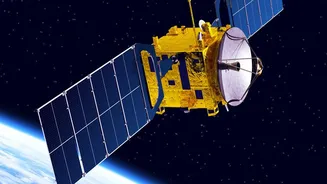
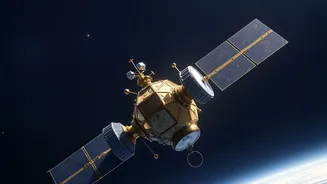
Chandrayaan-4 is not a single spacecraft but a complex, five-module system. It includes a Descender Module to land, an Ascender Module to lift off from the Moon, a Transfer Module to shuttle between orbits, a Re-entry Module to protect the sample on its way back, and a Propulsion Module. Executing the mission requires mastering technologies new to ISRO, such as automated docking in lunar orbit, where the Ascender will transfer its precious cargo to the return vehicle. ISRO plans to test this crucial docking capability with its SPADEX (Space Docking Experiment) mission ahead of time. The entire process, from launch to landing to return, will serve as a vital demonstration of the technologies needed for India's ultimate ambition: sending an Indian astronaut to the Moon by 2040.
A Stepping Stone to a Bigger Future
Chandrayaan-4 is a critical piece in a much larger puzzle of India's space exploration goals. It serves as a direct stepping stone for even more complex future missions. Following Chandrayaan-4, ISRO is collaborating with Japan's space agency, JAXA, on the Lunar Polar Exploration (LUPEX) mission, sometimes referred to as Chandrayaan-5. LUPEX will involve a more powerful lander from India and a sophisticated rover from Japan, designed to extensively search for and analyze water ice at the lunar south pole. These missions collectively build the experience, technology, and confidence required to eventually establish a sustainable presence on the Moon, including Prime Minister Narendra Modi's vision for a 'Bharatiya Antariksh Station' (Indian Space Station) by 2035 and a crewed lunar landing by 2040.
India's Place in the Global Space Arena
With an expected launch around 2028, the successful completion of Chandrayaan-4 would cement India's position in the top tier of space-faring nations. It's a statement of indigenous capability and scientific ambition. ISRO Chairman S. Somanath has noted that while the feat has been achieved before, doing so today in a cost-effective manner presents a significant challenge that India is poised to tackle. This mission not only enhances national pride and inspires a new generation in science and technology but also provides India with a valuable asset. The unique samples from the lunar south pole could become part of international scientific exchange programs, giving India a literal seat at the table in global discussions about lunar resources and the future of space exploration.