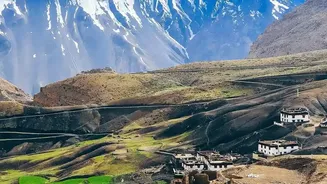







A Community with a Celestial Vision
Udmal, a remote tribal village in Nashik’s Surgana taluka, is embarking on an ambitious journey to become India's first official 'Dark Sky Community'. The goal is simple yet profound: to preserve the natural darkness that allows the Milky Way to sprawl
across the sky, unobscured by the glow of artificial lights. This initiative is not about turning the lights off completely, but about using them more wisely. The village’s Gram Sabha has passed a resolution to curb light pollution by adopting scientifically planned, energy-efficient outdoor lighting. The message, as one official put it, is “not less light, but wiser light.” This community-led conservation effort aims to protect both local biodiversity and the breathtaking beauty of the night.
The Fight Against Light Pollution
A Dark Sky Community is a town or area that has shown exceptional dedication to preserving the night sky through quality outdoor lighting, public education, and citizen support. The certification is awarded by DarkSky International, a global authority committed to combating light pollution. For Udmal, achieving this status means implementing shielded light fixtures that direct light downwards, using warmer-colored bulbs, and promoting awareness about the harmful effects of excessive artificial light on wildlife, human health, and scientific observation. The project has received an administrative sanction of ₹42.1 lakh from the district, which will fund night-sky quality assessments and the installation of responsible lighting systems.
The Promise of Astro-Tourism
Beyond environmental conservation, Udmal’s dark sky initiative is a strategic move to create sustainable livelihoods for its tribal residents. The project aims to position the village as a premier destination for astro-tourism, attracting stargazers, photographers, and nature lovers. This aligns with a broader push by the Maharashtra government, which has identified 11 potential locations across the state for a 'Dark Sky' policy to promote stargazing and eco-tourism. By transforming their pristine skies into an asset, the community hopes to generate income through curated experiences like guided stargazing sessions, astrophotography workshops, and educational programs. The project is being implemented in collaboration with the NGO Astronera, which will provide technical training to local youth, empowering them to become guides and entrepreneurs in this emerging sector.
A Model for a Brighter, Darker Future
Udmal’s initiative is part of a growing recognition of the value of natural darkness. Nearby, the Pench Tiger Reserve has already been certified as India's first Dark Sky Park, demonstrating the viability of such projects. While places like the Hanle Dark Sky Reserve in Ladakh are focused on scientific research, Udmal’s effort is a grassroots model for community-led conservation. If successful, the village will not just offer visitors a rare glimpse of a star-filled cosmos, but will also serve as an inspiration for other communities. It shows that development doesn't always have to mean more and brighter lights; sometimes, the most valuable resource to preserve is the darkness itself, offering a path to sustainable tourism that is written in the stars.