




The Green Banana: A Starchy Start
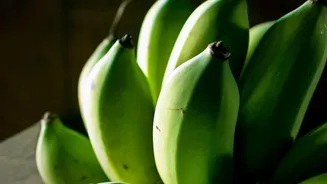
Often overlooked, the firm, green banana is a nutritional powerhouse for specific needs. Its defining feature is a high concentration of resistant starch. An unripe banana's carbohydrates are about 70-80% starch, much of which resists digestion in the small
intestine. This starch acts more like a prebiotic fibre, travelling to the large intestine where it feeds beneficial gut bacteria. This process can support a healthy gut microbiome. Because the starch is not easily broken down into sugar, green bananas have a lower glycemic index (GI), with values estimated around 30 to 42. This leads to a slower, more gradual rise in blood sugar, making them a potentially better choice for individuals managing blood sugar levels. The trade-off is a firmer, waxier texture and a less sweet, almost bitter taste that some find unappealing raw. They can, however, be cooked and used in savoury dishes.
The Yellow Banana: The All-Rounder
This is the banana most of us know and love: bright yellow, easy to peel, and perfectly sweet. At this stage, the magic of ripening has converted most of the resistant starch into simple sugars like sucrose, fructose, and glucose. This makes the banana much sweeter and softer. It also means it's easier and quicker to digest, providing a rapid source of energy. This makes a ripe yellow banana an excellent pre- or post-workout snack. While the resistant starch content is much lower, it still provides essential nutrients like potassium, vitamin B6, and vitamin C. The glycemic index is higher than a green banana, typically falling in the low-to-medium range of about 51 to 55, meaning it will raise blood sugar more quickly than its unripe counterpart but is still considered a moderate-impact food.
The Spotted Banana: The Sweet Finish
As a banana continues to ripen, brown spots appear, signalling that even more starch has converted to sugar. These bananas are the sweetest and softest of the bunch, with a very high sugar content and minimal remaining resistant starch. Research suggests that as a banana ripens and its chlorophyll breaks down, its antioxidant levels may increase. The higher sugar content also gives the spotted banana a higher glycemic index, which can be around 62 or more, placing it in the medium-GI category. While someone managing blood sugar may want to be cautious, their soft texture and intense sweetness make them incredibly easy to digest and perfect for specific uses. They are ideal for baking, blending into smoothies, or for young children and anyone needing a gentle, easily absorbed source of energy.
Which Banana Is Right for You?
There is no single 'best' banana; the ideal choice depends on your personal health objectives and taste preferences. Here is a simple breakdown: Choose GREEN bananas if your goal is: - Better blood sugar control, due to the low GI. - Improved gut health, as the resistant starch acts as a prebiotic. - Increased feelings of fullness, which may aid in weight management. Choose YELLOW bananas if you need: - A quick and easily digestible energy boost, such as for exercise. - A balance of sweetness and nutrients with a classic banana flavour. - A reliable source of potassium and vitamins in a familiar package. Choose SPOTTED bananas when you want: - Maximum sweetness and flavour, especially for baking or smoothies. - The easiest possible digestion for a sensitive stomach. - A potential increase in antioxidant content.