



The Monsoon Challenge
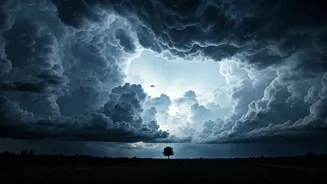
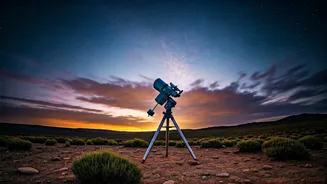
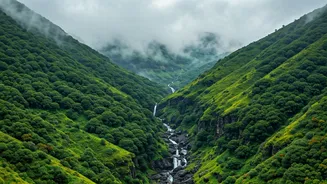
From June to September, the monsoon rolls across the subcontinent, bringing life-giving rain but also thick cloud cover that can last for days. For amateur astronomers, this often means telescopes gathering dust and planned viewing sessions getting cancelled.
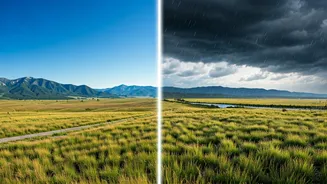
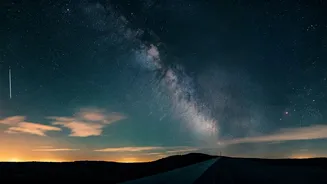
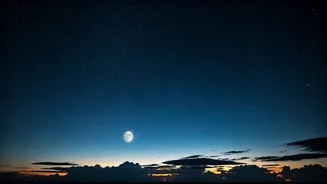
The sky, once a canvas of infinite possibilities, becomes an unpredictable, opaque ceiling. However, the monsoon isn't a continuous, uniform sheet of cloud. It moves in waves, leaving brief but precious windows of clear sky, often just after a downpour when the rain has washed away atmospheric dust and haze, leading to exceptional clarity.
Mastering Micro-Forecasts
Your standard weather forecast gives a general overview, but for stargazing, you need more specialised tools. Astronomy-specific weather apps are designed to predict not just cloud cover, but also atmospheric 'seeing' (stability) and 'transparency' (clarity). While some popular global apps like Astrospheric have limited coverage in India, others can be incredibly useful. Apps like AccuWeather and The Weather Network offer hyper-local, hour-by-hour precipitation forecasts, which are crucial for anticipating breaks in the rain. Combining these with satellite imagery apps like Zoom Earth can help you visually track cloud movements and identify approaching clear patches in real-time. The key is to shift from long-term planning to opportunistic viewing.
Your Astro-Weather App Drawer
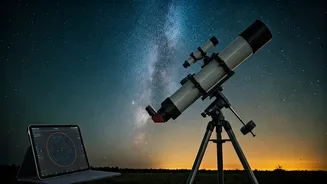
To build a robust weather-smart plan, arm your smartphone with a combination of apps. Start with a reliable general weather app popular in India, such as AccuWeather or Google Weather, for hourly rain predictions. Next, add an astronomy-focused app like Stellarium or SkySafari. These apps act as a virtual planetarium, showing you exactly what’s in the sky at your location at any given time, even if it's cloudy. This way, you’ll know if a spectacular planetary conjunction is happening above the clouds, motivating you to keep an eye out for a break. For those truly dedicated, apps like Clear Outside, while not perfect, can offer more technical data on atmospheric conditions.
Choose Your Viewing Spot Wisely
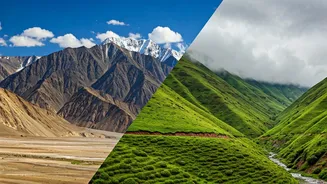
Location is everything, especially during the monsoon. While high-altitude deserts like Spiti and Ladakh offer the most reliably clear skies, they are not accessible to everyone. Consider exploring regions that lie in a 'rain shadow'—areas on the leeward side of mountain ranges that receive less rainfall. Closer to cities, the goal is to find elevated spots away from urban light pollution. Places like Malshej Ghat in Maharashtra or parts of Coorg in Karnataka are known for offering clear views between spells of rain. Even a short drive to a nearby hill or the outskirts of your town can make a significant difference, especially after a fresh shower has cleared the air.
Plan Around Celestial Peaks
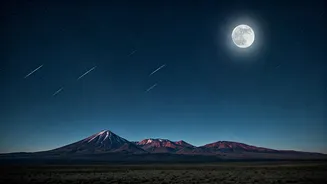
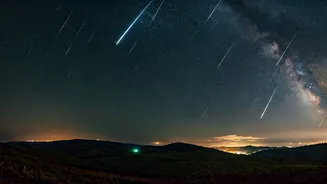
Even with challenging weather, knowing what’s happening in the sky can give you the motivation to persevere. July 2026, for instance, is packed with events. Highlights include a rare close conjunction of Mars and Uranus on July 4, a beautiful pairing of the Moon and Saturn on July 7, and a double meteor shower—the Southern Delta Aquariids and Alpha Capricornids—peaking at the end of the month. While the Perseids meteor shower in August is more famous, these July showers can still produce up to 30 meteors per hour under dark skies. Use your astronomy apps to know when these events will be at their highest point and keep your weather apps handy to seize any clear moments.
When The Sky Won't Cooperate
Some nights, the clouds will simply win. But that doesn't mean your hobby has to stop. Cloudy nights are the perfect opportunity to dive into other aspects of astronomy. You can use this time to learn how to use new software for processing astrophotography images you took during clearer seasons. You can also explore virtual stargazing through apps that simulate the night sky in perfect conditions. It's also a great time to read up on astrophysics, plan future trips to dark-sky locations for the winter, or clean and calibrate your equipment so you're ready to go the moment the clouds part.