




The Co-Pilot Is A Fully Qualified Pilot
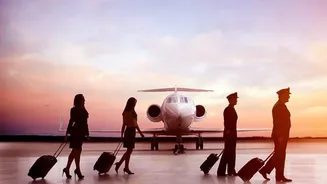
The first and most important thing to know is that there are always at least two fully qualified pilots in the cockpit of a commercial airliner: the Captain and the First Officer. The term 'co-pilot' is misleading, often making people think of an apprentice
or assistant. This isn't true. The First Officer is a certified and highly trained pilot who is just as capable of flying and landing the aircraft as the Captain. In fact, on most airlines, the Captain and First Officer alternate flying the plane from one leg of a journey to the next. The Captain has ultimate command and responsibility for the flight, but in terms of skill and the ability to operate the aircraft alone, the First Officer is 100% prepared for the job.
A Clear Protocol For Emergencies
If a pilot were to become incapacitated, the other pilot would immediately take full control of the aircraft. Their first priority is always to 'aviate, navigate, communicate' – meaning, fly the plane, know where you are going, and then tell people what is happening. The remaining pilot will first ensure the aircraft is stable, often by engaging the autopilot to manage their workload. The next step is to physically secure the incapacitated crew member. Their seat harness is used to ensure they cannot slump over and interfere with the controls. Crew Resource Management training, which all pilots undergo, specifically prepares them to detect subtle signs of incapacitation and act decisively.
Declaring an Emergency with Air Traffic Control
Once the aircraft is under control and the immediate cockpit situation is managed, the pilot will declare an emergency with Air Traffic Control (ATC). This is usually done by making a 'Pan-Pan' or 'Mayday' call. A Pan-Pan call signals an urgent situation that is not yet life-threatening, while a Mayday is a distress call for grave and imminent danger. Pilot incapacitation is considered a distress situation. Declaring an emergency gives the flight priority over all other air traffic. ATC will clear the airspace around the aircraft, provide guidance to the nearest suitable airport, and coordinate with emergency services on the ground to be ready for the plane's arrival.
The Role of Technology and the Cabin Crew
Modern aircraft are equipped with sophisticated technology that can significantly reduce a single pilot's workload. The autopilot can handle most phases of flight, and many large airliners are equipped with 'autoland' systems. This technology allows the aircraft to land automatically in certain conditions, guided by the airport's Instrument Landing System (ILS). However, the remaining pilot is fully trained to land the plane manually. The cabin crew also plays a vital role. They are trained to assist in medical emergencies and may be called upon to help secure the incapacitated pilot. They would also be responsible for keeping passengers calm and informed as directed by the flying pilot.
Could a Passenger Be Asked to Help?
What about the Hollywood scene where a passenger has to land the plane? In reality, this is extremely unlikely on a commercial flight. The First Officer is fully capable of handling the situation alone. A call might be made to see if there is another licensed pilot among the passengers who could offer assistance in a non-flying capacity, like reading checklists, but an untrained person would not be asked to take the controls. The systems are too complex, and the remaining pilot is the safest person for the job. In smaller private planes, there have been rare instances where a passenger with some flight experience has been talked through a landing by ATC, but this is a very different scenario from a commercial airliner with two professional pilots.