



The Philosophy of 'Zoning'
Before you add another squeaky toy or fluffy bed to your online cart, take a look around your compact living space. If you feel like you're constantly tripping over a water bowl or navigating a minefield of toys, the problem isn't a lack of space—it's
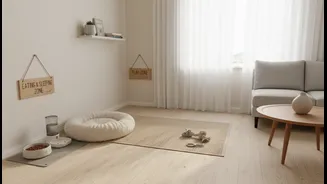
a lack of structure. The concept of 'zoning' is simple: you create dedicated, single-purpose areas for your pet's daily activities. This isn't about rigid rules, but about creating a predictable, calm environment. It helps your pet feel secure because they know where to eat, sleep, and play. For you, it contains the chaos, keeping pet life from overwhelming your entire home.
The Feeding Zone: Clean and Contained
The most crucial zone is the feeding station. This area should be located away from high-traffic paths to prevent you from kicking the water bowl on your way to the kitchen. It should also be kept separate from their litter box or sleeping area. The key here is containment. Use an easy-to-clean, waterproof mat to protect your floors from spills. To save space and streamline the look, consider decanting dry food into sleek, airtight containers instead of keeping a bulky bag in the corner. This creates a tidy, intentional station that’s easy to maintain and visually clean.
The Rest Zone: A Private Retreat
Every pet needs a safe space they can call their own, a place to retreat when they're tired or overwhelmed. This doesn't have to be a large, plush bed that takes up half your living room. It can be a simple nook, like a cozy corner under a side table, or a specific spot on a sturdy shelf for a cat. The goal is to provide a sense of security and ownership. Some designers even suggest creating built-in nooks or using multi-functional furniture, like an end table that doubles as a crate or bed enclosure, to seamlessly integrate this zone into your decor. This keeps their sanctuary from becoming your clutter.
The Play Zone: Managing the Fun
Pet toys have a way of multiplying and spreading to every corner of the house. To prevent this, designate a specific play area and, more importantly, a storage solution. A simple, attractive basket or storage ottoman can be a game-changer. It keeps toys accessible but contained. A great strategy is to rotate toys; keep some stored away and swap them out every few weeks. This not only reduces daily clutter but also keeps your pet more engaged with 'new' toys. You can even train your pet to put their toys back in the basket at the end of the day, reinforcing the idea of a tidy, shared space.
Why Zones Work Better Than More Stuff
It's easy to fall into the trap of thinking that buying more accessories—another bed, a fancier toy, a self-filling water bowl—will solve your problems. But in a small home, more items often just lead to more clutter and visual noise. A minimalist approach, investing in fewer, better things and giving them a designated home, is far more effective. Clear zones provide psychological comfort for your pet and logistical sanity for you. They establish routines, reduce messes, and ultimately allow both you and your animal companion to coexist more peacefully in a limited footprint.