





The Challenge of Living off the Land
For any long-term lunar settlement to be viable, astronauts can't rely on resupply missions from Earth for basic necessities like water and oxygen. The concept of using local materials is known as in-situ resource utilization (ISRU), and it's seen as the
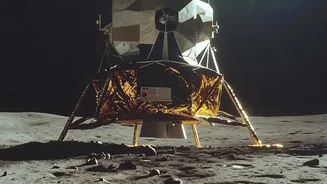
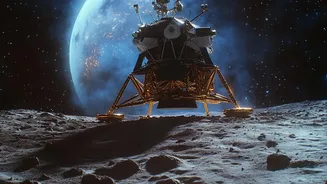
key to unlocking sustainable space exploration. Every kilogram of supplies launched into space is incredibly expensive, and oxygen is one of the heaviest and most critical. It’s needed not just for breathing, but also as a component of rocket propellant, which would be essential for return journeys or trips further into the solar system. Solving the oxygen problem by producing it on-site would dramatically reduce the cost and complexity of future missions, paving the way for the permanent lunar bases envisioned by the Artemis program.
Cooking Oxygen From Moon Rocks
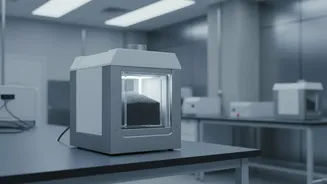
The breakthrough comes from a NASA project called the Carbothermal Reduction Demonstration, or CaRD. The process, known as carbothermal reduction, is a concept that has been used in industrial processes on Earth for decades. In simple terms, it involves heating lunar regolith (the scientific name for moon dust) to very high temperatures inside a specialized reactor. When the regolith melts, the oxygen within its minerals is released. In the CaRD experiments, this has been achieved using concentrated solar energy to heat simulated lunar soil. The process initially produces carbon monoxide, which can then be separated to yield pure, breathable oxygen.
An Atmosphere Hidden in the Dust
It may seem barren, but the Moon's surface is surprisingly rich in oxygen. Lunar regolith is made up of about 45% oxygen by mass. It’s not a gas floating around, but is chemically bonded with elements like silicon, aluminum, iron, and magnesium to form the minerals and glass that make up the dust. This technology effectively 'unlocks' that trapped oxygen. Recent tests conducted at NASA's Johnson Space Center successfully extracted oxygen from a simulated lunar soil in a vacuum chamber, proving the concept works in a Moon-like environment. A team of engineers from several NASA centers, along with the commercial space company Sierra Space, which developed the carbothermal reactor, collaborated on the successful demonstration.
From Lab Prototype to Lunar Reality
The latest tests represent a major milestone, proving the integrated system of solar concentrators, mirrors, and the reactor can work together to reliably produce oxygen. By successfully operating in a vacuum, the technology has reached a high level of technical readiness, meaning it is certified as being ready for demonstration in space. This recent success, reported in early 2026, confirmed that a solar-driven chemical reaction can be used to extract the vital element. The technology has the potential to produce several times its own weight in oxygen per year, which would be a game-changer for establishing a lunar economy and a sustained human presence.
Fueling the Artemis Generation and Beyond
This breakthrough directly supports NASA’s long-term Artemis program, which aims to build a permanent base at the Moon's south pole. Having a ready supply of locally-produced oxygen would be critical for life support and for creating rocket propellant for reuseable landers or for missions to Mars. Interestingly, the same core technology could be adapted for Mars. The Red Planet's atmosphere is about 96% carbon dioxide, and a similar process of electrolysis has already been proven there by the MOXIE experiment aboard the Perseverance rover. The CaRD technology provides another pathway, with NASA noting that its systems could also convert carbon dioxide into oxygen on Mars, making these innovations foundational for humanity's future across the solar system.