

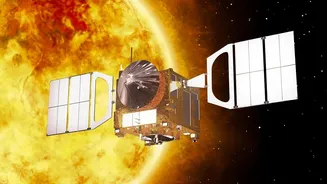
The Sun’s Unseen Temper
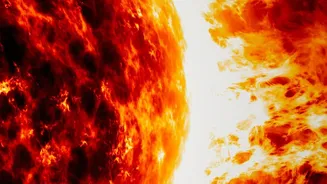
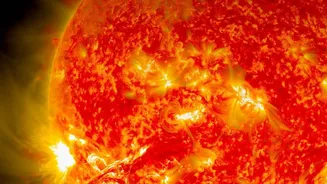
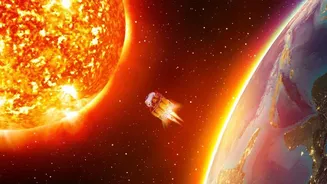
When we think of weather, we picture rain or sunshine. But there's another kind of weather that originates 150 million kilometres away. Space weather refers to the changing conditions in space driven by the Sun's activity. This includes solar flares,
which are massive bursts of radiation, and Coronal Mass Ejections (CMEs), which are giant clouds of solar plasma and magnetic fields hurtling through space. While these events produce beautiful auroras, they also pose a significant risk to the technological backbone of our society. A single extreme event could cause billions of dollars in economic damage.
Satellites in the Firing Line
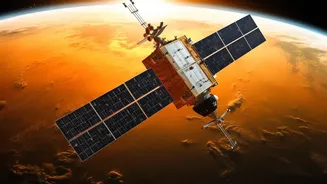
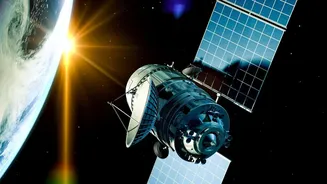
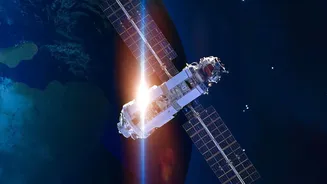
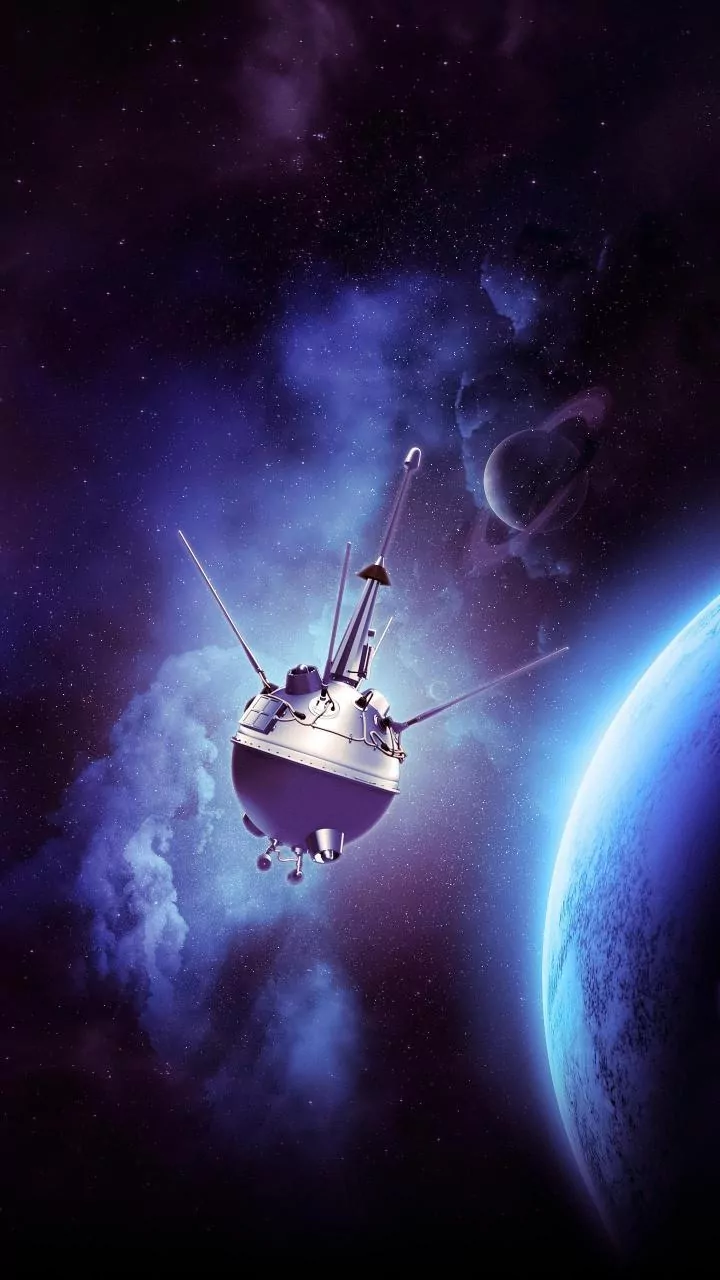
Satellites are particularly vulnerable to this solar onslaught. High-energy particles can penetrate a satellite's electronic systems, causing phantom commands, data corruption, or permanent hardware failure. This is known as a single-event upset. For satellites in Low Earth Orbit (LEO), a major geomagnetic storm heats and expands Earth's upper atmosphere. This increases atmospheric drag, which can cause satellites to lose altitude and even re-enter the atmosphere prematurely if they can't correct their orbit. Furthermore, these solar events can disrupt the radio signals used for GPS, leading to navigation errors for planes, ships, and ground transport that rely on precise positioning.
An Eye on the Sun
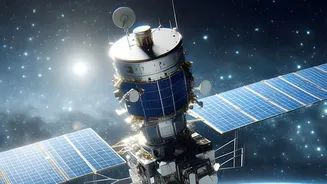
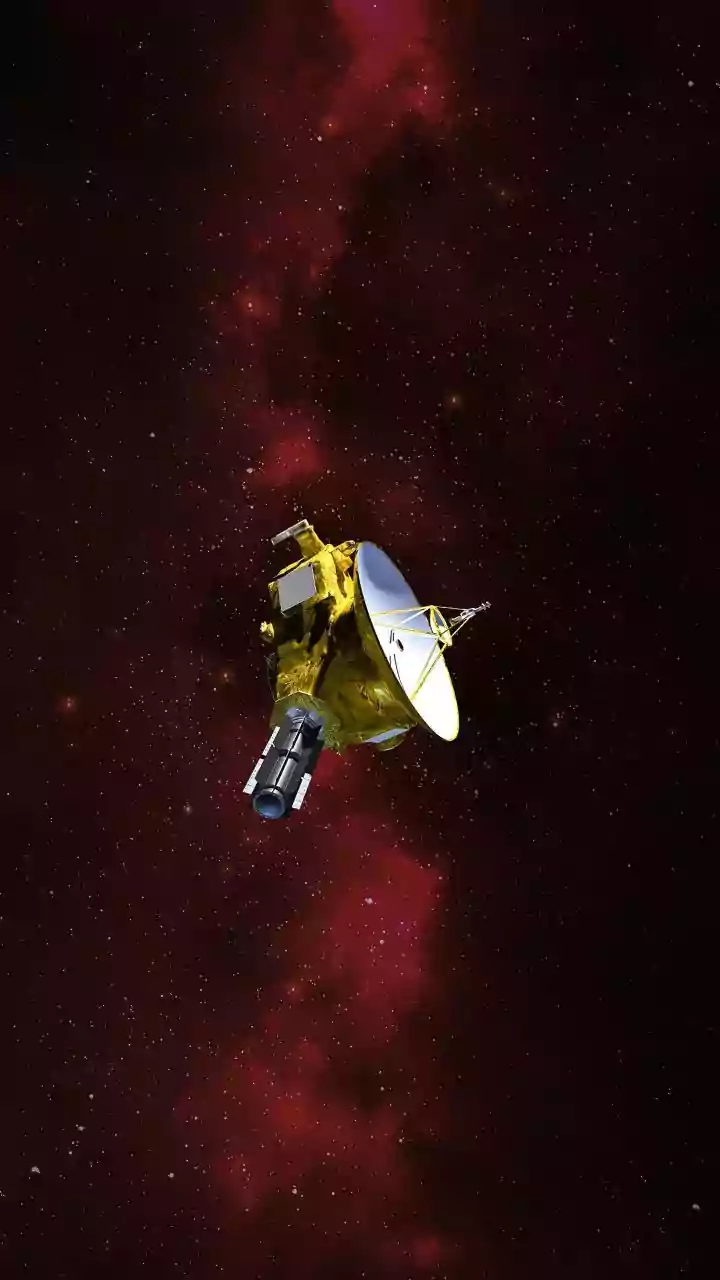
To protect these vital assets, space agencies around the world constantly monitor the Sun. Specialised spacecraft act as our celestial sentinels. Observatories like the Deep Space Climate Observatory (DSCOVR) are positioned at a unique point in space called Lagrange Point 1 (L1), about 1.5 million kilometres from Earth. From this vantage point, they can monitor the solar wind—the stream of charged particles constantly flowing from the Sun—and detect CMEs heading our way. This provides a crucial early warning, giving us notice of an impending solar storm.
India’s Vigilant Watch
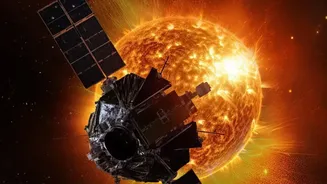
India has significantly boosted its space weather monitoring capabilities with the Aditya-L1 mission, the country's first dedicated solar observatory. Also positioned at the L1 point, Aditya-L1 provides an uninterrupted view of the Sun. Its suite of seven instruments observes the Sun's various layers, from the photosphere to the outer corona, helping scientists understand the physics behind solar flares and CMEs. Recent findings from Aditya-L1 have identified small brightening events that occur hours before a major flare, a promising step toward more reliable forecasting. This data is crucial not just for protecting India's own space assets but also for contributing to the global understanding of space weather.
From Alert to Action
When a space weather alert is issued by an agency like America's Space Weather Prediction Center (SWPC) or ISRO, satellite operators spring into action. The lead time can be anywhere from 15-60 minutes to a few days, depending on the event. With this warning, operators can take protective measures. A common action is to put a satellite into 'safe mode,' powering down non-essential and sensitive electronic components to protect them from electrical surges or radiation damage. They might also reorient the spacecraft to present a smaller profile to the incoming particle storm or delay critical manoeuvres like software uploads, which are riskier during a radiation event. For LEO constellations, operators may even command satellites to raise their orbit to counteract the expected increase in atmospheric drag.