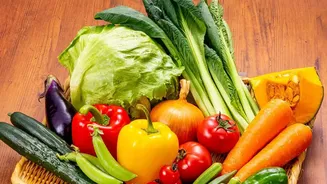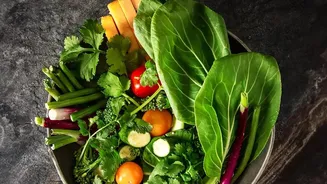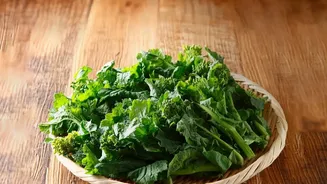



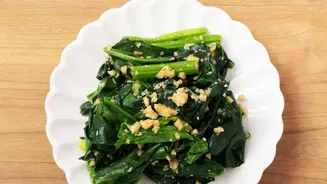
We're all told to eat our greens, but what if a bowl of palak isn't giving you all the goodness you think? The secret to unlocking the full power of leafy greens lies not just in the leaves themselves, but in the company they keep on your plate.
More Than Just 'Eating Your Greens'
For generations,
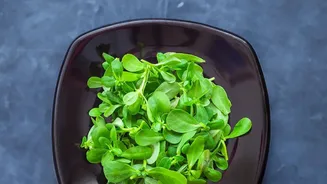
Indian households have championed the goodness of leafy greens, from spinach (palak) and fenugreek (methi) to mustard greens (sarson). They are celebrated as rich sources of essential nutrients like iron, calcium, and vitamins. Yet, modern nutrition science reveals a crucial detail: consuming these nutrients is not the same as absorbing them. The concept of 'bioavailability' explains how much of a nutrient is actually absorbed and used by the body. A food can be packed with a mineral on paper, but if your body can't access it, the benefit is lost. This is where the rest of your meal becomes critically important. Nutrients don't work in isolation; they interact with each other in complex ways, a phenomenon known as food synergy.
The Science of Smart Pairings
Food synergy is the idea that some foods, when eaten together, are better than the sum of their parts. Indian cuisine, often without realising the complex biochemistry, has practiced this for centuries. A key example is pairing iron-rich plant foods with Vitamin C. The iron in plants (non-heme iron) is harder for our bodies to absorb than the iron from meat (heme iron). However, Vitamin C dramatically boosts its absorption. Studies show that adding Vitamin C can increase non-heme iron absorption by up to 67%. Another vital pairing involves fat. Vitamins A, D, E, and K are 'fat-soluble', meaning they need fat to be absorbed from your gut into your bloodstream. Eating greens without any fat means you might miss out on these crucial vitamins, including the Vitamin A precursor, beta-carotene, found in abundance in many greens.
The Indian Thali Conundrum
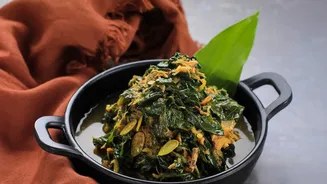
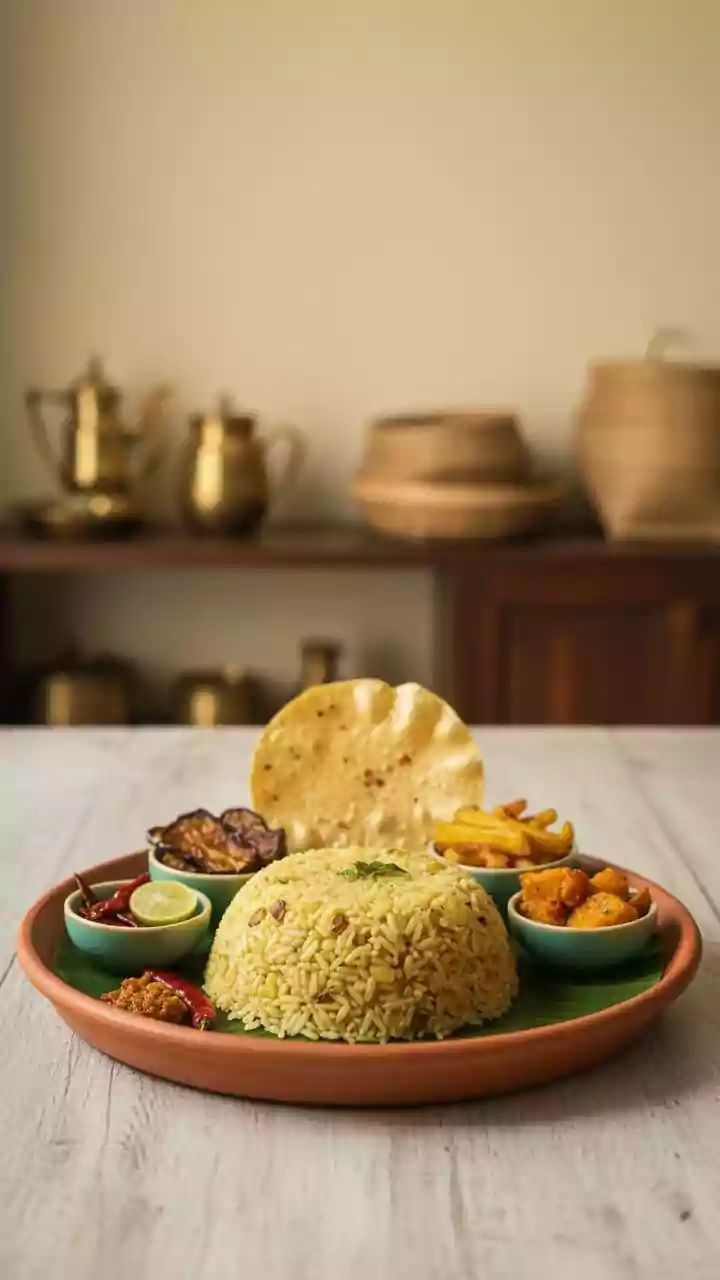
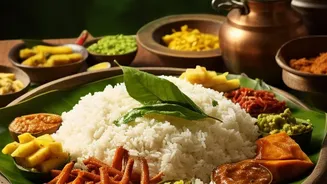
Think about a classic Indian thali. It’s not just a random assortment of dishes; it’s a masterclass in food pairing. A simple bowl of dal and rice provides a more complete protein profile than either would alone. When you add a leafy green sabzi to this meal, the magic happens. A squeeze of lemon over your palak dal does more than add flavour—the Vitamin C from the lemon helps you absorb the iron from both the spinach and the lentils. The dollop of ghee on your roti isn't just for taste; it provides the healthy fat needed to absorb the fat-soluble vitamins from your methi sabzi. This is why palak paneer is a more nutritionally synergistic dish than plain boiled spinach. The fat from the paneer and the cooking oil helps your body absorb the vitamins in the spinach. Similarly, pairing rajma (kidney beans) with curd combines the calcium in the beans with the Vitamin D in the curd, which is needed for calcium absorption.
Navigating 'Antinutrients' in Greens
Leafy greens also contain compounds called 'antinutrients', such as oxalates and phytates. Oxalates, found in high amounts in spinach and beet greens, can bind to minerals like calcium and iron in the gut, preventing their absorption. In fact, because of the high oxalate content in spinach, some studies estimate that only about 5% of its calcium is actually bioavailable. Does this mean you should avoid these greens? Not at all. Traditional Indian cooking methods have instinctively provided solutions. Cooking, blanching, or steaming greens can significantly reduce their oxalate content. For instance, blanching spinach and discarding the water can remove a substantial amount of these soluble oxalates, making the remaining minerals more accessible to your body. Soaking dals and legumes before cooking also helps reduce phytic acid, another antinutrient that can hinder mineral absorption.
How to Build a Smarter Plate
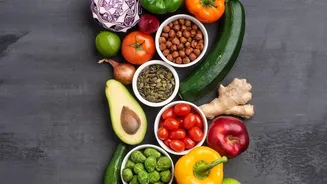
Harnessing the full power of your leafy greens doesn't require a complete dietary overhaul. It’s about making small, intelligent tweaks. Always add a source of healthy fat to your greens—a drizzle of olive oil, a handful of nuts, a spoonful of ghee, or by cooking it with paneer or coconut. To maximise iron absorption from your sabzis and dals, always include a source of Vitamin C in the same meal. This could be a squeeze of lemon juice, or including tomatoes, bell peppers, or amla in your cooking. Finally, embrace variety. Rotating different types of greens in your diet ensures you get a wide spectrum of nutrients and avoids overloading on any single antinutrient. The wisdom of a balanced diet, exemplified by the traditional Indian thali, shows that the whole is truly greater than the sum of its parts.