




There’s no better way to connect with a city than by walking its streets. It allows you to discover hidden corners, absorb the local atmosphere, and see history up close. Here are ten famous streets that offer unforgettable pedestrian experiences.
La Rambla, Barcelona, Spain
Stretching
from Plaça de Catalunya down to the Christopher Columbus Monument at the port, La Rambla is Barcelona’s most famous thoroughfare. This wide, tree-lined boulevard is a vibrant artery pulsating with life day and night. It's actually a series of shorter streets, each with its own character. As you stroll, you'll encounter street performers, flower stalls, and lively cafes. Key stops include the sprawling La Boqueria Market, a feast for the senses with its fresh produce and tapas bars, and the grand Liceu Theatre. Side streets lead into the historic Gothic Quarter, making it a perfect starting point for deeper exploration. A local legend even claims that if you drink from the Font de Canaletes fountain, you're guaranteed to return to Barcelona.
Via dei Fori Imperiali, Rome, Italy
To walk the Via dei Fori Imperiali is to walk through the heart of ancient Rome. This grand avenue connects Piazza Venezia to the Colosseum, flanked by the ruins of the Imperial Forums—the political and commercial centre of the Roman Empire. Inaugurated in 1932, the street offers an unparalleled open-air museum experience. As you walk, you can admire what remains of the forums of Trajan, Augustus, and Caesar, with informational plaques illustrating the empire's vast reach. The best time to stroll is during the golden hour or on Sundays when the street is often pedestrianised, allowing you to fully absorb two millennia of history without the distraction of traffic.
Philosopher's Path, Kyoto, Japan
For a more contemplative journey, the Philosopher's Path, or 'Tetsugaku no Michi', in Kyoto offers serene beauty. This two-kilometre stone path follows a canal lined with hundreds of cherry trees. It was named after Nishida Kitaro, an influential Japanese philosopher who meditated while walking this route to Kyoto University daily. The path connects several temples and shrines, including the famous Ginkaku-ji (Silver Pavilion) at the northern end and Nanzen-ji temple to the south. In spring, it becomes a stunning tunnel of cherry blossoms, while in autumn, it’s a corridor of fiery maple leaves. It’s a place for slow ambling, not rushing, perfectly embodying its reflective origins.
Lombard Street, San Francisco, USA
Known as the 'crookedest street in the world', the one-block section of Lombard Street on Russian Hill is a unique pedestrian experience. Featuring eight sharp hairpin turns, the street was designed in the 1920s to make the steep hill navigable for cars. While driving down is a popular novelty, walking is the best way to appreciate its quirky design. Pedestrian stairways run along both sides of the street, offering fantastic photo opportunities of the zigzagging brick road, manicured flowerbeds, and Victorian mansions. From the top, you’re rewarded with stunning views of the city, including San Francisco Bay and Coit Tower.
Chandni Chowk, Delhi, India
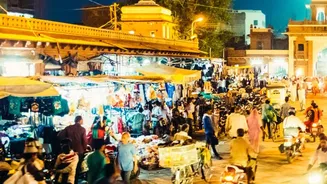
A walk through Chandni Chowk is a full-sensory immersion into the vibrant chaos of Old Delhi. Designed by Emperor Shah Jahan’s daughter in the 17th century, this historic marketplace is a maze of narrow lanes, each specialising in different goods, from spices and textiles to silver and electronics. A walking tour here is a culinary adventure, with countless street food vendors selling local delicacies like parathas, jalebi, and chaat. The walk can also include visits to iconic landmarks such as the majestic Jama Masjid mosque and Khari Baoli, Asia’s largest wholesale spice market. It’s a true slice of life, history, and culture rolled into one unforgettable experience.
Acorn Street, Boston, USA
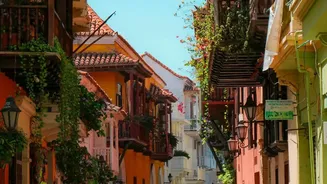
Often called the most photographed street in America, Acorn Street in Boston’s Beacon Hill neighborhood is a step back in time. This narrow, one-block lane is paved with original cobblestones and lined with charming 19th-century Federal-style brick row houses. The street, with its gas lanterns and flower-filled window boxes, feels perfectly preserved. It was originally home to artisans and coachmen who served the wealthier families in the surrounding mansions. Due to its uneven surface, comfortable shoes are a must, but the picturesque and historic atmosphere makes it an essential stop on any walking tour of Boston.
The Lanes of Chefchaouen, Morocco
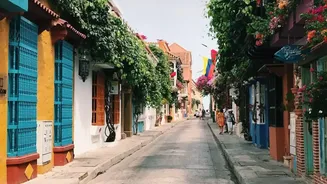
While not a single street, the entire medina of Chefchaouen is a pedestrian’s paradise. Nestled in Morocco's Rif Mountains, the 'Blue Pearl' is famous for its labyrinth of narrow alleys and blue-washed buildings. The practice of painting the town blue is tied to various histories, including Jewish refugees and a belief it keeps mosquitoes away. Walking here is an act of discovery; every turn reveals a new photo opportunity, a colourful doorway, or a quiet square. Starting from the main square, Plaza Outa el-Hammam, you can wander uphill through less-crowded lanes to the Ras el-Maa spring, where local life unfolds at the water's edge.
Nevsky Prospekt, St. Petersburg, Russia
Nevsky Prospekt is the historic heart and main artery of St. Petersburg, stretching 4.5 kilometres from the Admiralty to the Alexander Nevsky Monastery. Walking this grand boulevard is an essential city experience, offering a showcase of magnificent architecture from different eras, including Baroque palaces and Art Nouveau buildings. The street is packed with cultural landmarks, such as the majestic Kazan Cathedral, the iconic House of Books (Singer House), and the Anichkov Bridge with its famous 'Horse Tamers' sculptures. It’s the city’s primary hub for shopping, dining, and entertainment, buzzing with energy from locals and visitors alike.
Strøget, Copenhagen, Denmark
As one of Europe's longest pedestrian-only shopping streets, Strøget offers a masterclass in car-free urban design. Since it was pedestrianised in 1962, it has become a vibrant centre of Copenhagen life. The street is actually a collection of interconnected thoroughfares that run through the city's old town. It's known for its mix of high-end luxury brands and more accessible stores, but the real charm lies in its lively atmosphere. Street performers, bustling squares like Amagertorv, and endless opportunities for people-watching make a walk along Strøget a quintessential Copenhagen experience.
The Shambles, York, England
Walking down The Shambles in York is like stepping into a medieval fairytale. This narrow, cobbled street is famous for its overhanging timber-framed houses, some dating back to the 14th century. The upper stories are so close they nearly touch. Originally the street of butchers, the wide window sills were used to display meat. Today, the historic buildings house quirky independent shops, cafes, and boutiques. It’s a short walk, but its unique, preserved character and magical atmosphere make it one of the most memorable pedestrian streets in the world.