





The Geography of Risk
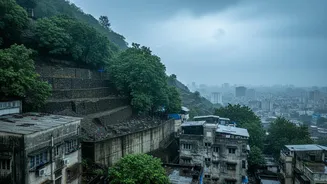
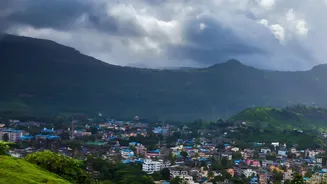
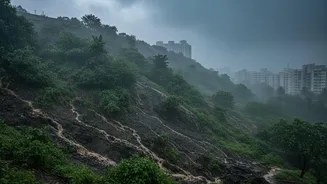
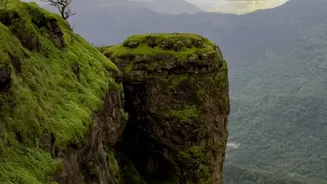
Mumbai's unique topography is a primary factor in its landslide susceptibility. The city is a mix of flat reclaimed land and hilly terrain. These slopes, combined with the intense, saturating rainfall of the monsoon, create a naturally high-risk environment.
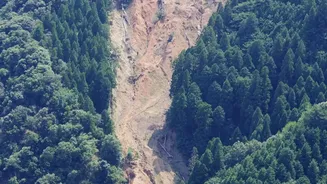
When the ground becomes oversaturated with water, the soil and rock lose their stability, making them prone to suddenly giving way under the force of gravity. The Mumbai Climate Action Plan (MCAP) has specifically identified landslides as a key climate-related threat to the city, warning that increasing instances of extreme rainfall will only heighten this danger. According to data from the Brihanmumbai Municipal Corporation (BMC), there are nearly 250 identified landslide-prone locations across the city.
Mapping the High-Risk Zones
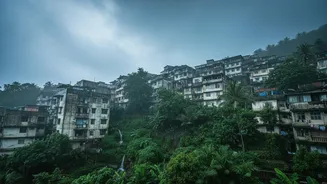
Certain parts of Mumbai are significantly more vulnerable than others. The BMC and the Geological Survey of India (GSI) have identified numerous high-risk zones, which are often classified based on the level of danger. The eastern suburbs have the highest concentration of these vulnerable spots, with 45 identified areas. Key high-risk wards and neighbourhoods include Ghatkopar (N ward), which alone has 15 high-risk sections, Kurla (L ward), Vikhroli, Bhandup, and Chembur. Other vulnerable areas are located in the island city around Malabar Hill, Babulnath, and Tardeo, as well as parts of the western suburbs. These areas are often characterized by steep terrain and dense populations.
The Human Factor: Informal Settlements
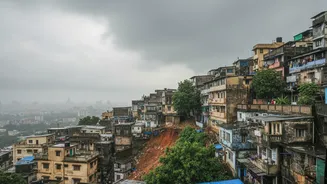
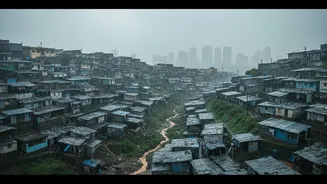
The greatest risk is faced by residents of informal settlements and shanties built on or at the base of these vulnerable hillsides. An estimated 1 lakh people across 22,500 families live in these landslide-prone zones. These settlements are disproportionately vulnerable due to the temporary and often poor quality of the structures. Unchecked construction and encroachment on hilly terrain can destabilize slopes further. Cutting into a hill to create flat ground for a home can remove the natural support of the slope, while the weight of the structure adds pressure. Many residents are aware of the danger but have few alternatives, with their jobs, communities, and children's schools rooted in these areas.
Man-Made Triggers That Worsen Risk
Natural geography is only part of the story. Human activity significantly contributes to landslide risk. Deforestation on slopes removes trees whose roots help bind the soil together. Improper or blocked drainage systems are another major issue. Instead of dispersing, rainwater becomes concentrated, leading to intense soil erosion and saturation. Experts point out that excavation and construction at the foot of a hill can compromise its structural integrity. Even the act of providing civic amenities like water connections to informal settlements can inadvertently encourage expansion into more dangerous areas. These factors combine to turn a natural hazard into a recurring urban disaster.
How to Recognise Warning Signs
While some landslides occur without warning, there are often tell-tale signs that a slope is becoming unstable. Being aware of these can save lives. Look for new cracks appearing in the ground, on walls, or on paved surfaces. Other indicators include doors or windows that suddenly begin to stick, leaning trees or utility poles, and bulging ground at the base of a slope. Sudden changes in water flow, such as new springs appearing on a hillside or creek water that becomes muddy, are critical warnings. Unusual sounds like cracking wood, rumbling, or rocks knocking together should be treated as an immediate sign of danger.
Official Advisories and Safety Measures
The BMC's Disaster Management department regularly issues advisories during the monsoon. They appeal to residents in the most dangerous areas to move to temporary shelters, though many are reluctant to leave their homes. In some cases, authorities may issue evacuation notices for highly vulnerable structures. The civic body and other agencies like MHADA are also tasked with building retaining walls to stabilize slopes, although progress can be slow due to funding and jurisdictional issues. Residents are urged to stay alert during periods of heavy, continuous rainfall and report any of the warning signs to the authorities immediately. Following official channels for updates on weather and traffic is also a crucial safety measure.