




A Needle in a Cosmic Haystack
Detecting potentially hazardous asteroids is an immense challenge. These objects are often small, incredibly faint, and moving at high speeds against the black backdrop of space. Traditionally, astronomers have relied on taking multiple images of the same
patch of sky in a single night. If a point of light moves against the fixed background of stars, it's flagged as a potential asteroid. However, this method has its limits. Faint objects might not show up clearly, and survey telescopes can be hampered by weather or simply can't cover the entire sky fast enough. An object might be spotted once or twice, but without at least four confirmed sightings in one night, it couldn't be confirmed and was often lost.
The Power and Limits of Telescopes
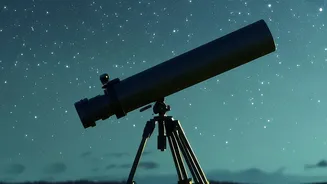
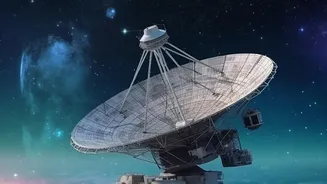
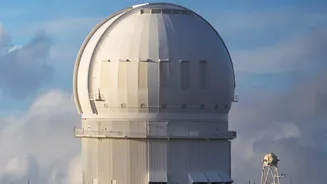
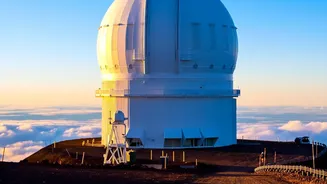
Ground-based telescopes are the bedrock of planetary defense. Powerful instruments at observatories like the NASA-funded ATLAS survey in Hawaii systematically scan the heavens, gathering enormous amounts of data every night. Upcoming facilities like the Vera C. Rubin Observatory in Chile are set to take this to another level, capturing a torrent of data amounting to 20 terabytes per night. This observatory will survey the entire southern sky every few nights. But this firehose of information creates a new problem: there is simply too much data for humans to analyze manually. The sheer volume of images and potential moving dots would overwhelm teams of astronomers, meaning real threats could be buried in the noise.
Enter the Algorithm
This is where Artificial Intelligence becomes an indispensable partner. AI, specifically machine learning algorithms, can do what humans can't: sift through petabytes of data at incredible speeds, spotting subtle patterns that would otherwise be missed. Algorithms like HelioLinc3D and THOR are not just faster; they are fundamentally different. Instead of needing multiple sightings in one night, these AI systems can connect sparse observations of a faint object across several different nights. By calculating potential orbits, the AI can link a dot seen on Monday with another seen on Wednesday, proving they are the same object even if each individual sighting was too weak to be confirmed on its own.
A Digital Detective at Work
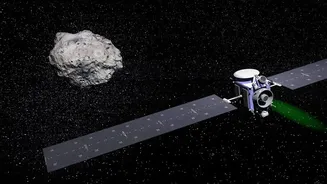
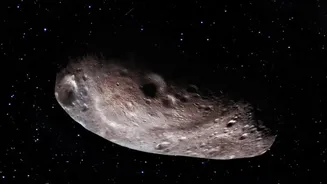
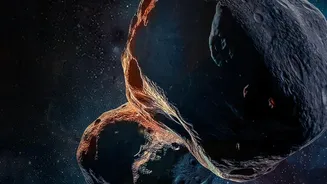
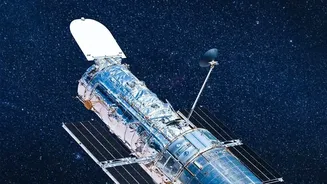
The power of this new approach has already been proven. In a test using data from the ATLAS survey, the HelioLinc3D algorithm discovered its first 'potentially hazardous asteroid,' named 2022 SF289. This 600-foot-wide asteroid had been observed on four different nights but never enough times on any single night to be identified by traditional methods. By piecing together these separate, inconclusive sightings, HelioLinc3D confirmed its existence. Similarly, the THOR algorithm, running on Google Cloud's powerful infrastructure, analyzed archival images and identified over 27,000 previously unknown asteroid candidates in 2024 alone. These AI detectives are making existing telescopes 'bigger and better' by unlocking discoveries hidden within their data.
The Future of Planetary Defense
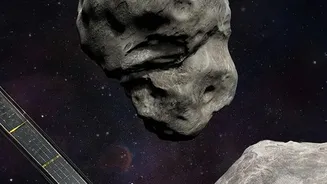
The Vera C. Rubin Observatory, expected to begin its full survey in early 2025, was designed with this AI partnership in mind. Its strategy of taking fewer images of each spot but scanning the sky more rapidly is tailor-made for algorithms like HelioLinc3D. Scientists anticipate that this combination will dramatically increase the rate of discovery, potentially finding thousands of new potentially hazardous asteroids. This proactive approach is critical for planetary defense. Identifying a threatening object years or even decades in advance gives humanity time to plan and execute a deflection mission, such as the one successfully demonstrated by NASA's DART project. The next decade of discovery will be as much about advancements in algorithms as it is about giant new telescopes.