



The Monsoon Gardener’s Dilemma
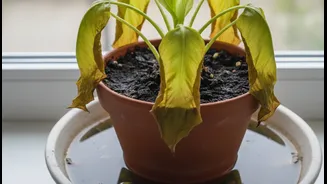
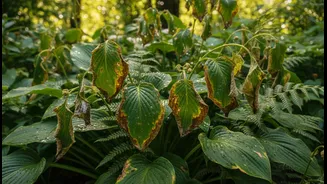
For apartment dwellers across India, the monsoon is a double-edged sword. While the rains rejuvenate the city, they often spell doom for carefully tended balcony gardens. You might notice your plants, which thrived in the summer heat, suddenly looking
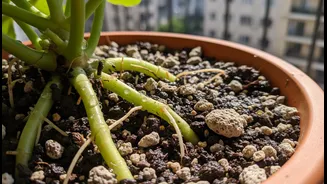
wilted, yellow, and sickly despite the abundance of water. The culprit is often what lies beneath the surface. Incessant rain saturates the potting soil, and what seems like a blessing quickly becomes a curse. This leads to the most common cause of plant death in containers: root rot. The very water that should give life ends up suffocating the plant from its roots up.
The Science of Survival: Air and Water
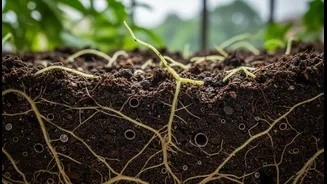
To understand why this happens, we need to think about what plant roots truly need. It's not just water and nutrients; it’s also oxygen. In healthy soil, there are tiny pockets of air between the solid particles. Roots use this oxygen for respiration, the process of converting food into energy for growth. When a pot becomes waterlogged, these air pockets fill with water, effectively drowning the roots. Without oxygen, the roots can't function properly, can't absorb nutrients, and begin to die. This decaying, oxygen-starved environment is the perfect breeding ground for fungal diseases like Phytophthora and Pythium, which accelerate root rot and kill the plant.
Why Your Potting Mix Is Failing
The standard potting media many of us use—often heavy on garden soil or plain cocopeat—is the main problem. Garden soil, when used alone in a pot, compacts easily with repeated watering, turning to dense mud during the monsoon. While cocopeat is excellent at retaining moisture, it can hold too much water when constantly exposed to rain, squeezing out essential air. This compaction destroys the soil structure, leaving no room for aeration. You might notice water pooling on the surface or running straight down the sides without being absorbed, a clear sign that the soil has become hydrophobic and compacted. This is when the air-to-water balance is critically off, and your plants are in distress.
Crafting the Perfect Monsoon Potting Media
The solution is to create a potting mix that actively resists compaction and ensures excellent drainage. It’s about building a structure that can hold enough moisture for the plant but allows excess water—and crucially, air—to move freely. A reliable, all-purpose recipe for Indian monsoon conditions is a balanced blend of three key components. A good starting point is a ratio of 40% cocopeat (for moisture retention), 30% compost or vermicompost (for nutrients), and 30% aeration material. For aeration, perlite is an excellent lightweight option. However, coarse river sand or even small brick pieces (thikri) also work wonderfully to create those vital air gaps and improve drainage.
Drainage Is Your First Line of Defence
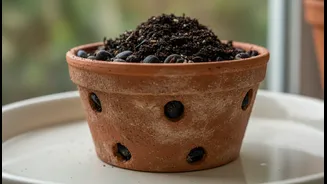
Even the best potting mix is useless if the water has nowhere to go. This might seem obvious, but it’s a step many gardeners overlook. First, ensure every single pot has multiple, unobstructed drainage holes at the bottom. Second, and just as important, is to elevate your pots. Placing them on pot stands, bricks, or even old wine corks allows air to circulate underneath and ensures that the drainage holes don't get blocked by sitting flush against the floor. This simple step prevents the pot from sitting in a puddle of its own runoff, which it can reabsorb, defeating the purpose of good drainage. Never place a layer of gravel at the bottom of the pot; contrary to old gardening myths, this actually raises the water table inside the pot and can worsen waterlogging.
Beyond the Mix: Smart Monsoon Care
With a well-draining setup, your job is halfway done. However, you still need to adapt your care routine. Always check the soil moisture before watering. Just because it rained doesn't mean every plant got the water it needed, especially those under a roof. Stick your finger a couple of inches into the soil; if it feels damp, wait another day. Additionally, high humidity attracts pests like slugs and fungal diseases. Improve air circulation by spacing your plants out and pruning any dense or dead foliage. For very delicate plants, consider moving them to a sheltered spot during periods of relentless downpour to give them a chance to dry out slightly.