




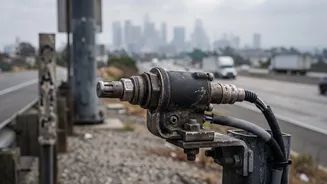


What is a PUC Certificate?
A Pollution Under Control (PUC) certificate is a government-mandated document that certifies a vehicle's emissions are within the legally permissible limits. Under the Central Motor Vehicles Rules, 1989, every vehicle must undergo a periodic emission test.
The test measures pollutants like carbon monoxide and hydrocarbons. The certificate serves as proof that your vehicle is compliant with environmental norms. New vehicles are exempt for the first year, after which they require periodic renewal. This rule applies to all petrol, diesel, and CNG vehicles, while electric vehicles are exempt due to having no tailpipe emissions.
Cleaner Air and the GRAP Mandate
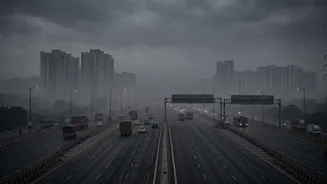
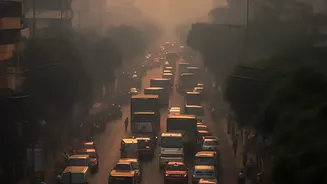
Delhi's severe winter air quality is a well-documented public health crisis. Vehicular pollution is a major contributor to the toxic smog that blankets the region. To combat this, the Commission for Air Quality Management (CAQM) implements the Graded Response Action Plan (GRAP), a set of emergency measures that activate as air quality worsens. As of October 21, 2026, Stage I of GRAP has been invoked across the NCR due to the air quality deteriorating to the 'poor' category. A key directive under Stage I is the strict enforcement of PUC norms for all vehicles to curb emissions at the source.
It Applies to Everyone, Everywhere
The enforcement drive is not limited to vehicles registered in Delhi. Any motorist from a neighboring state like Uttar Pradesh, Haryana, Punjab, or Rajasthan entering the Delhi-NCR must carry a valid PUC certificate. Authorities are intensifying checks at border points and throughout the city. Furthermore, as part of a broader 'Winter Action Plan' effective from November 1, 2026, the entry of vehicles registered outside Delhi that do not meet BS-VI emission standards will be restricted. This makes having a valid PUC certificate even more critical for interstate travel to the capital region.
The High Cost of Non-Compliance
Driving without a valid PUC certificate can be a costly mistake. Under the Motor Vehicles Act, the penalty for not producing a valid certificate can be a fine of up to ₹10,000. In some cases, repeated offences can even lead to imprisonment or a three-month suspension of your driver's license. Beyond fines, the Delhi government is also enforcing its 'No PUC, No Fuel' policy. This means petrol pumps are directed to refuse fuel to any vehicle that does not have a valid certificate, potentially leaving non-compliant drivers stranded.
How to Get and Check Your Certificate
Obtaining a PUC certificate is a straightforward process. You can visit any authorized emission testing centre, which are often located at petrol pumps or standalone workshops. The test itself takes only a few minutes. You'll need to have your vehicle's Registration Certificate (RC) handy. The cost is nominal, typically ranging from ₹60 to ₹200, depending on the vehicle type. The certificate's data is linked to the national Parivahan database, allowing for easy digital verification by authorities. You can also check the status of your PUC certificate online through the Parivahan portal by entering your vehicle registration number.