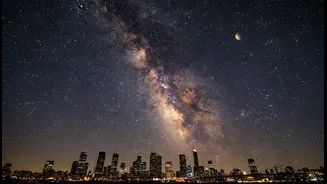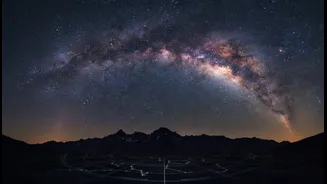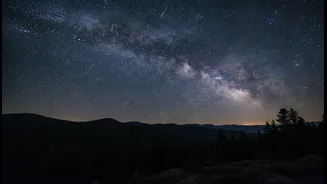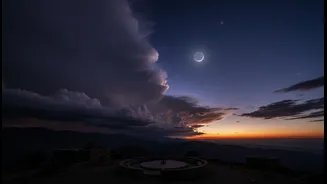


The Midnight Myth
There's a romantic notion tied to the stroke of midnight. It feels like the deepest, darkest part of the night, the perfect canvas for stars to appear. Many of us plan our stargazing trips around this time, hoping for peak darkness. While it's true that
the sky is dark, midnight isn't always the prime time for celestial events, especially meteor showers. This common belief often means enthusiasts pack up and head home just as the show is about to get truly good. The best viewing experience often requires a shift in perspective and timing, moving away from the conventional midnight watch and embracing the quiet stillness of the pre-dawn hours.
Why Pre-Dawn Is a Game Changer
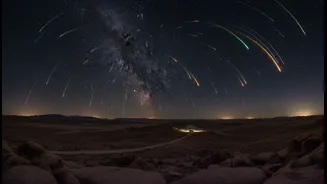
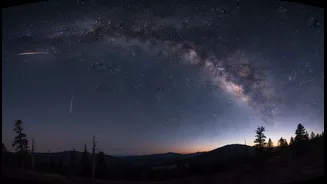
The secret to superior pre-dawn viewing lies in a combination of Earth's rotation and celestial mechanics. For meteor showers, the key is the 'radiant'—the point in the sky from which the meteors appear to originate. For many major showers, like the famous Perseids or the Geminids, this radiant point rises higher in the sky as the night progresses. Think of it like driving through a snowstorm: you see more snowflakes hitting your front windscreen than your rear one. Between midnight and dawn, our side of the Earth is rotating to face the direction of our planet's orbit, essentially moving 'head-on' into the stream of cosmic debris that causes a meteor shower. This means more meteors are entering the atmosphere directly above you, resulting in a more frequent and dramatic display just before the sun begins to light the sky.
The Added Bonuses: Less Light, Steadier Air
Beyond the favourable geometry, the hours before dawn have other practical advantages. Human activity significantly dies down in the early morning. This means less artificial light pollution from homes, businesses, and traffic. This reduction in 'skyglow' creates a darker backdrop, allowing fainter stars and meteors to become visible. The atmosphere can also be more stable. After a full night of cooling, there's often less thermal turbulence rising from the ground. This results in steadier air, which reduces the 'twinkling' of stars and provides sharper views of planets and other celestial objects. This combination of darker skies and clearer seeing conditions elevates the entire stargazing experience.
What to Look For This Season
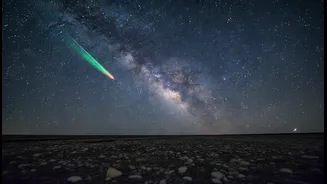
While this pre-dawn principle applies year-round, it’s especially relevant for annual meteor showers. In late July, the Southern Delta Aquariids and Alpha Capricornids are active. Though the 2026 peak at the end of July will be hampered by a bright moon, observing in the pre-dawn hours on moon-free nights can still be rewarding. The Alpha Capricornids are known for producing a small number of very bright, slow-moving fireballs that can be spectacular. The real highlight of the summer, the Perseid meteor shower, peaks in mid-August. In 2026, the peak nights of August 12-13 will coincide with a new moon, promising perfect dark-sky conditions. For the Perseids, the radiant is highest just before dawn, making a 3 or 4 a.m. start time ideal for seeing the highest rate of meteors.
Your Pre-Dawn Stargazing Guide
Ready to try some early morning stargazing? A little preparation goes a long way. First, find a location away from city lights; even a local park can be better than your backyard. Check the weather forecast and the moon phase—a night with no moon is best for seeing fainter objects. Give your eyes at least 20 minutes to fully adapt to the darkness; avoid looking at your phone screen during this time. If you need a light, use a red-light torch, as it's less disruptive to your night vision. Dress in layers, as even summer nights can get chilly in the early hours. Finally, get comfortable. A reclining chair or a blanket on the ground will save you from a sore neck. Patience is the most important tool of all. Let the universe unfold at its own pace.