




A Season of Deficit
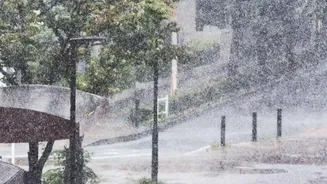
India's 2026 southwest monsoon season concluded with a significant rainfall deficit, marking it as one of the weakest in recent years. According to the India Meteorological Department (IMD), the country received rainfall that was roughly 13% below the long-period
average, officially classifying the season as "deficient". This was the fourth-lowest rainfall recorded since 2001 and the worst since 2015. The performance was erratic, with extreme swings between surplus and deficit weeks, and some regions were hit much harder than others. Southern peninsular India, for instance, ended the season with a 24% deficit, while the east and northeast recorded a 25% shortfall, leaving large agricultural areas with depleted soil moisture. This meteorological reality is the first link in a chain that extends directly to urban water security.
The Reservoir Lag Effect
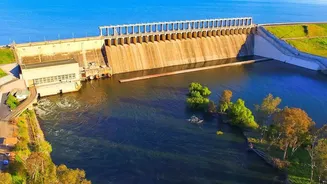
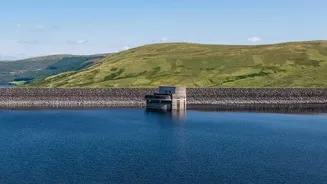
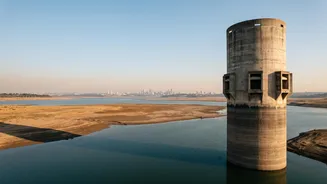
Most major Indian cities depend heavily on a network of reservoirs that are replenished by monsoon rains. These massive storage systems act as a buffer, ensuring a steady water supply throughout the dry seasons. However, a poor monsoon means these reservoirs do not fill to their optimal capacity. As of late September and early October 2026, water levels in India's 178 major reservoirs were already below the 10-year average. The situation is particularly concerning in the southern region, where reservoirs were at just about 50% of their live capacity, a steep drop from 87% the previous year. Even in Mumbai, where a network of seven lakes supplies the city, the collective water stock on October 5 was 95.23%, lower than the levels of the past two years. The impact of this shortfall is not felt immediately. Cities continue to draw from existing reserves, but as the months wear on and demand remains constant, the lower starting point means water levels will deplete faster, leading to potential restrictions and shortages in the hot, dry months of the following year.
Draining Our Invisible Bank
Beneath our cities lies a second, invisible reservoir: groundwater. This resource is a critical fallback, supplying water to millions through private borewells and municipal systems, especially in areas where piped supply is inadequate. However, groundwater is not an infinite resource. It is primarily recharged by rainfall, with monsoon showers accounting for about 60% of this replenishment. A weak monsoon has a double-negative effect: it fails to adequately refill these underground aquifers while simultaneously increasing our reliance on them as surface water sources dwindle. Studies have shown that during poor monsoon years, groundwater withdrawal intensifies. This over-extraction is already a critical issue in many parts of India, including Punjab, Haryana, Delhi, and Rajasthan, where many groundwater blocks are designated as over-exploited. The water crisis in Bengaluru earlier in the decade served as a stark example of how rapid urbanisation and over-extraction, compounded by a poor monsoon, can cause borewells across a city to run dry.
When Less Supply Meets Rising Demand
The challenge of a deficient monsoon is amplified by the relentless growth in urban water demand. India's cities are expanding rapidly, and with them, the need for water for domestic use, construction, and industry. This creates a fundamental imbalance: a reduced supply is forced to meet a constantly growing demand. A city like Chennai nearly reached 'Day Zero' in 2019 after a poor monsoon, forcing it to rely on water brought in by trains. The expansion of impervious surfaces like concrete and asphalt in cities also prevents rainwater from seeping into the ground to recharge aquifers, further straining the system. This combination of a poor monsoon, under-filled reservoirs, depleted groundwater, and rising urban consumption creates a perfect storm for a water crisis that may only become apparent when the summer heat arrives.