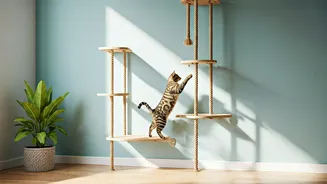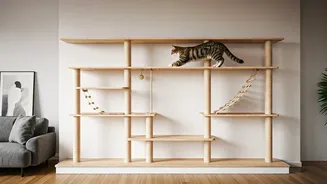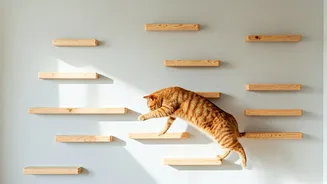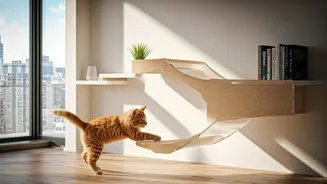





Why Cats Need to Climb
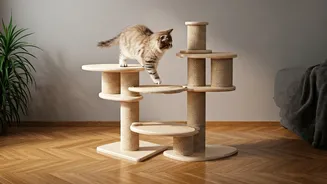
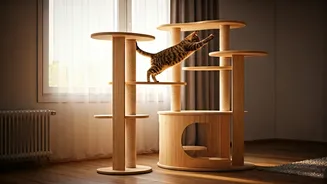
In the wild, cats are masters of the third dimension. They climb trees to survey their territory, escape predators, and feel secure. This instinct doesn't disappear just because they live indoors. Providing vertical space isn't just about exercise; it's
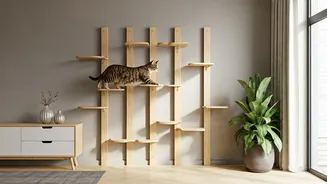
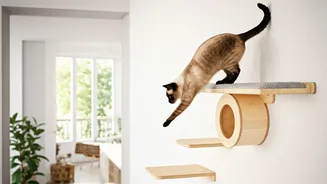
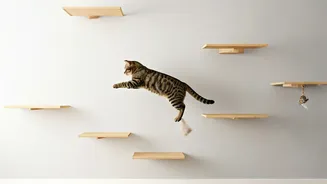
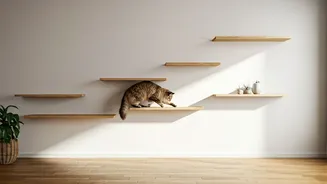
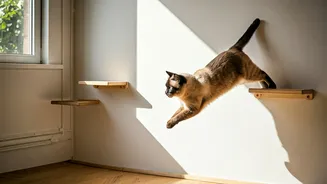
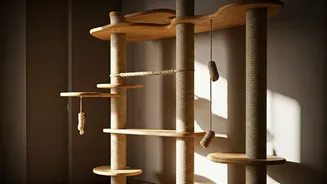
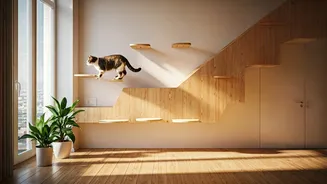
about fulfilling a deep-seated behavioural need. A cat with access to high perches is often more confident and less stressed. Wall-mounted steps, shelves, and perches—often called a 'cat superhighway'—transform your walls into an enriching environment. It gives them a new perspective, a safe retreat from a busy household (especially with dogs or children), and a stimulating physical challenge that keeps their muscles and minds sharp. For cats in multi-cat households, it also expands the available territory, which can significantly reduce conflict and tension.
Planning Your Feline Freeway
Before you drill a single hole, take a moment to plan. Think like your cat. Where would they want to go? The best cat highways have a destination. This could be a sunny window perch, the top of a tall bookshelf, or a comfy wall-mounted bed. Sketch out a potential path on paper. Consider flow and accessibility. The steps should be spaced appropriately for your cat’s size and agility—typically close enough that they can step or make a small hop, not a huge leap. A good rule of thumb is 12-16 inches apart horizontally and 6-12 inches vertically, but adjust for your cat's specific abilities. Also, consider the room's human traffic. You don't want a major cat thoroughfare right in the middle of a busy hallway where they might get startled.
Choosing Materials and Steps
You have two main routes: buying a pre-made kit or going the DIY route. Commercial kits are convenient and have been tested for feline use, often coming with all the necessary hardware and instructions. If you're building your own, choose strong, solid wood like pine. Avoid particleboard or MDF, which may not hold up to repeated jumping. The most critical part is the surface. Bare, slick wood can be dangerous. Your cat needs a secure grip. You can achieve this by adding a non-slip surface like a small piece of carpet, durable sisal rope (which doubles as a scratching surface), or a non-toxic, grippy paint. Ensure whatever you use is securely attached to the wood with non-toxic glue or staples that are fully hammered in and pose no risk of snagging a claw.
Safe and Secure Installation
This is the most important step. A poorly installed shelf can be a major safety hazard. Your top priority is to mount the steps into the wall studs. Studs are the vertical wooden beams that make up your wall's frame. Use a stud finder to locate them. Attaching shelves only to drywall, even with plastic anchors, is not safe enough to support a leaping cat. Once you've located the studs, use long, sturdy screws that go through the shelf bracket, through the drywall, and deep into the stud. For each step, use at least two screws into a stud if possible. After installing each step, give it a firm tug and press down on it with significant weight to ensure it's completely stable before you let your cat near it. Double-check everything. Your cat's safety depends on it.
Encouraging Your Cat to Explore
You’ve built it, but will they come? Cats can be suspicious of new things. Don't just place your cat on the top step and hope for the best. Instead, make it an appealing game. Start by placing high-value treats on the lower steps to encourage exploration. Use a feather wand or laser pointer to guide them up the path, turning it into a fun activity. Place a comfy blanket or their favourite toy on a destination perch. Most importantly, be patient. It may take a few days or even weeks for a cautious cat to fully embrace their new vertical world. Shower them with praise and affection whenever they use the steps. Soon, they'll associate their wall-mounted kingdom with safety, comfort, and fun.